Categories
Inside the incubator

Alois – Empowering people with memory loss to live independent and autonomous lives

Alois is on a mission to build a second brain for people with mild cognitive impairment and early stages of dementia. Their ambition is much like that of a hearing aid, where Alois will serve as a mental aid to help those with memory loss to continue living life to the full. 

In this interview we discover more about how Alois developed from a need to support caregivers and loved ones to a desire to build a platform that supports people with dementia themselves.


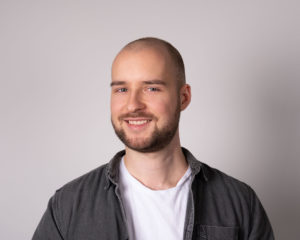
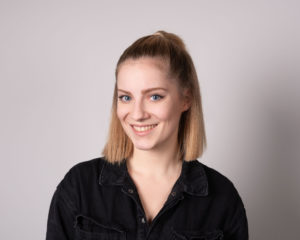
On meeting Co-Founders Zuzanna Bień and Franziska Seehuber you begin to discover why Alois is positioned to improve Zuzanna Bien - startup Alois Vision Health Pioneers Incubatorthe current status of dementia. From personal experiences to forming a startup team with an aligned ambition, the early-stage founders are driven to make a positive change. Somewhat surprising is they only formed in late 2021, but they are bringing their talents together in a way that teams must do when beginning their journey. 
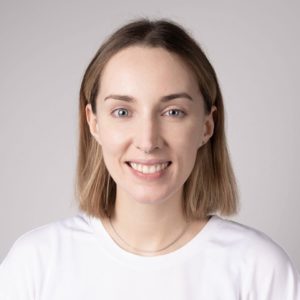
Startup team Alois originally came together in October 2021 after competing in the Rox Hackathon, an “invention marathon” where teams worked on real challenges facing the fields of neurology and oncology. During this experience, Alois formed and began to develop their business idea and ambition to help make a change to the lives of families who are currently impacted by the challenges of caring for someone with dementia. The inspiration for their name Alois, comes from Dr. Alois Alzheimer who was credited for reporting one of the first cases of a type of dementia commonly referred to as Alzheimer’s disease.

Zuzanna describes the hackathon experience, “Taking part in this virtual hackathon meant meeting each other for the first time via Slack after we had gravitated to the same challenge. We then finished in second place in the overall hackathon and with the feedback we received, started to get excited about our idea!” Franziska adds to this, “We were then offered to continue working on our project in an eight week program provided by Rox Health. After several conversations with experts we realised we could really turn our vision into reality and applied to the Vision Health Pioneers Incubator.”

The team hasn’t looked back since and it’s clear they are driven by not only a desire to improve the current situation but also each have a personal connection with dementia. Franziska, whose mother was diagnosed with dementia, shares why Alois is working hard to make a difference. “Having this personal experience means I have seen and continue to see the challenges. I have the ambition because it is sad to see that there is still so much stigma around this disease, making a lot of people feel like their lives are not worth living anymore. Finding support can be difficult and we believe there is nothing available that is similar to what we plan to provide.

The Alois Team 

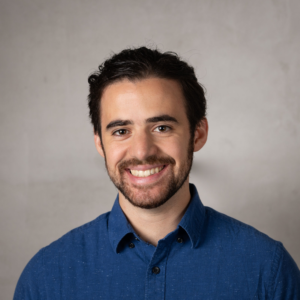
Zuzanna and Franziska are joined by Matt Betts who is part of the wider team but not in the program. Franziska describes how Matt is a neuroscientist and is currently conducting research in dementia. “Matt’s research is in developing neuroimaging biomarkers for understanding the progression of Alzheimer’s disease which overlaps really well with our startup.”
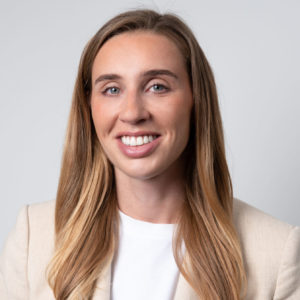
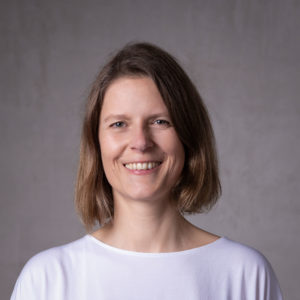
Franziska Seehuber - startup Alois Vision Health Pioneers IncubatorFranziska completed her Bachelors in Medical Engineering before changing her career path to UX Design. “I really appreciate how good design can change the value of a product. I’m still very interested in the medical field and enjoy having various hats that I can utilise while working on our platform.”

For Zuzanna, her education includes degrees in Psychology and Graduate Medicine before working clinically in London. A break from this intense work during Covid 19 was also part of the reason she formed the startup Alois with Franziska and Matt. “I’ve always been interested in the startup space and healthcare innovation. Competing in the hackathon which led to us joining the Vision Health Pioneers Incubator felt like the timing was just right. Moving to Berlin on short notice was adventurous but equally exciting!” 

The duo explained more about how they have found the experience with Vision Health Pioneers Incubator so far, having joined in January 2022. “It’s been really good for us, especially as we are an early-stage startup. The structure of the workshops and the way everything progresses are perfectly matched to our current status. We have felt supported in a space we have not operated in before. Having a community around us who we can connect with for various needs is so effective as well. This is so much easier than having to network from scratch and trying to write to someone on, say, LinkedIn.” Franziska says. 

Building a second brain

The Alois product is a cross between a personal assistant and a memory bank, allowing users to store and retrieve memories in a way that mimics natural human interaction. It evolves as the team gains further knowledge. “When a person gets diagnosed with dementia, that is often it. There is no additional support for those around that person who is suffering. Yet a caregiver has to do so much.” Franziska shares. “When we entered the hackathon, we were working on a platform for caregivers but this has developed into what we are now working on today.”

The team describes the current setup as a hopeless scenario for those who are diagnosed. “Whilst there is no cure, life is not over following a diagnosis.” Franziska says before Zuzanna adds, “We have worked on our product a lot and our solution is now a personal companion for those with memory loss. A way to easily access and retrieve memories, aided by a voice first interface. ”

Franziska describes their first aim is to have their product available via a smartphone. “Dementia is often thought about in its most severe form, but in truth it can start up to 20 years before the picture many have in their minds. The early and moderate stages can last for very long time periods. We therefore focus on earlier stages and aim to benefit people over a longer period of time. At the later stage we hope to develop a physical device but for now we focus on a mobile application.”

Zuzanna adds that their ambition for the application is to have a fully functional prototype before the end of their 10 month program with the Vision Health Pioneers Incubator. “We are starting by identifying key features that would be most useful for users. With a limited spec we then plan to expand it.” Franziska adds. 
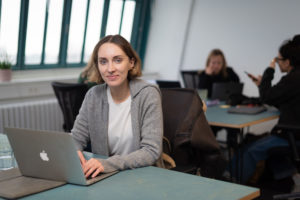
Zuzanna Bien - startup Alois Vision Health Pioneers IncubatorAs the team works through its research and creates their first prototype, they are also exploring system architecture and what components are needed first. For Franziska she is responsible for design and prototype building whereas Zuzanna focuses on pitching and providing a front face for the company. She describes their activities, “Because we’re at such an early stage, everyone is keen to get involved in all aspects of the startup, so we all play an overlapping role but try to stay disciplined.”

The vision of Alois is to support those with memory loss with their daily living and help them to continue living an autonomous life for as long as possible. To do this they are constantly improving their application and are making it more sophisticated by adding additional features. “We want people to be able to reminisce about their memories in all aspects of their lives, by providing an easily accessible platform. We know that we can’t replace something that is lost, but we can at least try to help support those when early issues arise.” Franziska describes, before concluding, “The go to strategy for most people affected is currently to deeply rely on their loved ones or using some form of sticky notes to remember important information. We imagine that Alois can work as a replacement to this and help people to live an independent life for longer.” 

The Alois team is aware of the challenges that they will face – from building relatively sophisticated technology to complex engineering. “We know we can’t develop something over a weekend. But with the advancement of voice recognition, language and processing technology, how things look in just one year from now will be very different.” This is how Zuzanna describes their approach and Franziska joins in, “There is definitely a challenge in how accessible our product will be for those who are experiencing memory loss. We are currently trying out different approaches to see what design decisions have to be made in order to make our platform work out as a real benefit for this specific user group. Proactivity as well as working with sound and visuals will definitely play an important role in making the storage and especially the retrieval of information as seamless as possible.

Alois is positioned to help support those suffering with memory problems and loss of identity which can be so damaging for both the person and their loved ones around them. The team have recently looked for a Technical Co-Founder to help take their startup to the next level and are now focused on building their prototype. It is an exciting time and with 200,000 new diagnoses of dementia in Germany alone every year, a much needed addition to the healthcare world.
Categories
Inside the incubator

The missing puzzle piece for at home testing – Physikit

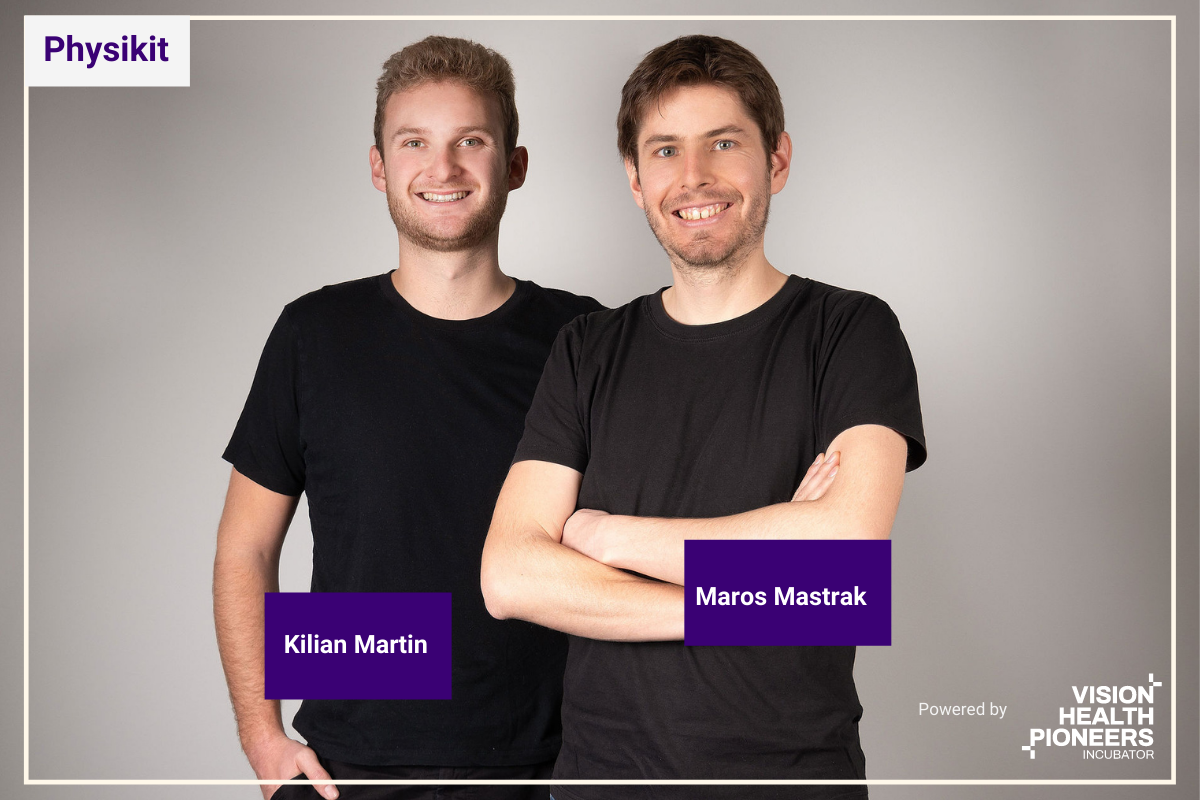
Physikit joined Vision Health Pioneers Incubator in the third cohort at the beginning of 2022 have a clear purpose: to bridge a gap which will fuel the growth of eHealth in the future. According to the Co-Founders Kilian Martin and Maros Mastrak, “eHealth will become just health and we want to facilitate that transition.” In this article we will discover how Physikit plans to do this and how prevention is at the core of it.

“A key question is: why is there still a gap between eHealth and health? The answer is simple: eHealth is limited by digital-only solutions. However, healthcare strongly relies on a holistic, physical analysis of patients. We need to close this gap so that eHealth can reach its full potential.” explains Kilian Martin. His Co-Founder, Maros Mastrek, follows up: “Current digital solutions can solve some problems, but what you don’t have right now, is the whole picture. These solutions are restricted because they lack the ability to look inside the body. For the holistic picture, you need to measure biochemical and physical parameters.”

Physikit argues that while digital health players provide quality medical advice and solid digital products, they lack the skills to effectively deal with the physical aspect of health (e.g. blood tests, laboratory analysis, sample logistics etc.), all of which Kilian describes as “a completely different world”. This is where Physikit comes in.

It became clear for Kilian and Maros immediately that their skillsets would provide a fine, complementary balance to solve these problems. Kilian is a former McKinsey consultant who brings the business and tech perspective into the startup formula, while Maros, a molecular biologist, leverages his technical, scientific expertise to challenge what is possible in (blood) testing. Putting their backgrounds into practice, they launched Physikit.

A B2B model for dried blood spot testing

The duo describes how their solution includes test kits and how this technology is already being used today. “We send physical dried blood spot kits to homes of patients. With the help of the kit, the patient pricks one of their fingers, applies a few drops of blood on a filter paper card and uses a return envelope in the kit to send the card to one of our partner laboratories. This technology has been around for more than 50 years, but was not needed beyond some specific use cases.” explains Maros. Kilian proceeds: “Some may know it from metabolic diseases testing for newborns. There, small, moving baby arms and big needles didn’t fit well together, so a solution had to be found: dried blood spot testing. Since the 1960s, within a few days after birth, each baby is pricked in their heel, and a few drops of blood are collected on a filter paper card. Beyond some use cases like this, dried blood spots were not needed, because patients would come to the doctor physically anyway. But this completely changes with the rise of eHealth.”

“At heart, Physikit is a B2B provider that takes care of the complexities of at-home blood collection by fully orchestrating it for eHealth platforms, apps and hybrid solutions. We bridge the gap between the digital and physical worlds, so these providers can focus on what they are best at. They simply use our state-of-the-art API to notify us which patient to test for what, and where they live. We take care of the physical backend processes required to collect a blood sample at home. Providers can continue to focus on their core competencies, while we help them add the critical functionality.”

Maros explains how the laboratories enter into this constellation: “Normally, they require large volumes of samples to work effectively and eHealth hasn’t been able to provide this. This is why we aggregate demand across many eHealth players and include some hybrid use cases (mix of digital and physical applications) as well. In this way, we become a significant partner for laboratories, and can work with them to innovate at-home testing.”

Maros Mastrak, Co-Founder of PhysikitOriginally from Slovakia with education and career at leading bioanalytical institutions in Austria, molecular biologist Maros shares more on his time of working in laboratories. “It was a fascinating experience, and I grew a deep understanding of how laboratory analysis works, but I soon realized there was a large gap between the theoretical and the practical world.” Eager to contribute to closing this gap, Maros founded a startup for virtual clinical trials. “In my home country, I leveraged the power of dried blood spots to give inputs into clinical trials, making them better and cheaper at the same time. But after some successful trials, I wanted to use what I learnt in a faster moving environment. And with a complementary co-founder. So I joined Antler in Berlin, where I met Kilian.”
After meeting in a Co-Founder matchmaking session in the Antler Accelerator, both quickly understood how well they complement one another. The duo jokes that when they have meetings, they both leave energized by different parts of the conversation. It is perhaps these qualities that teams need so much when creating their early-stage healthcare startups.

Kilian Martin, Co-Founder of PhysikitKilian, whose excitable energy complements the more relaxed words from Maros, remarks: “I provide the business & tech side and Maros provides these essential insights from his background and experience.” Maros adds onto this, “Kilian has a great ability to look at the bigger picture and look almost from above, whereas I focus on the technical side and countless details that are required to make our solution work.”

Kilian, from Germany, shares his background. “I’ve always had two hearts beating in my chest. The first is a love of business and the second is a love for technical applications. My experience ranged from supermarkets to tax to logistics. Each brought different learnings.” After his initial business education, Kilian worked for four years for McKinsey, focussing on product management and digitization topics. “I always knew I wanted to gain a deeper technical understanding and so I completed a second masters in Computer Science. This helps me to connect the two worlds I am deeply passionate about. However, I realized that I wanted to do this in a less constrained context: within my own startup. This led to my journey to the Antler program and meeting Maros. After the first conversations around dry blood spots, I was fascinated by their potential to fix a broken patient journey in eHealth.”

Physikit would soon be born and they would shortly after become part of the Vision Health Pioneers Incubator. “We were so excited to be accepted and the timing was perfect.” Kilian shares. “We have really appreciated the expert coaching – whether topics such as regulations, insurance, software development and more. Each session has led us to further improve and refine our business model.” Both Maros and Kilian highlight mentor Johannes Starlinger in the network as someone who has helped their journey. They also share that originally it was a connection to alumni Vision Health Pioneers Incubator startup Nilo.Health (formally mila.health) that led to their discovery of the program.

Physikit quickly put everything into practice and launched its first pilots in early April 2022. “We want to solve real customer problems, and refine our offering.” Kilian explains before Maros adds, “We quickly wanted to move from ideas to actual hands-on work.”

Kilian Martin PhysikitWhilst confident, both Co-Founders recognise the work ahead of them. “We truly believe we are the missing puzzle piece between eHealth and physical healthcare. We can see that digital health can dramatically increase its value by providing blood or other kinds of analyses that can start at home.” Kilian says, highlighting their determination and desire for positive change.
Kilian and Maros outline their future vision where prevention analysis is leading the line, rather than treatment. “We could catch things earlier, we can make weekly and monthly tests more accessible and, in this way, increase the “resolution” with which we see health and disease now. And, we can provide better healthcare in rural areas while enabling doctors to spend their time in a more efficient way.”

Categories
Inside the incubator

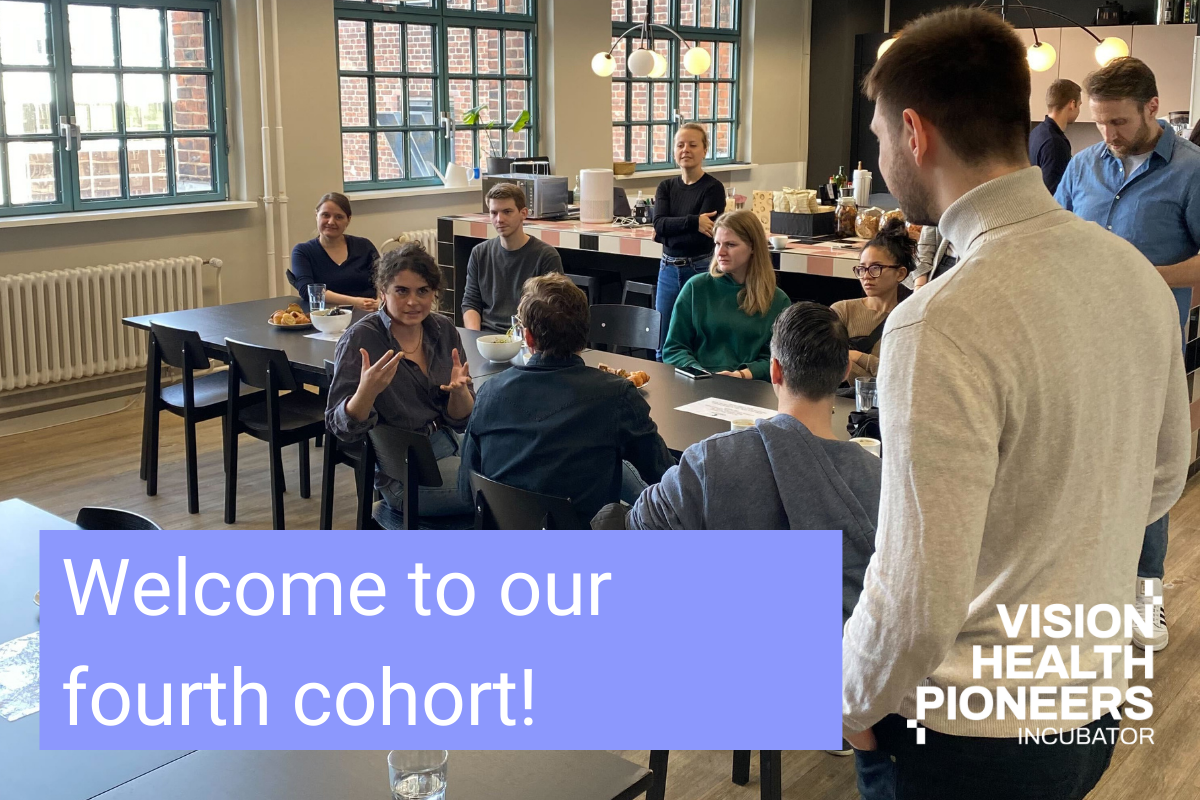
Welcome to our fourth cohort!

With a spring in our step, we started the fourth month of the year with a bang as our fourth cohort joined us at our crib for the start of their ten months with us! We are pleased to present HYPT, Blended Support and Noah Therapies who began their journey with us in April 2022. Now the teams will develop in our healthcare incubator in Berlin and benefit from scholarship funding, coaching and mentoring, free coworking space and access to experts and testing beds. We can’t wait for your to meet them. For now here is a short overview.[/vc_column_text][/vc_column][/vc_row][vc_row css_animation=”” row_type=”row” use_row_as_full_screen_section=”no” type=”full_width” angled_section=”no” text_align=”left” background_image_as_pattern=”without_pattern”][vc_column width=”1/4″][vc_single_image image=”20313″ qode_css_animation=””][vc_empty_space][/vc_column][vc_column width=”3/4″][vc_column_text]HYPT – We know that living with ADHD can be difficult – We Are HYPT to help! Using a unique combination of AI, genetic research, world-class experts with ongoing remote monitoring, HYPT will digitalize the process of getting ADHD diagnoses, personalized treatment and tools to unlock the full potential of our clients. We are hypt about solving the diagnostic and care delivery problem by building the leading ADHD omni-channel patient ecosystem.[/vc_column_text][/vc_column][/vc_row][vc_row css_animation=”” row_type=”row” use_row_as_full_screen_section=”no” type=”full_width” angled_section=”no” text_align=”left” background_image_as_pattern=”without_pattern”][vc_column width=”1/4″][vc_single_image image=”20314″ qode_css_animation=””][vc_empty_space][/vc_column][vc_column width=”3/4″][vc_column_text]Blended Support – To support people in walking the path of healing. Our aim is to provide people who have experienced trauma with fast and effective support to overcome their experiences… and perhaps to grow from the fact that they have managed to do just that… from anywhere, barrier-free and self-effective.[/vc_column_text][/vc_column][/vc_row][vc_row css_animation=”” row_type=”row” use_row_as_full_screen_section=”no” type=”full_width” angled_section=”no” text_align=”left” background_image_as_pattern=”without_pattern”][vc_column width=”1/4″][vc_single_image image=”20312″ img_size=”medium” qode_css_animation=””][vc_empty_space][/vc_column][vc_column width=”3/4″][vc_column_text]Noah Therapies – Noah is a holistic therapy management system for cancer patients. We lift the administrative weight off of patients shoulders by automatizing their therapy schedule and provide guidance for a higher quality of life on the basis of integrative medicine and data intelligence.[/vc_column_text][/vc_column][/vc_row][vc_row css_animation=”” row_type=”row” use_row_as_full_screen_section=”no” type=”full_width” angled_section=”no” text_align=”left” background_image_as_pattern=”without_pattern”][vc_column][vc_separator type=”normal” color=”#ffffff”][/vc_column][/vc_row][vc_row css_animation=”” row_type=”row” use_row_as_full_screen_section=”no” type=”full_width” angled_section=”no” text_align=”left” background_image_as_pattern=”without_pattern”][vc_column][vc_column_text]The first weeks in our incubator for cohort #4 include getting to know each other, beginning to attend their dedicated workshops, meeting mentors and much more. They can also benefit from interacting with cohort #3 who joined in January 2022 and have already been in the startup healthcare program for over three months. Both cohorts will be joined by our fifth cohort in July 2022 and all will be based at our free coworking space of Unicorn Workspaces in Berlin. Make sure to follow Vision Health Pioneers Incubator across social media, for example on our LinkedIn, to discover more about these exciting first-time founders in healthcare.[/vc_column_text][/vc_column][/vc_row][vc_row css_animation=”” row_type=”row” use_row_as_full_screen_section=”no” type=”full_width” angled_section=”no” text_align=”left” background_image_as_pattern=”without_pattern”][vc_column][vc_separator type=”normal” color=”#ffffff”][/vc_column][/vc_row][vc_row css_animation=”” row_type=”row” use_row_as_full_screen_section=”no” type=”full_width” angled_section=”no” text_align=”left” background_image_as_pattern=”without_pattern”][vc_column width=”1/2″][vc_single_image image=”20322″ img_size=”medium” alignment=”center” qode_css_animation=””][/vc_column][vc_column width=”1/2″][vc_single_image image=”20321″ img_size=”medium” alignment=”center” qode_css_animation=””][/vc_column][/vc_row]

Categories
Inside the incubator

Supporting the supporters. Together without eating disorders – aidable

The road to recovery for someone who is suffering can be long, difficult and lonely. For those lucky enough to have family and friends around who can and know how to support them, it can make a huge difference to the recovery process. These supporters are an essential pillar, but are they forgotten about when it comes to their own health and wellbeing? Do we need to look at how we can support the supporters as well? Should they not be supported as well? This is where the startup aidable comes in. 

aidable hold a vision of “together without eating disorders” and that no one should suffer on their own. If recovery is viewed as a team process, everyone in that ‘team’ should be supported for the best possible results. 

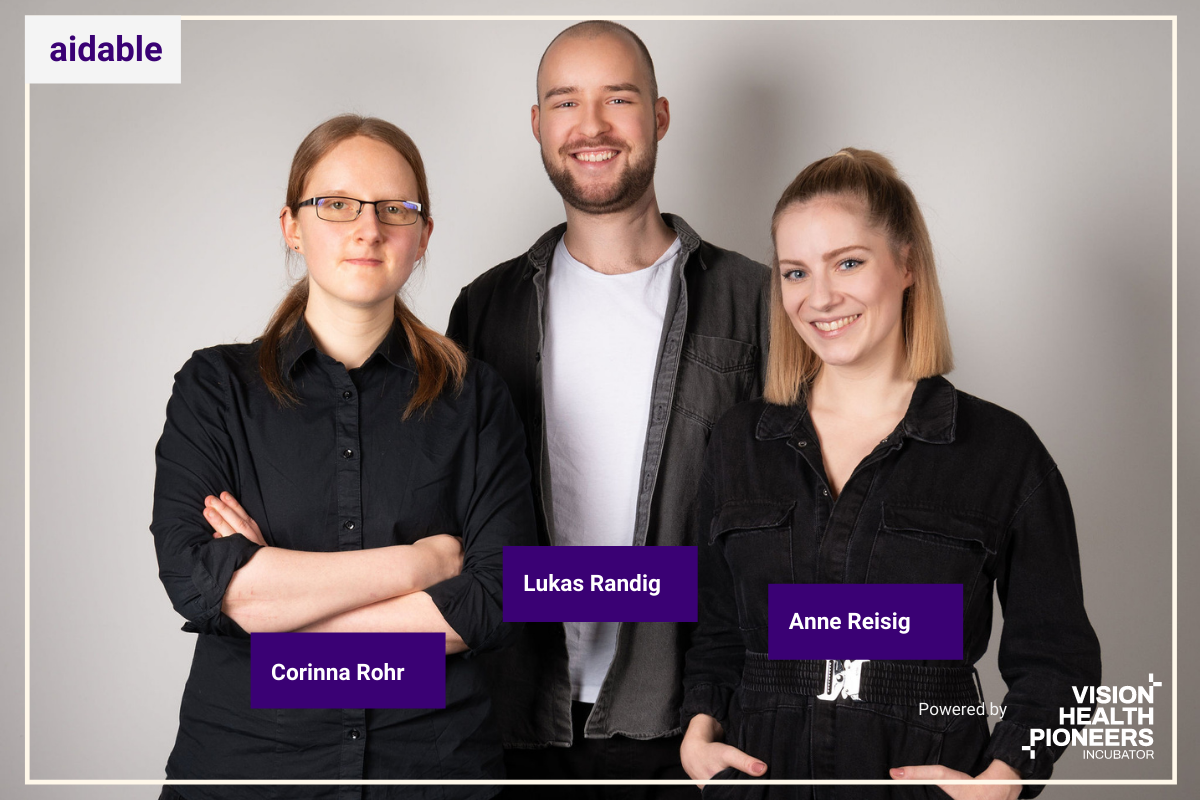
aidable is the vision of Anne Reisig who was inspired to do something from her own experiences. Anne suffered from an eating disorder in her late teens and even after she got better, she couldn’t stop thinking about what she had been through. These feelings have turned to drive and have led to aidable entering Vision Health Pioneers Incubator as a startup in the third cohort in 2022. Anne focused on this in her studies at University. “I really started thinking about doing something related to this area after handing in my bachelor thesis which received positive feedback. So I continued this in my master’s studies in UX and UI Design and Communication Management. Along the way I found a team who also cared about this topic.” 

candid shot of startup team aidable
Lukas and Anne of startup team aidable

This team Anne speaks of is Lukas Randig, who has experience in business administration, especially controlling and accounting and Corinna Rohr, a software developer. Combined, the team of three formed to power aidable to the next level and first met together in-person at deGUT, Germany’s largest trade fair for start-ups in 2021. Previously restricted by the corona situation, the team had worked online together. It was at deGUT that they met the Vision Health Pioneers Incubator team and would lead to them coming together in Berlin to attend the program. 

“We attended some great workshops at deGUT and were positively surprised to see some of the best ones were hosted by mentors within the Vision Health Pioneers Incubator community.” Anne explains before adding that whether inspirational figures they met at conferences or guest speakers whilst studying, the feedback they continuously receive is that the team is passionate about their topic and that they can make aidable into a solid, successful business.

Lukas Randig of startup aidable

As with any startup, first-time founders change their approach a handful of times. This is no expectation for aidable. What started with an original idea of a book, turned into an app. “We are always learning and trying to get better as a result of this. We now have an absolute focus for helping the relatives of those with eating disorders. But the way in which we do that is fluid. We don’t want to be too strict and our focus is to build a community. We want to do something that actually helps.” Anne explains before Lukas goes into a little more detail on this focus. “We were creating an app but we are currently working through what is the right tool, service or product to create – whether a web app, smartphone app, an online course and more. Nothing is set in stone. We want to develop something that people will use. At this stage we are asking customers what they want.”

Although early-stage, the team opening shares how they have failed at times during this process. “We tried sending messages to select groups of people on Facebook and hold online sessions but nobody came. We realised we needed to build trust and so took one step back and instead talked to everyone we knew. We asked if they were in contact with anyone who was suffering from an eating disorder and then directly and indirectly began to make personal connections. We found trust and started to hear answers such as “yes, I know someone.” We began to connect with parents whose children were suffering from these serious illnesses.” The team have clearly reflected and learnt from their experiences so far. “Corinna then had the idea of researching various institutions and clubs that tackle the topic of eating disorders.” Lukas adds. “We began to form connections with them and ask how we could help them, help their patients. We have now reached even more people.”

From a personal place.

Anne Reisig of startup aidable

When speaking to Anne today she is very open and it’s hard to imagine that at one point she couldn’t tell anyone about what she was going through for a long time. It is this personal experience that helps drive aidable forwards. “My parents found out after a year and my best friends after four years. It wasn’t until I began to present my bachelors project at university that I felt I needed to talk about it. A parent’s reaction may be to interrupt the eating disorder but part of the illness is that it wants you to stay sick and get even sicker. A relative may push the sufferer to eat but when you’re struggling and the sickness is telling you to ignore them, it wants you to continue to suffer until you’re dead.” It’s clear Anne had to go through something incredibly difficult. She adds, “I realise now that I didn’t have the energy to tell them and was desperate for an app that would have helped. If it could say to a parent how they should react. To not try and push their child to eat and instead work in a team. When a parent doesn’t have any input, it can cause conflict and turn relationships sour. If something like an app can support this and bring a family together, it can help everyone.”

Lukas, who has known Anne for some time, was part of her recovery journey. “I also have a relative who suffered from an eating disorder, so both experiences have made me want to do something with a purpose.” Lukas also explains how there is a stigma around eating disorders and this makes all three of them want to do more. “You can’t see a mental illness like you can with someone who has a broken leg. Equally people often don’t want to openly talk about it. But when we can open up, tell our stories and extend our trust, a safe protective space is formed.” Corinna also shares her personal experiences. “As a teenager I had friends going through the difficulty of eating disorders but no one ever explained more about it. What we should or shouldn’t do. Whether we should talk about something or not. I felt helpless and on reflection felt there needed to be an easier way to access knowledge on how to communicate and treat people.”

The unseen sufferer and supporter.

“Some people argue you can see an eating disorder, but if you are not very close to someone, you really can’t see it. Many of those with bulimia have a normal body weight. The sick behaviour only usually happens in secret. No matter what body type a person is, they may still eat tons of food and then throw up in secret. often surprise you who is suffering. In your close circles it can be helpful to know how not to trigger others. Triggers can be so easily done and begin with comments such as “I eat so much food at Christmas and now I can’t eat for a week” – without awareness, things like this can cause big problems.” Anne shares. 

Equally what the supporter is going through can be unseen. Studies have been conducted into the burden and psychiatric symptoms on key relatives of patients with eating disorders but is still relatively unknown. 

One of the main features of aidable is short concrete advice. Anne explains, “we realised you can find information online and in books on how to treat eating disorders but that information is very general. It lacks how to apply the information correctly and what relatives often want is simply solid advice. They want an answer to how they should react to a challenging situation.” It is this information that aidable plans to present so people can inform themselves in calmer situations. To make it easier to find professional help like therapy or inspiration – such as that with interviews of relatives of sufferers. 

Lukas explains that they also want to help the overall process of those who may need to go through rehabilitation. “When you are suffering from an eating disorder, you don’t always have the energy to call the bureaucratic powers between their phone line opening times. You may want and need treatment and rehabilitation but it’s a complex process.” 

Aidable hope to form close collaboration with health insurance providers or individual companies themselves. This could come in the form of programs that support the employees of a company.

Corinna Rohr of startup aidable

Whilst it’s still early days for aidable, they are enjoying being involved in the third cohort of Vision Health Pioneers Incubator. Corinna shares, “It’s been really nice to meet each other in person when possible. To talk to the other startup teams and get to know others.” Anne adds, “we’re extremely happy to be in this program. To be financially covered and really focus on our startup and not have it as only a side project.” 

They are a young team, but the three of them are enjoying the process of building something special. Anne thrives on interviews with the relatives of those who are or have suffered because it reminds her of why they are doing what they do. “I have so much energy after speaking with others and hopefully can give them advice. My goal is that even if we only impact just one person, it will all be worth it.” 

They will go far beyond this modest goal. But it does emphasise how aidable is focused on making as much difference as possible and completed in the best way possible. Although early into their time in the program, the team is benefiting from the insights from the coaches and mentors and working hard to make aidable as successful as those who interact with the startup know it can be. 


Categories
Inside the incubator

Behind the scenes – first week in the Incubator

A behind the scenes look at the first week in the Incubator. In January 2022, the third cohort in the Vision Health Pioneers Incubator stepped through the doors to begin their thrilling journey. They follow in the footsteps of the first two cohorts who have taken their startups from a vision to a reality and will themselves be followed by another two cohorts. They will join them in April 2022 (fourth cohort) and July 2022 (fifth cohort). All three will spend an extended 10-months in the Incubator and benefit from a new and improved program. This includes coaching in smaller group sessions, mentoring from some of the best experts in the world of healthcare and overall general support which ranges from access to test sites, to challenging their business models, to pitch training, to deep dives and much more. They will also benefit from a growing alumni network who have ‘been there, done that’ and can pass on their experience and wisdom.

All combined the Vision Health Pioneers Incubator is a thriving ecosystem which propels healthcare startups and fuels a growth of problem solvers. The entrepreneurs grow as individuals, grow as teams and grow alongside their fellow cohorts. Whilst the speed of growth will naturally vary between each team, they have all entered the Incubator at exactly the same time and in exactly the same position: they are all first-time founders of early-stage healthcare startups.

Here is a brief behind the scenes look at some of the things that happen in the first week with Vision Health Pioneers Incubator:


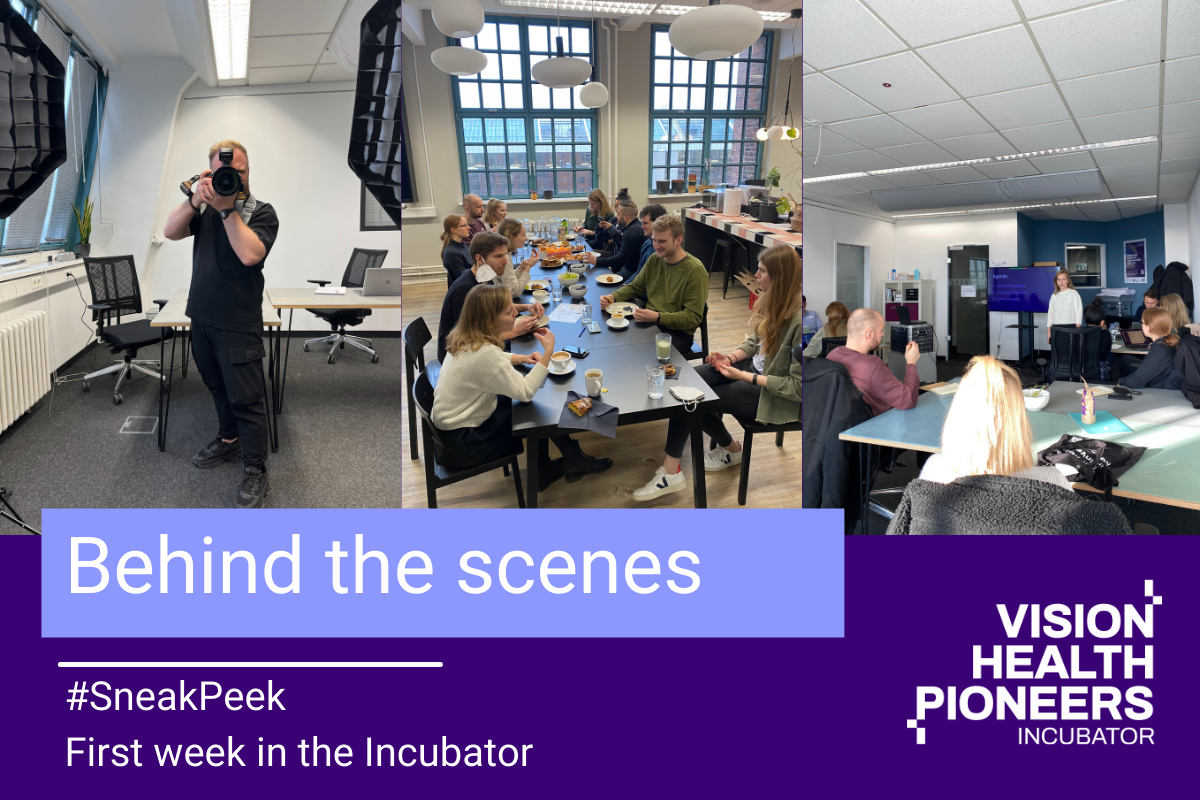
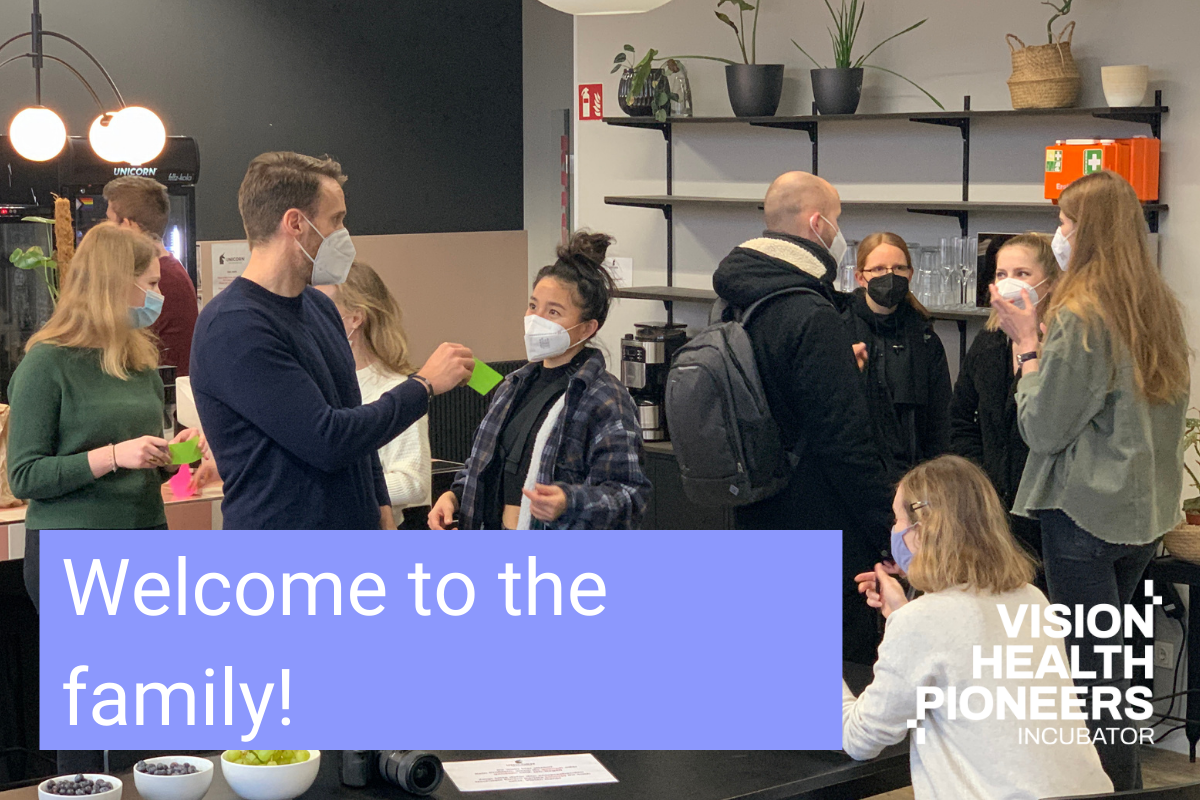
welcome breakfast at vision health pioneers incubator The Vision Health Pioneers Incubator Welcome Breakfast. After all Covid-related safety checks, our entrepreneurs pull up a chair, sip from a glass of champagne, nibble on a croissant and meet everyone else! An important part of any successful relationship is the welcome and this is always done with a bit of style at Vision Health Pioneers Incubator. This was the chance for the startups to find out more about each other and also get to know the Vision Health Pioneers Incubator team.

Introduction to the Vision Health Pioneers Incubator programAfter this warm welcome our Vision Health Pioneers Incubator team introduce the program and talk everyone through what happens during their 10-months in the Incubator. Our structured program is designed to guide them all through the key phases of product development and a go-to-market launch. It’s supported by our exclusive partner network, which includes experts in healthcare, business, tech and innovation.
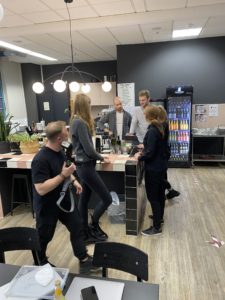
behind the scenes photo shot Strike a pose! Our trusted photographer Dominik Tryba takes portrait and team shots for all the startups which are used in all future communications about their exciting businesses. Dominik has taken all the entrepreneurs headshots and group shots since Vision Health Pioneers Incubator began and this provides a consistent style approach. His approach will always eventually get a smile out of everyone. Here is a behind the scenes look of the photography in action!
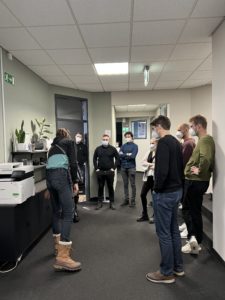
Tour of Unicorn coworking spaceOur new crib is Unicorn Workspaces and so during the first week our latest cohort took a tour of the impressive site. With the engaging and welcoming on-site barista team, we are sure our startups will enjoy the instant availability of a coffee or tasty treat. As well as their private room, our startups can use private phone booths, a barista room for important breaks and for those who need a few minutes shut-eye, there is even a napping room.


It’s a non-stop first week for our startups when they enter the program. This welcome provides the perfect introduction to what is about to happen and is a strong grounding for the overall appreciation of everyone in the exciting journey. We love supporting startups and watching them all develop for an even stronger future of healthcare.


Categories
Inside the incubator

Welcome to the family! Our third cohort

We welcome our third cohort to the family! In January 2022 we welcomed the third cohort into the Vision Health Pioneers Incubator. After a few months exploring many exciting early-stage startups, our team and jury reviewed all the applications we received and five startup teams were chosen. As the New Year began, their new journey started in our new coworking space and for 10 months they will receive coaching, mentoring and overall support from experts in the world of healthcare.

We are delighted to present the startups who have joined us in January 2022.

Welcome to the family to our third cohort!


aidable logoaidable

“Support for the supporters: tool for relatives of eating disorder sufferers”

aidable focus on supporting family members of those suffering from eating disorders, in particular in the therapy aftercare where they want to reduce relapse rates. With their tool they want to act as a guide and as a source of information that enables the best possible support for the road to recovery.

askalois logoAskalois

“Empowering carers to support their loved ones with dementia at home”

Askalois is a platform that provides a personalised plan and ongoing support to empower first-time carers to support their loved ones. With 200,000 new diagnoses of dementia in Germany every year, they aim to tailor their solution to both location and situation.

NeuriTec logoNeuriTec

“We are building the pacemaker of the brain”

NeuriTec aims to enhance the outcome of stroke patients and support their rehabilitation. With an AI based, closed-loop brain-computer interface they want to prevent the full impact of neurological deficits after a stroke and increase recovery outcomes.

Physikit logoPhysikit

“Enabling at-home (blood) testing as a service for eHealth”

Physikit is the missing puzzle piece between the digital space of eHealth and the physical world of medicine. With its plug-and-play solution, Physikit enables at-home blood collection and subsequent blood analysis for any eHealth service on the market. Services of Physikit include lab search and coordination, selection of the best test kits, orchestrating logistics and integration with lab IT systems. The eHealth developers only have to integrate the Physikit API, and can immediately provide their users with convenient at-home blood collection for monitoring of key health parameters.

Seeme Health logoSeeme

“The first computer vision indicator for mental health in children”

SeeMe is an AI driven service that monitors the health of patients. We provide an additional layer of information to doctors and patients derived from facial analysis (valence, intensity, engagement, attention, variety of emotions, and heart rate) during video assessment. SeeMe makes sure the patient gets the best after-diagnosis care by offering automatized check-ups that monitor any changes in their behavior. Especially helpful with chronic patients, seniors, and pregnant women.


We look forward to sharing more details soon and can’t wait for you to meet them. They will be joined in April 2022 by our fourth cohort and then our fifth and last cohort for 2022-2023 in July this year. Applications are still open to join us in July – apply by 15th April 2022.

Categories
Inside the incubator

Welcome to our new crib!

Welcome to our new crib! We are excited to showcase our new coworking space in central Berlin. Provided by Unicorn Workspaces in the beautiful AEG building, this is the home for our startups in 2022 and 2023. Whether the entrepreneurs are attending an on-site workshop, zooming into an online mentor session or just building their business, the startups benefit from the comforts of modern office spaces. 

barista room at unicorn workspaces
Barista Room at Unicorn Workspaces

Set in the stunning AEG complex, once one of the largest industrial sites in Berlin, our new crib includes an on-site barista team who help fuel the creativity with delicious coffees and energy boosting treats. When they’re not creating cappuccinos and playing beats, you can spot the team whizzing down the corridors on scooters to save precious minutes – something our startups know all so well! Time is everything when you’re innovating for the future. 

Napping room for those needed moments

Inside Unicorn Workspaces, the startups can utilise phone booths for private meetings or when they need a power boost, relax in the napping room. This jewel of the workspace provides the perfect place to recharge and a place where you can escape from the world for a while. Phones are not allowed inside. So our entrepreneurs should hopefully feel relaxed after a visit. 

private phone booths at unicorn workspaces
Phone booths for private calls

Looking back, the Unicorn Workspaces is set in an impressive part of the city’s history. The complex is the former site of electrical company “Allgemeine-Electricitäts-Gesellschaft“ (AEG) am Humboldthain – this is the place that literally powered Berlin. Today it now helps power healthcare startups. Much of the site has been preserved and so even now we have a glimpse of how the industrial metropolis after 1890 helped Berlin become an electropolis.

With the dark red brick (bluish brick containing iron oxide on the façade), our new coworking space  is the perfect place for our startups to work hard but equally enjoy some downtime in some of Berlin’s best hangout spots – just a stone’s throw away. 

If you’d like to benefit from this coworking space in Berlin, visit our application page to find out more about applying for the last cohort. Join us in July 2022 (apply before 23:59 CET on 15th April 2022). 


Categories
Inside the incubator

Making Home UV-Therapy As Normal As Brushing Your Teeth – Skinuvita

If you saw a problem every time you received treatment, would you decide to make it your purpose to solve it? Not many people would. But Jan Elsner isn’t many people. Skinuvita – making home UV-Therapy possible.


When you find out more about Skinuvita and how they are making UV-therapy more accessible, you soon discover what lies at the heart of the startup. There is a vision, yes, but also an inspiration weaved into the business and those who work within it. It’s the real feeling of knowing what it’s like to live with a chronic skin disease and that the effective medical treatments available are actually not so easily applied.  

Jan Elsner, who Co-Founded Skinuvita, has the chronic skin disease Psoriasis and had for a long-time seen numerous therapists and tried different treatments until he eventually found that UV therapy was the best for him. However he encountered a problem. He was recommended 30 individual sessions, the average for a successful treatment cycle, but to receive these, he needed to visit the dermatologist every single time. Time is the most precious thing and this treatment process takes it away. Plus the travel involved in going to and from the doctors. That’s why home UV-Therapy is so important. 

Skinuvita - Home UV-Therapy. Startup Vision Health Pioneers Incubator
Mockups of upcoming Skinuvita product

Therefore UV therapy, in its current setup, is just not applicable for most patients of chronic skin diseases. But the solution from Skinuvita is. Jan decided to improve the situation for himself and all others in similar positions. To create a digitalised therapy which allows patients to use a safe and medically supervised UV-therapy at home. It began as a student project at Bremen University and those around were quick to see the advantages it brought to the healthcare ecosystem.

Jan explains how things began to really take off. “We had input from dermatologists in Bremen, public health experts and insurance companies. They were all keen to support. Then in 2019 with the Digital Health Act, the market changed and digital health became far more relevant.”

Skinuvita - Home UV-Therapy. Startup Vision Health Pioneers IncubatorEven the global pandemic didn’t seem to hugely impact the startup being formed. “We decided to leave the comfortable bubble of academia and actually found more courage to write proposals for funding. It was during this process that we were invited to pitch at the Professional Association of the German Dermatologists (BVDD) in Berlin and then by surprise became the wildcard entry for the Vision Health Pioneers Incubator.”
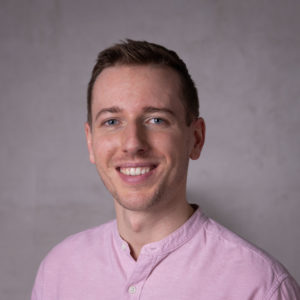

Jan shares how joining the Vision Health Pioneers Incubator has helped their dream of making home UV-Therapy possible. “We went from an evening and weekend project to, on short notice, having the luxury to build a team.” It was this process where fate played a role.

A Team of Coincidence

Jan Elsner, Co Founder Skinuvita, Skinuvita - Home UV-Therapy. Startup Vision Health Pioneers Incubator
Jan Elsner, Co-Founder Skinuvita

Jan reached out to now Skinuvita Co-Founder Till Fitzke, but it nearly didn’t work out that way. Till shares how he became involved. “I knew Jan from before. He contacted me but I was super sick with tonsillitis. After five days I called him back just before he pressed send on an email accepting someone else for the role! It was such a unique opportunity that I quit my then job. I felt I wouldn’t get another chance at something like this.”

Till Fitzke Co-Founder Skinuvita. Skinuvita - Home UV-Therapy. Startup Vision Health Pioneers Incubator
Till Fitzke, Co-Founder, Skinuvita

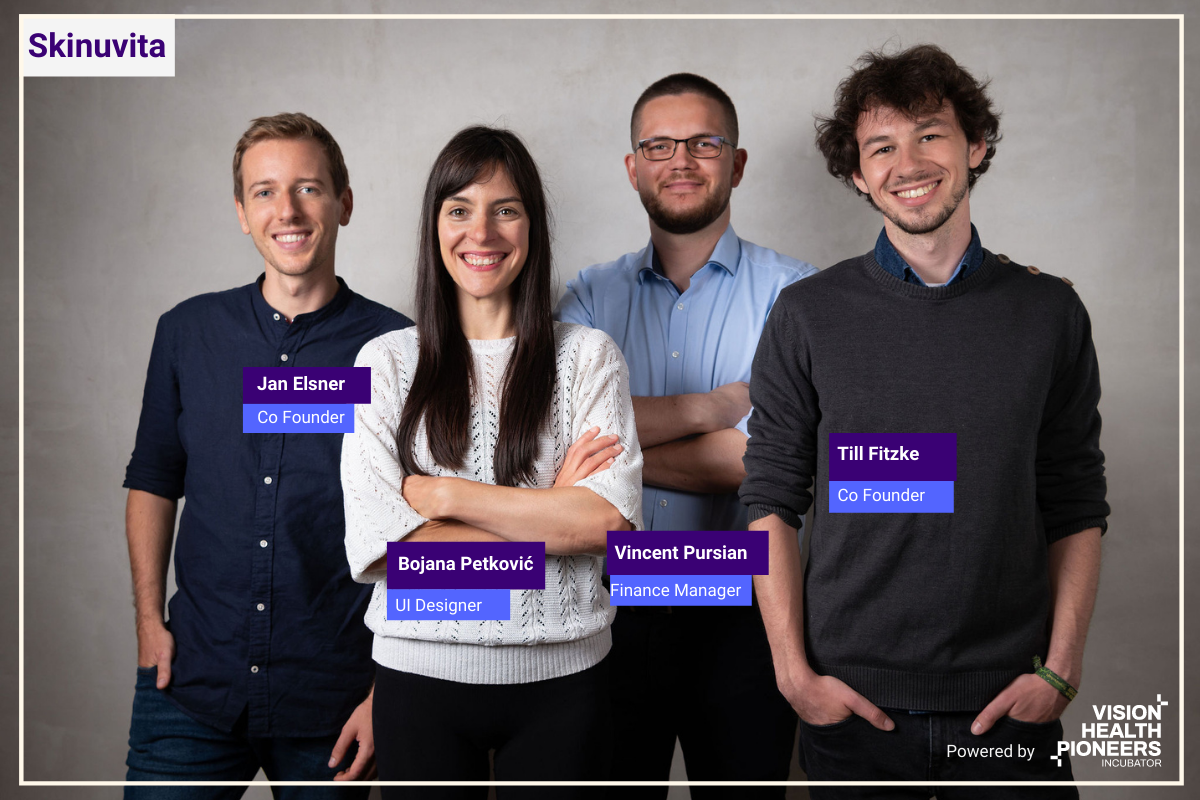
This wasn’t the last of happy coincidences for the Skinuvita team. For Bojana Petkovic, UI Designer, she was finishing her studies in Digital Media when a flatmate recommended the startup. “They said that Skinuvita were looking for support in their design work. I had a promising future in my job at the time but it wasn’t so interesting. I relate more to this kind of work – where we can create things from scratch. Rather than being a tiny screw in a larger organisation.” Bojana is focusing on marketing design and visual identity, having also recently been awarded the ‘Best Design Art’ award for her master thesis. 

Bojana Petkovic, UI Designer, Skinuvita. Skinuvita - Home UV-Therapy. Startup Vision Health Pioneers Incubator
Bojana Petkovic, UI Designer, Skinuvita

As the Skinuvita team speaks it is clear they have a well-balanced approach to startup life and embrace the journey they are on. Till likens the combined passion as to that of doing something in your life that helps other people. “We all have that in common. It is worth a lot.” he says. 

The startup team has naturally changed a little since they entered the Vision Health Pioneers Incubator in January 2021. Jan shares more,

Vincent Pursian, Finance Manager Skinuvita. Skinuvita - Home UV-Therapy. Startup Vision Health Pioneers Incubator
Vincent Pursian, Finance Manager, Skinuvita

“Not everyone is born to work in a startup with all its uncertainties and challenges. We had a great colleague, Nadine, who did a fantastic job but had to make a change in her career direction. We are very thankful for her efforts. We used this chance to explore a fourth member of the team.” It was by chance that Till received a message from a friend. 

“It was another funny coincidence. Vincent Pursian, who is now our Finance Manager, messaged me. We knew each other from school and he had just found out that his job at the time wasn’t continuing. He was in!”

Vincent is making sure they are ready for investment. “Till came back to me with that question about a change in my life and so I accepted. We have been planning for a substantial investment since then and are confident with what we can achieve. There are already ongoing conversations with various interested business angels and VCs.”

A Philosophy of Positive Impact

Jan explains how they enjoy the positive impact they have. “Like Bojana said, none of us want to be a small screw in the system. Startups are risky and they need a profitable business outlook to attract investors. We all relished the fact that we get more fulfilment from shaping things.” Bojana adds more, “We really discovered that in a team workshop together. After three exciting days with barbeque, creative sessions and simple things like playing frisbee in the lake, we got to know one another. That was really important to help us bond.”

“The small moments like when you discover a puzzle piece you didn’t know was missing. Suddenly everything gets better.” – Is how Jan describes how it energized them. 


The Skinuvita Home UV-Therapy Product

The future looks very promising for Skinuvita. For example a recent meeting with an influential Head of a Dermatology Department took place and this might lead to advanced clinical tests. They aim to have a virtual treatment therapy device tested under medical supervision and overcome some of the typical barriers of certification. Following this, the next step is to take their product to the business sector. 

Mockup of upcoming Skinuvita product. Skinuvita - Home UV-Therapy. Startup Vision Health Pioneers Incubator
Mockup of upcoming Skinuvita product

Till explains more about their product. “We’re in different beta phases. On one side is a therapy manager for nurses and doctors to plan and set sessions for treatment. On the other, a patient app where they receive session information – things like when and how long a treatment is. We were also recently able to integrate a bluetooth control unit which allows our software to connect with existing therapy devices, enabling an automatic dosis transfer. Therefore there is no longer the risk that patients could be harmed by setting a wrong dosis. Now we have to design it, connect it, make it look nice and certify it.” 

Jan describes how the Vision Health Pioneers Incubator has helped their mission of home UV-therapy.

“It’s hard to imagine how we would have created our startup without the support. It’s like gaining knowledge from ten years of industry experience within just nine months. There’s just so many new things to consider when you’re not an expert. This is exactly the right programme for young people and young ideas.”


They have big dreams for home UV-Therapy at Skinuvita. They don’t just want to be considered an app which is turned on and off. Their international team has contacts in the Netherlands, Scandinavia and of course across Germany. Jan explains, “We are creating quality of life for those with chronic skin diseases. The more rural the area, the more relevant a home treatment. We now have a well established treatment and will use technology to make it safe, accessible and to guide people. To give them a normal life. We want UV-therapy to be as normal as brushing your teeth.” 

Catch Skinuvita presenting at INTO THE FUTURE – the next Demo Day from Vision Health Pioneers Incubator on 31 August 2021.

Categories
Inside the incubator

Breaz – Making the invisible damage of COPD visible

“A lot of people put the emphasis on the heart but our lungs are equally important. After all without oxygen, the blood the heart pumps is useless. Cardiovascular diseases get the fame for all the right reasons, but now we want to raise awareness and contribute to making lung health considered just as important.”


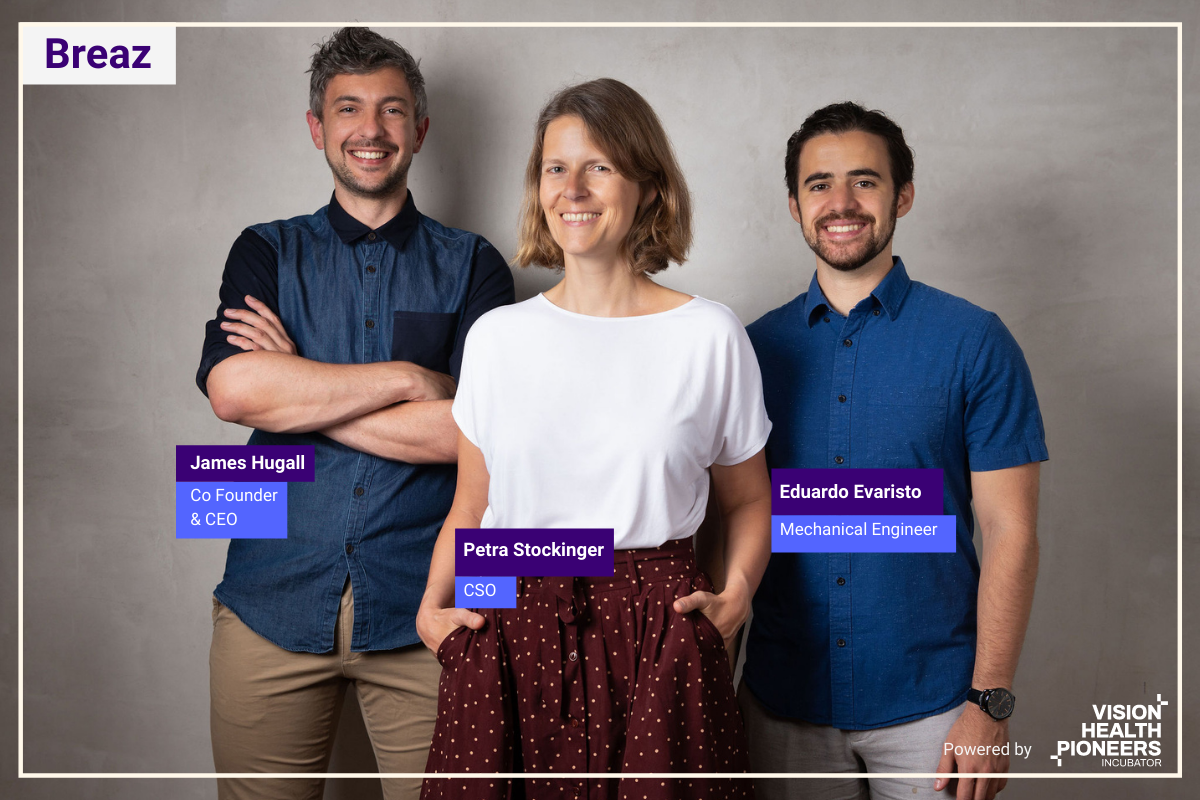
These are the words of James Hugall, Co-Founder and CEO of
Breaz. In the following interview, the Breaz team speak openly about making the invisible damage of COPD, visible – The lung diseases they are trying to tackle, what drives them to make a difference and what the future has in store for their device. They also share why now might be the best time to make something come to full fruition.

James explains what they mean by this. “The impact of COVID19 may impact the awareness of respiratory diseases like chronic obstructive pulmonary disease (COPD). Before this time, many people would feel a pain in their chest and just think they are getting old or not being as active as they could be. We want to change this mindset and bring our product into the market to help analyse people effectively.”

James, who is from the UK, originally began making his plan for the business in Barcelona, Spain. He worked there as a scientist in academia before moving to Berlin, Germany to enrol with the Vision Health Pioneers Incubator. James is joined by Co-Founder Austrian Petra Stockinger and Eduardo Evaristo, Mechanical Engineer from Venezuela. Combined this international team is focused on improving people’s lives and making the invisible damage of COPD, visible.

The Breaz Prototype

The Breaz team have a vision for their product to be considered as everyday as a thermometer or a blood pressure monitor. “These devices allow us to quickly understand what risks we have of certain diseases. We want the same for lung health. ” Petra says.

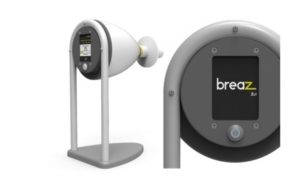
The Breaz Prototype - Breaz, startup in Vision Health Pioneers Incubator

The Breaz prototype is a simple to use device which measures and grades respiratory diseases like COPD. All patients need to do is breathe normally and within a couple of minutes the doctor receives the results. They can then choose the best next steps, whether further tests, or beginning or adjusting treatment.

“We want to make it simple to use and reach as many different settings as possible. In primary care but perhaps also pharmacies and even the gym. Whenever the individual wants to check their lung health, they can.” James says.

Making the invisible damage of COPD visible

Both James and Petra are scientists and have previously worked in an academic setting. Whilst completing their post-doctoral work, Petra was working in biology and James in physics. Both knew they wanted more.

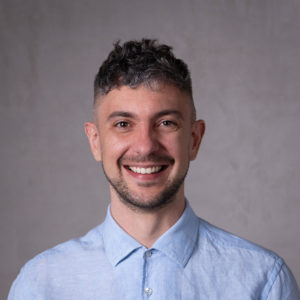
James Hugall, Co-Founder and CEO of Breaz

“We wanted to get out of the scientific world and into something more applied, that’s where our interest for healthcare innovation took hold.” James says. Only despite this inspiration happening at similar times for them both, they didn’t know each other at the time. “That desire for something more took us to the d.HEALTH course in Barcelona. This is where you try to create a business idea based on a real experience in a clinical setting.”

Petra Stockinger, Co Founder, Breaz
Petra Stockinger, Co-Founder, Breaz

They worked in different teams on the course which explored unresolved clinical needs that doctors faced. For two out of the nine month course, this focused on hospital immersion. Petra describes this time. “We discovered hundreds of needs and then we needed to try and filter them down to just one that would have the biggest impact, if it were worked on. James was in the respiratory team and saw first-hand the shocking amount of people suffering from COPD.”

James continues with what this experience was like, “I really wasn’t aware of it before that moment, it surprised me. More than half of the people there were dying from this disease. We only saw them at the very end and it was horrible to watch. To see the suffering.” It was during these traumatic experiences that James saw the need for something to improve this situation.

“The current method just isn’t working effectively. From both the patient and the doctor’s point of view. When diagnosing patients, the main method is the force spirometry test, which is where the patient breathes in a whole lot of air and exhausts it as quickly as possible. It’s quite a stressful test for patients and there are often long waiting periods.” 

Doctors in primary care have also complained that the test isn’t always completed effectively. Petra and James reference research which found 75% of cases are undiagnosed. (Soriano and Joan B in their paper, “Prevalence and Attributable Health Burden of Chronic Respiratory Diseases, 1990–2017: A Systematic Analysis for the Global Burden of Disease Study 2017).

“So this is where the inspiration comes from. To find a way to test these people effectively. Reduce the number of undiagnosed cases, take control early with detection and how to follow the patient throughout the rest of their life. COPD is in many ways the new stroke.”

The programme in Barcelona ended and James was inspired to do something to improve the situation. Unfortunately timing wise, Covid-19 was just starting to appear.

“That changed things a lot. It became hard to start a business and bring us all together. The team changed slightly and then by chance a colleague in an EIT Health MedTech Bootcamp mentioned the Vision Health Pioneers Incubator. It seemed like the perfect setting to build a new startup and receive really important training.”

Breaz were enrolled and James reached out to Petra again to come in and join as another Co-Founder. Despite only having a week to decide, she said yes!

Breaz were finalists in the 2021 Imagine IF! Competition

The Breaz Team

The team today splits most of the business activities between James and Petra. Eduardo, as Mechanical Engineer, focuses on the prototype of their product. They believe having strong focus areas has helped them but that this did take time to develop. Petra explains, “James comes from a technical background so he’s more on the product development side. My background is data aspects – clinical testing. We have faced challenges, like any other startup, but within the incubator of Vision Health Pioneers, that has really helped us.”

Eduardo Evaristo, Mechanical Engineer, Breaz

Eduardo is in charge of product development. He describes his role, “We’re a hard-tech company so we need to develop and produce a physical device. I need to make sure that it works and then test and calibrate it.” It’s clear he enjoys the design process the most and all the challenges that come with it. “There are so many decisions to be made because we’re coming up with something new. There’s no script to follow. At times I have to kind of trust my gut and then see if it works. If it does, I feel amazing. If it doesn’t, then I need to see what I can do about it.” 

James shares more about their time with Vision Health Pioneers. “It’s been a good introduction to topics that would have taken us forever to try and learn. We’ve connected with some great people, received mentoring but have also seen how different startups work and operate. We’ve always really appreciated the support in preparing for what comes afterwards.” 

Breaz are now excited to talk to potential investors and prepare themselves for the Demo Day on 31st August 2021 where each startup will pitch their business. They are continuing to develop their prototype and are working on the longer process of hard tech plus working on strategies for how they can sell it. They are making the invisible damage of COPD, visible. 

Environmental Concerns for Lung Health

Petra shares why lung diseases are such a worrying concern. “Air pollution, smoking, anything that irritates in the air – all of this can cause harm to our bodies. People are not always so aware of the damage the conditions around us are having on our body.” 

The global population is also becoming older. This is important because chronic respiratory diseases take a while to develop, so as people age, they can enter more severe states of lung disease.” James adds. 

The team also shares that in more heavily polluted areas of the world, for example in locations where they cook inside over open fires, they are possibly at a greater risk. They also cite research from Hitchman SC and Fong GT that found smoking amongst women is increasing in some locations as social equality is achieved. (Gender empowerment and female-to-male smoking prevalence ratios. Bull World Health Organ). 

For Breaz success is how the team grows from here. They believe that good people are the really important part but also how that team works together can be a challenge. They appreciate they have a complex product which requires a lot of activities running in parallel but are confident they can make it happen. By this time next year they hope to have tested their device in a clinical setting, have feedback, early adopters and overall a better understanding through user valuation research. 

James going into a little detail on the current progress. “Compared to say a software based company, we have different expectations with hard tech. We’re getting to where we want to go – to have a functional demonstration of our device so we can take it to a hospital and test it, but it does take time. We can then use those learnings to develop further.” 

Eduardo adds more on the why behind Breaz,

“We’re raising awareness of a massive problem that COPD represents, worldwide. We are making something and getting it out there. People are finding out too late and we can avoid that stress. It comes down to whether we choose to do something about it or have people who can barely breathe.”

Petra shares that she loves to learn, even when she’s involved in something she isn’t fully comfortable with. “We have learnt that sometimes not making a decision is worse than making the wrong decision. If you are not an expert in something, in a startup you just push yourself to make a decision.”

“We have come from science where you try to prove if something is wrong by obeying the rules of the world as you would expect it too. At the beginning of our journey, we wanted to know what’s the right answer, now we know there isn’t always one, you just take different paths.” 

Breaz was born from frustration in academia, a willingness to learn of problems in clinical settings, the leap into a new country, hard work in an incubator and ultimately along the entire journey, a desire to help people.

Categories
Inside the incubator

Meet minime: The Startup Founded By Psychotherapists—For Psychotherapists

Look no further than minime for a startup that’s helping patients and therapists build a more interactive relationship. Founded by Paul Schneeweiß, a practicing cognitive behavioral therapist, minime was built with psychologists’ needs in mind. The CEO came up with the name for his startup on the train to the hospital where he still works today. “The idea just came to me,” he confessed. “I spoke it out loud and wasn’t really searching for a name, but I thought, Why not? It fits.

The platform’s name serves as a metaphor for reflecting one’s inner thoughts and feelings— for example through the components that make up the SORC (Situation, Organism, Reaction, Consequence) Model and other self-monitoring strategies in psychology.


What does this model entail? We’ll get to that shortly. For now, we’ll reiterate that the idea behind this innovative mental health startup is for therapists to help patients more efficiently create their own “mini-me.”

A Cutting Edge Approach: Digitizing Paper Logs

PaulThrough Schneeweiß’s work in the psychotherapy field, it became clear that there’s a lot of homework involved for both patients and practitioners—generally using paper logs, which have become outdated. “It became obvious we needed to digitize things,” explained minime’s CEO. “To make complex concepts more tangible.”
According to Stella Römhildt, User Experience Director at minime, the worksheets patients complete between sessions is super-complex, and the paper logs aren’t particularly nice to look at. “This is the reality,” she said. “Not just in one setting, but in psychotherapy settings all over Germany.”

So Schneeweiß created a card game—the basis of the startup’s MVP—and integrated it in therapy sessions before developing a digital version. Ask the founder to describe his product, and he’ll cite the many different layers involved.

“On the one hand, we have paper logs,” he described. “And on the other, we have specific self-monitoring strategies.” 
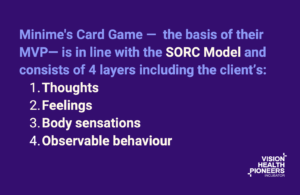
In line with the SORC Model, these strategies consist of four layers. These include the client’s: Thoughts, Feelings, Body sensations, Observable behaviour.

By offering a playful take on these four layers—including their triggers and consequences—Schneeweiß and his team have created a digital framework for overcoming challenging behaviours. The platform is essentially a toolbox therapists can use to distribute exercises to patients: creating them, sharing them, and ultimately, analysing them.

Mental Health Treatment Challenges and COVID-19

The COVID-19 pandemic has presented unique opportunities for minime—and a unique set of challenges.

“Therapy changed a lot because [therapists] were so non-digital, and suddenly they had to be [digital],” said Römhildt.

StellaWhile some therapists continued to work with patients in person—wearing masks to ensure safety—there was an overwhelming disconnect, given the lack of visibility into both parties’ facial expressions. And then, with telehealth appointments, therapists could no longer distribute paper logs. (Unsurprisingly, scanning, printing, and emailing the documents wasn’t an efficient alternative.) While the startup is still in its early stages, minime is offering a solution that transcends digital and in-person therapeutic models. And it comes at an appropriate time—as mental health issues have become more prevalent during the ongoing public health crisis.

“I think with COVID-19 and all these regulations, we were forced to behave unhealthily,” confessed Schneeweiß. “And by unhealthily, I mean reducing your regular contacts, and relying on activating behavior patterns.”

Layoffs, lockdowns, and the financial challenges resulting from the pandemic have only compounded the stress so many of us face—yet we’ve also become more aware. According to Schneeweiß, patients have begun scheduling sessions with the goal of no longer coping in unproductive ways. Some people, for instance, began drinking excessively to deal with the monotony of COVID-19—and many patients want to adopt healthier behavioral patterns instead.

Per the SORC Model, and with minime, they can do just that. The mental health startup has launched at an ideal time, as more and more people begin to advocate for greater transparency.

Nina“The awareness of mental health, and being able to talk more openly about it these past few years, has been a great development,” said Nina Hackenbroich, Full-Stack Developer at minime. “This will always be an issue people face, and society and humanity will improve with this increased visibility.”

The novel coronavirus, and the challenges billions of people around the world have experienced as a result of the pandemic, revealed that everyone has struggles. From this point forward, mental health startups like minime will continue highlighting the benefits of open discussion.

A strong team with a joined mission

Rafael Rodrigo da SilvaThe founding team at minime only recently connected on LinkedIn. And while they just added a fourth employee to their roster – the UX/UI & Marketing Expert Rafael R. Da Silva – they have a number of goals toward which they are still working.

Schneeweiß’s objective is simple: “Having therapists who not only like this idea, but who use it and deeply integrate it into their therapy,” he said. “And by ‘deeply,’ I mean, ‘I don’t know how we ever did it using paper logs.’”

Hackenbroich added, “Hopefully we will be in as many therapy practices and hospitals as possible in Germany, and really supporting the patient-therapist relationship.”

As a developer, she’s confident that digital tools like minime will be quite popular in other countries as well. In the next year or so, Römhildt projects a huge number of therapists overcoming their fear of adopting digital tools. “I want minime to really encourage patients to communicate their thoughts and feelings over the week,” she said. “Helping even just some people would be a huge win.”

The mental health startup’s MVP will be ready at the end of August 2021—at which point the team plans to have their first therapist and clients onboarded.

Team minime’s secret weapon for all the progress they’ve made? Römhildt believes they’ve conquered this early stage in large part due to effective communication. “I like to compare it to a romantic relationship,” she said. “Honesty is the most important thing for us. We were honest from the start about our beliefs and struggles. That way we know about everyone’s history and can cut some slack if needed.”

She shared that the founding members regularly check in with one another—asking how things are going—to ensure everyone can speak freely. There are no complex power dynamics, and there’s a sense of openness and integrity that’s integral to the team’s well-being and overall success.

So, what does the path forward look like? Only time will tell—but minime is slated to be a huge hit among therapists looking to securely digitize their paper logs.

“What I’ve learned is that we are used to doing things again and again—to learning patterns,” said Schneeweiß. “If you are doing new things, it comes with a lot of uncertainty that could lead to frustration or a search for short-term solutions. Even building up a company, being aware that uncertainty is okay is key.”

As a therapist and a founder, it’s no wonder that minime’s CEO has mastered the uncertainty so many of us fear. The mental health startup acknowledges that we have to reflect on our anxieties and frustrations, and then accept and release them in order to move forward.