Categories
Our Mentors Training & Coaching

A Spotlight on Our Mentor Johannes Starlinger

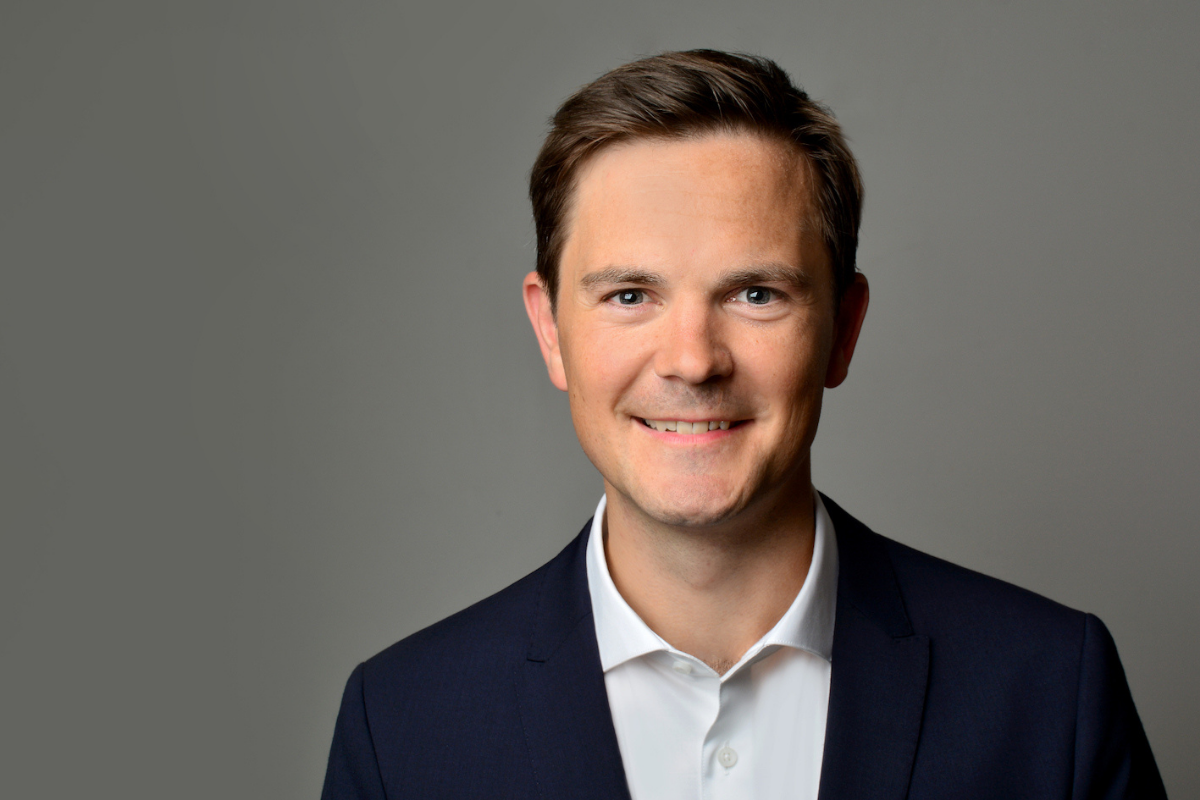
Dr.-Ing. Dr.med.univ. Johannes Starlinger is an experienced digital health and information technology consultant, developer, researcher and interdisciplinary project manager. Having spent significant time in academia with a background in medicine and computer science and a TÜV certification as a specialist for software as a medical device, Johannes is a man of many hats.

He supports companies and young startups in the field of digital health, founded his own company Howto Health – Digital Business Solutions, still teaches occasionally, is a devoted parent and an invaluable mentor to our startup teams here at Vision Health Pioneers Incubator. 

What issues or topics are you most motivated to tackle, what Digital Health issues are particularly on your mind at the moment?


“What I find extremely fascinating at the moment is the forthcoming shift from classic, episodic healthcare provided in healthcare facilities towards a more continuous care-for-health with the patient themselves as the point-of-care – whether they happen to be visiting a physician or are enjoying healthcare from the comfort of their home.”


We are currently seeing big tech companies starting to move into this space already and I think it will be very interesting to see how this shift not only transforms the healthcare market, but even more will transform healthcare as we know it.
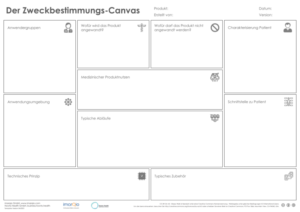
 

The Purpose Canvas / der Zweckbestimmungs-Canvas
To help young companies in defining their product strategy better, Johannes Starlinger developed a special canvas for healthcare products.

What does success mean to you?

To me, success means being happy with who I am and with what I’m doing today, and with the person I see myself transforming into.


What is the best advice anyone has ever given you?

Don’t take advice from anyone who’s not where you want to be.


How would you describe or characterize your digital health journey?

Well, at the end of my medical studies, I realized how fascinating the possibilities are that digital technologies provide – for applications both within and outside the healthcare system. So I went ahead and studied computer science right after finishing my medical degree. I was lucky to already start exploring the area of biomedical informatics as a working student and continued working as a researcher in this area for over a decade. My focus was on data-powered applications, including, for example, software architecture for distributed processing of biomedical data, the use of genetic data to improve cancer treatment, or the use of data from general practice patient records to predict dementia.

Next to working as a researcher, I’ve been providing IT and digital health consulting and software development services for more than 7 years now and, eventually, found that I enjoy this product-oriented type of work slightly more than the more publication-oriented goals academic research strives for.

“It was an eye-opener for me to do regulatory training and learn about how to actually transform research findings and ideas into medical device products. It still feels like the regulatory know-how was my personal missing puzzle piece to be able to fully interweave my medical and computer science knowledge in the area of digital health.”


So I finally decided to leave academia (for the most part, I still do some teaching) and fully went industry with my own company some 1,5 years ago. The process is still ongoing. I’m very happy with who it’s transforming me into 🙂


What have been your biggest challenges in working through a pandemic, and have you found any silver linings?

As a father of three, managing home kindergarten, homeschooling, and home office all at the same time during the second lockdown was incredibly challenging, not to say nerve-wracking. As with most challenges, there was a great deal of learning to take from it (after getting over the wracked nerves), both on a personal and on a professional level. I hope we don’t have to go through that again, though.


Did you always want to be a leader in digital health? What do you think you might have been if you had taken a different path?

I’m not actually sure I see myself as a leader, I must admit. I’m someone with rather deep knowledge and experience on a rather broad spectrum of all the elements important in digital health: med, tech, and regulatory. And I love to use this knowledge to enable change in the way health and healthcare are delivered and consumed. That being said, I tend to have strong opinions and a certain vision for what healthcare may look like 10 to 20 years from now – and especially how we as individuals make use of the tools given to us to care for our own health much more than we do today, and in a more holistic way.

My alternative path would have been non-health tech. There are so many awesome things digital technology can do in all sorts of areas. And it’s just fun, too 🙂


How would you characterize the digital health space in Berlin/Germany – what are its relative strengths and weaknesses?

I think Berlin (and selected other places in Germany) has a great mix of creative power and all the different skills needed to drive innovation in digital health. This includes a vibrant startup scene, various funding opportunities, a plethora of biotech industry and startup-friendly universities. At the same time, I think the interlink between digital health innovation driven from outside the healthcare system, e.g., by innovative startups, on the one hand, and participants within the healthcare system on the other hand, could be much better. Currently, it’s often very difficult for startups to engage with partners within healthcare.


What do you do to unwind?

Cycling relaxes me almost instantly. Decent booze with the right company does the trick in the right circumstances.
 

“Going for a walk, possibly with some good music, does many good things.”

Categories
Inside the incubator

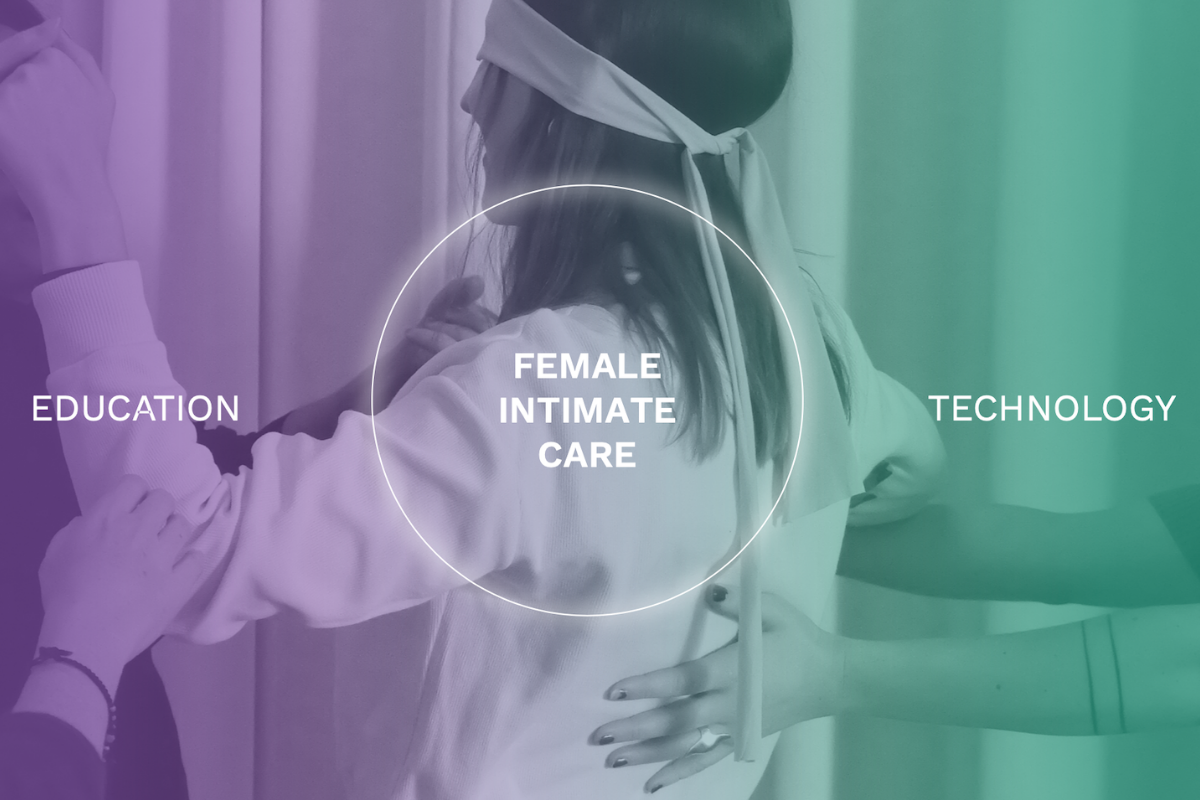
ALMA: Where Education and Technology Intersect

Born in 2018, ALMA fuses design, anthropology and technology in their bid to create a cultural revolution in the area of female intimate care. ALMA is a collaborative practice that connects professionals from all around Europe. Their team comprises of Giulia and Isabel who utilise design and anthropological methods in creating solutions, Tommaso and Ryo who are scientists materialising ideas into products, Tauras a graphic designer, Anjali a data scientist, Alice their design intern and their to be onboarded software developer.

Here in Berlin, they are represented by founder Giulia and Tauras, who have been busy developing a wearable biosensor that monitors the pH in vaginal fluids, setting up a global community platform and completing a book about female intimate care innovation.

ALMA Universe: Creating Cultural Change in Female Intimate CareThrough Education and Technology

Lovingly known as “ALMA Universe”, ALMA’s work sits at the praxis of science, technology and culture. It draws inspiration from the very community it seeks to empower, and to date, they have run numerous workshops exploring the hearts and minds of more than 400 participants across the world.

Their website showcases the extensive work they have done surrounding female intimate health, with aesthetics that echo a Sofia Coppola film. For ALMA, design and aesthetics are political.

“The depiction of female intimate care in society is typically very medical. We want to show the normality that comes with it and with that, of course, the beauty that goes together with it – because it should attract and be something that inspires people to want to engage and know more.”

In designing a wearable sensor, it is not simply designing something beautiful and feminine. Rather, there is a need to ensure a level of comfort for their users. Not just in wearability, but in how it presents on the person. They question everything, including the traditional notions of femininity, its’ aesthetics and the role it plays in the stigma and politics that surround the issue of female intimate care.

“The stigma and silencing behind female intimate care come from a problem within the system, within culture. Our solution in addressing this is to bring awareness through technology and education. To gain profit from spreading awareness sounds like a joke to us. In an industry that is primarily still profit-driven, we are like white flies.”

Throughout their time at the incubator, ALMA has struggled to articulate their complex vision within the strictly enforced 4 minute timed pitch sessions. This is in part due to their unconventional approach to innovation. Essentially their mission is not just the development of a wearable sensor, the technology or the innovation. Rather, ALMA is already looking three steps ahead towards the cultural change their work will bring as their end product.

White Flies of the Femtech World

In Italy, the white fly is the one that stands out as different from all the others. That’s ALMA, who are developing an entirely not-for-profit, non-medical, community platform based on user experience. Inspired by their workshop series ALMA meets Flora, they are aiming to build an inclusive, crowd-sourced community platform around female intimate health.

ALMA sees the value and wisdom of the female body and the sum of their experiences. Building this platform is the first step towards fostering a movement of awareness– a movement that seeks to see individuals empowered and in control of their health through a holistic approach. This platform would serve also to allow open dialogue to take place in a safe space. Dialogue is of great importance, considering the culture of silence that blankets this field. Giving a voice to their target demographic allows for the normalisation of female health issues and the breaking of stigmas and taboos. It also allows for the advocacy of female intimate health that is still regretfully, greatly underrepresented in modern medicine.

“There are so many areas that still fall short in modern medicine when it comes to female bodies. It is such a shame that we are flying to Mars, but still so much is to be known about what’s happening in the female body.”


Language, Community and Co-Creating Knowledge

Throughout their time at the incubator, ALMA have been able to better align with their core values. They are seeking impact investors, perhaps even partnerships where there can be a co-creation of knowledge. Their book, which acts as an introduction to their platform, will be completed in September.

ALMA’s methodology is based on user diaries that describe their current experiences searching for information regarding intimate health. This has comprised of a survey where users’ preferences in terms of features were explored and participatory workshops in different cultural contexts. Data of which has been used to design the platform.

When asked what gets them up in the morning, Giulia speaks about her constant inspiration to bring about this change. For Tauras, it is the realisation that the clock is ticking and there is still much to be done.

Participants who are interested can now access the survey they have recently launched. Here, ALMA invites participants to take on an active role in co-designing the Atlas.


Categories
Our Mentors Training & Coaching

Mentor Oliver Eidel And His Thoughts On The Digital Health Space In Germany

Mentor Oliver Eidel is a medical doctor, self-taught programmer, and founder of OpenRegulatory, helping startups become compliant since 2020. At Vara, he was an integral part of the team that developed Germany’s first AI software for breast cancer screening and got it certified as a medical device. Self-taught as well, in regulatory compliance, Oliver went on to found OpenRegulatory to make regulation more transparent through free templates and a Slack community.

When he is not solving regulatory compliance problems, he uses his free time to fly airplanes and enjoys a good shut-eye. Keep up with Oliver and his work via his blog and at OpenRegulatory.


What do you think are the best steps to enter the digital health space?

First off: I have a huge amount of respect for anyone attempting to enter the Digital Health Market and trying to build a company around it. It’s full of incumbents, slow-moving customers and, on top of that, heavily regulated. You need an almost pathological dose of optimism (or ignorance) if you want to persist in trying to enter it.

That being said, I think it’s the most exciting and fulfilling field to be in! What’s more exciting than improving Healthcare, essentially improving people’s lives? Sending people to Mars, maybe. But then again, those people on Mars also need Healthcare. And they’ll need digital health, because right now, we don’t have fax machines on Mars!

So – how to enter it? It’s tricky and there’s no perfect way.

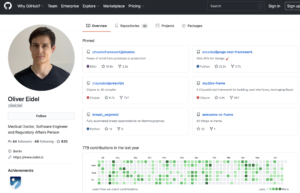
Explore some of the free tutorials from Oliver Eidel


There are two paths you can take: The first one is Healthcare-heavy. You work “within the system”, as a physician, nurse, technician, etc. – that directly exposed you to all the day-to-day problems which need solving. You can easily come up with product ideas. But now you’re facing a problem: How do you build a product “within the system”, who will work with you and who’s going to buy it? Chances are, the hospital you’re working in and the people surrounding you aren’t that interested in founding a startup and building something risky and innovative. So you need to take the second path, which is startup-heavy. You join a Healthcare startup which connects you with like-minded people, funding, and the opportunity to build something. But now, you’ve moved further away from the actual problem which you experienced in your day-to-day work at the hospital!

As you can see, there’s no perfect way. The perfect way would be to work in an innovative hospital (or doctor’s practice) while being able to build something new.


That sort of setup doesn’t exist as of today. The next best alternative is to work in a startup. But again, today’s startups have a high risk of developing the wrong thing because they’re not close enough to the actual problem.


What digital health issues are particularly on your mind at the moment?

Building a Hospital Information Software which doesn’t suck. I think there would be so much awesome leverage there! You should see the software they use nowadays in hospitals, it’s unbelievable. I’ve seen students being employed to copy-paste things inside crappy software all day long  because there weren’t interfaces to export data, for example for research purposes.

Think of all the time physicians, nurses and assistants spend on wrestling with slow software and confusing user interfaces, imagine all the time we could free up!


Everyone’s talking about the impending lack of personnel in hospitals, but hardly anyone is talking about how much time crappy software currently consumes. Sure, we might not solve the entire personnel problem with software, but we might get closer.

Well, that’s the problem I’d like to solve if I had infinite resources. For the time being, I’m trying to solve the problem of regulatory compliance for Healthcare startups at OpenRegulatory. It’s interesting: Every startup has this huge pain dealing with regulatory compliance and there’s hardly any free information available online. I’m trying to change that.


How would you characterise the digital health space in Berlin/Germany?

Firstly, you’ve got all the relevant ingredients for building great Healthcare startups: A fairly large ecosystem of startups with smart people, funding, and even a connection to politics via the Health Innovation Hub. For someone coming from Heidelberg like me, the fact that there are more than three startups to choose from is very exciting!

Also, the German Healthcare system which treats everyone, and treats everyone equally (more or less), while being fairly efficient (efficient being defined as “not a complete catastrophe like in the US”). Then, you have the recent political changes which made apps reimbursable by insurances (“DiGAs”). I’m not entirely sure how that will pan out, but it’s an exciting move in the right direction and will boost innovation and the Healthcare startup ecosystem for sure.
There’s a lot of startup optimism here – that’s great! But sometimes, it’s maybe a little too much, and maybe a little too tech-centered. Seemingly every startup wants to apply machine learning to Healthcare – but why?

I think many founders have never been inside a hospital. You don’t need machine learning to replace fax machines. Every day, physicians and nurses are fighting with crappy software. The next logical improvement to crappy software is not machine learning – it’s non-crappy software.


Many startups don’t understand that, and I’m not sure why. There are many possible reasons: “Only” building non-crappy software doesn’t sound very sexy, especially to VCs. Also, non-crappy software is often connected to solving big problems, and solving big problems is very risky, like building a Hospital Information System which doesn’t suck – I imagine it being near-impossible to sell this sort of software to hospitals as a startup.

So, that leads to startups building isolated solutions (often apps) for isolated problems, with some machine learning mixed in. It’s less risky, and it’s more sexy. But it leads to a lot of duplicated effort: Right now, every startup is effectively reimplementing their own Electronic Health Record inside their software. Every software has its own, distinct user interface, also for physicians. And if there’s one thing which physicians hate, then it’s using yet another new software with its new user interface!

Anyway, right now, we have lots of innovative stuff being built, but it’s all isolated from each other. I don’t think that this will be sustainable – neither patients nor physicians want to interact with multiple applications regularly. Then again, I’m happy about the innovation happening and this might just be the first wave of startups we’re seeing in this space, and maybe, hopefully, we’ll have more integrated solutions in the future.

I’m not sure if the classical VC-funded-startup model maps well to Healthcare startups. It’s all about growing fast, capturing a market and then selling the company. But even only that first step, growing fast, is often impossible: Sales cycles are long and integration efforts are complex.


Sometimes I wonder whether the old-school business model of growing a small, profitable business maps better to Healthcare as it forces you to consistently deliver value to your customers. I’m a big fan of that. Not sure though if they even teach that at business schools nowadays.”


How do you picture the digital health space in Germany looking in five years?

I’m very bad at predicting the future. Here’s what I would hope:

We continue to sustain the momentum of Healthcare innovation which we’re seeing right now, while startups have figured out how to implement sustainable business models in digital health, maybe through reimbursable apps (DiGAs), maybe through some other way. Other startups are finally getting started on solving the big problems like building better Hospital Information Systems.

And, on a more personal level: I hope I’ll need less than five phone calls to book an appointment with a specialist. I hope I no longer have to organise and scan my own paper-based medical records.


Physicians actually prepare and read my medical file before I walk through the door. And, finally, software will actually reduce the time which physicians spend on tedious tasks so that they can spend more time with patients. That’s still the holy grail, and right now, we’re not doing a great job at achieving it.


What advice would you give your younger self?

I think that my generation (I’m 30 now) faces an interesting situation: We have way too many job options. It’s hard to decide and you’re likely to be unsatisfied with whatever you chose. I could have worked as a physician, researcher, or software engineer – the latter not even limited to Healthcare. There’s a near-infinite amount of job opportunities for those combinations! I acknowledge this as a first-world problem, but still: It’s a problem I’ve seen many people struggle with.

So here’s the advice I’d give my younger self: “Sometimes, procrastinating a decision is worse than making a crappy one. Just make your decision.


It took me one year of hanging around my parents and some lucky coincidences to move to Berlin and join my first startup. Even if decisions are crappy, nowadays you can revert most of them or at least mitigate their impact with different decisions in the future.


What is the best advice anyone ever gave you?

“Cut your losses” (my mom).

Categories
Inside the incubator

Introducing Karis: The Mental Health Startup Destigmatizing Adult ADHD

While completing his master’s degree in Barcelona in November 2019, David Garrido came up with an idea to improve mental health treatment. Karis was born.  Like many young entrepreneurs Garrido and his co-founder Ruben Nieto Lopez—a friend from university—had no masterplan in mind. “I didn’t have any idea how to do that,” Garrido, now Karis’s CEO, confessed. “But I knew there could be massive potential there.”


DavidThe two honed in on adult ADHD, an underdiagnosed condition that’s often overlooked in the mental health space. Garrido had experienced mental health challenges of his own; he was well aware of the stigma that still plagues this community, and he and his team have—in just a short time—set out to democratize the support of mental health treatment.

“When we started this project, it was just an idea with a lot of uncertainties,” David Garrido explained. 


Today, it’s a gamified solution blending the arts, science, and emerging technologies to treat adult ADHD – and one of the six startups currently enrolled in the second cohort of the Vision Health Pioneers Incubator.

And while the road towards a working prototype and long-term financial success has not been easy so far, David Garrido is still in love with the concept and will continue working on Karis for many months ahead.

A Gamified Treatment Solution

What, exactly, does Karis entail? The platform features a series of mini-games: games using art as a stimulus, encouraging adults with ADHD to improve their memory and build other relevant skills.

“We’re looking for a holistic treatment,” explains Rubén Nieto López, co-founder and CTO of Karis. “The emotional component is important—so the content is more important than the technology.”

The technology, however, is nonetheless paramount to the user experience. Over the next decade, virtual reality is slated to become one of the most prevalent technologies in existence. Karis hopes to lead the charge as a mental health startup, and while they currently use a browser-based version of emerging VR technology (known as WebXR), they’re keeping a close eye on the future of tech.

Rahul Thangaraj, Karis’s VR Programmer and Developer, considers the platform a “one-stop solution for all your ADHD problems.” He’s diving deep into the game mechanics behind the platform, utilizing his master’s in virtual reality to make the best use of gaming as a viable treatment solution.

For now, however, the team’s top priority is on the user: that is, on guiding the user through a gamification room, allowing adults with ADHD to perform certain exercises and trigger specific activities. “We are using artistic stimuli,” said Nieto López. “Art can be dancing or painting or music—used as a stimulus to improve the engagement in the mini-games we want to incorporate in our platform.”

It’s all in an effort to help adults with ADHD manage their symptoms more effectively.

Adult ADHD: An Overlooked Mental Health Condition

A key question: Why did Team Karis decide to focus on people with adult ADHD? What’s more, Team Karis hopes to shed light on the fact that people with ADHD are very sensitive—an empowering trait—and that both adults and children may grapple with the condition. Another differentiator is that Karis features a strong emotional component that isn’t always present in other therapies.


As one of the most under diagnosed conditions in the world, this aspect of the startup is critical.

“That’s why I’m so passionate about it,” added Karis’s COO Alissa Del Toro. “Culturally, for me, it’s a faux-pas to even go to therapy, or talk about mental health, because I’m supposed to be seen as a strong, independent woman who’s blazing a trail.”

While the stigma is unfortunate, the founding team is confident that platforms like Karis—and the fact that Germany is so steeped in health tech—will eventually shift the mindset involving mental health.

What will make Karis a success in the next few years?

Alissa“I feel that we are pioneers in this space,” said Del Toro.

“If we can at least get people talking about adult ADHD in the way that we do—if we can get to the point where someone can say, ‘hey, there are options for managing your ADHD, through this game and through other treatments’—if we can do that, and become a trailblazer in this new mindset, and open up the market, and increase research in the field, then, to me, we’ll have been successful.”

Granted, there are challenges to overcome in the meantime: among them user adoption, since Karis was built on a groundbreaking concept, and it will need to be introduced in the space before people truly understand it.

In other words, while emerging tech has become more popular in recent years, Team Karis will need to get their platform in front of as many people as possible to achieve meaningful results. The overall trajectory isn’t unlike what Uber and Lyft went through 10 years ago, however. People were initially quite skeptical of ride-share platforms, and it took time for the public to get used to these digitized solutions over simply hailing a cab.

Breaking that mindset, in this way, will be key to combatting challenges. And this can be solved simply by putting Karis in front of people—by asking adults with ADHD, or ADHD symptoms, to take a look at the solution and see how it goes.

Even helping just one person would make a real difference.

Ruben“If I travel around the world and see someone using Karis, and they say it’s changed their life, that would be amazing,” said Nieto López. “Maybe they don’t know who I am, but I want to ask them about the result of the product somehow.”

The platform, it’s worth mentioning, will be accessible to the public shortly. Team Karis has started testing in June 2021. From there, they’ll have a clear-cut strategy—and in just three or four months, they’ll have their product. (PS: In case you want to become an early user, please reach out to Karis via info@karisdigital.com.)

It’s a busy time as the world begins to reopen. That said, Team Karis is working hard to get their MVP as soon as possible and access the funding they need to continue making progress.

“Personally, I think I have learned a lot in the last few months,” shared Nieto López, “because in the startup ecosystem, you change a lot from one week to the next. The learning process never ends.”

With founding members from Spain, India, and the United States, they’re a diverse yet close-knit group.

“The biggest power of Karis lies in how different each team member is,” said Garrido. “We all have many different ways of thinking, and different mindsets, which is something that plays out in our discussions.”

At the end of the day, this gives Team Karis a broader view of what they are trying to do. Throughout, they intend to put adults with ADHD at the forefront of their vision.


Check out the Karis Website: https://karisdigital.com