There are more than 140 coworking spaces in Berlin – some are huge with thousands of members, some are small and have a special sector focus. Which one would become our crib?
In December our incubator team visited close to 15 spaces. At the end we decided to set-up our own space. At Wöhlertstrasse 14 – close to Charite, the Federal Ministry of Health, the Health Innovation Hub and companies such as Bayer and fellow startups such as ADA Health, we found a new home.
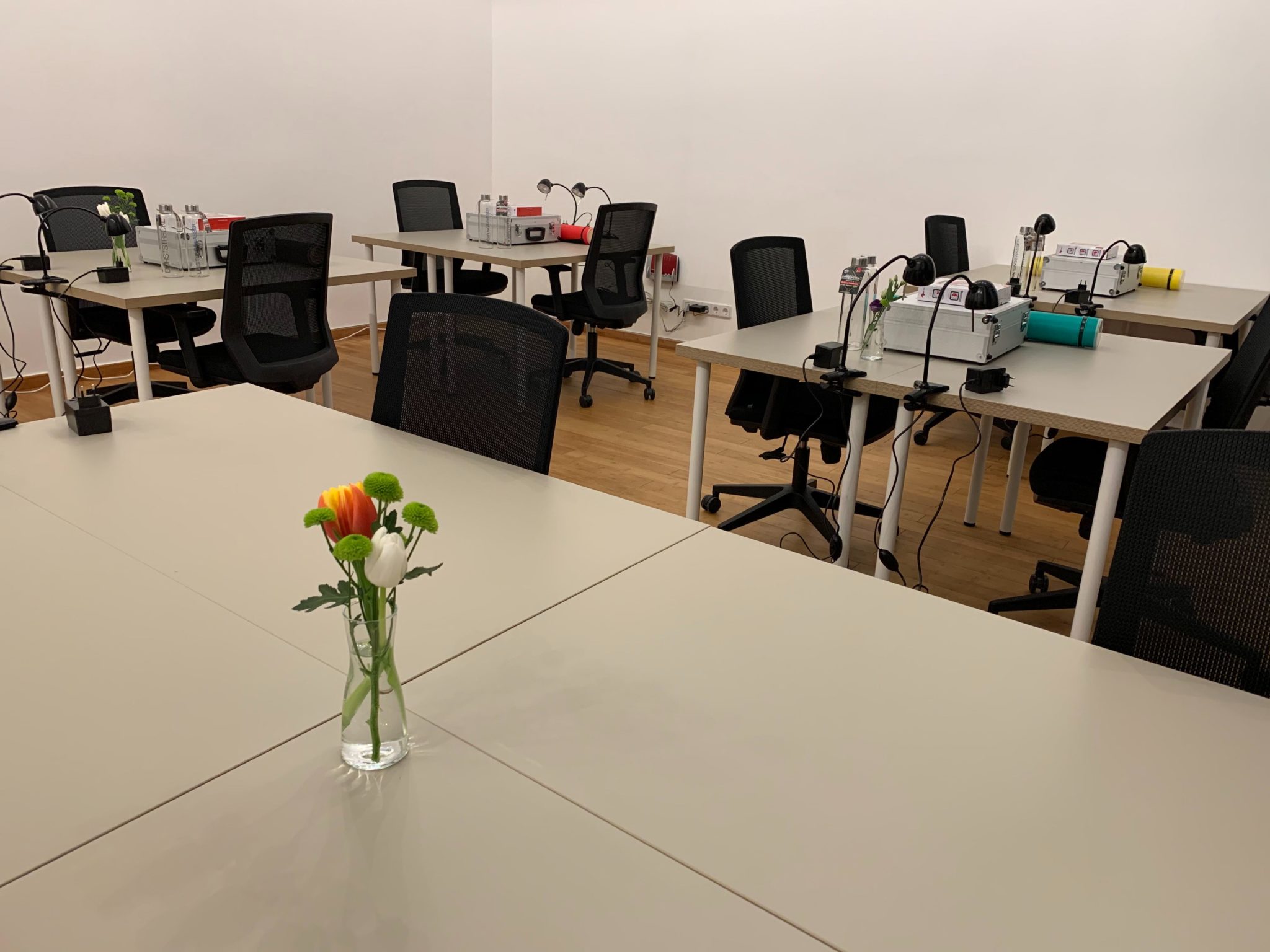
A former shop, turned ground-floor apartment that housed a family of 4, became our new incubator hub. After 3 months of adding dry and glass walls, testing desks and couches, we moved in – just in time for the first cohort.
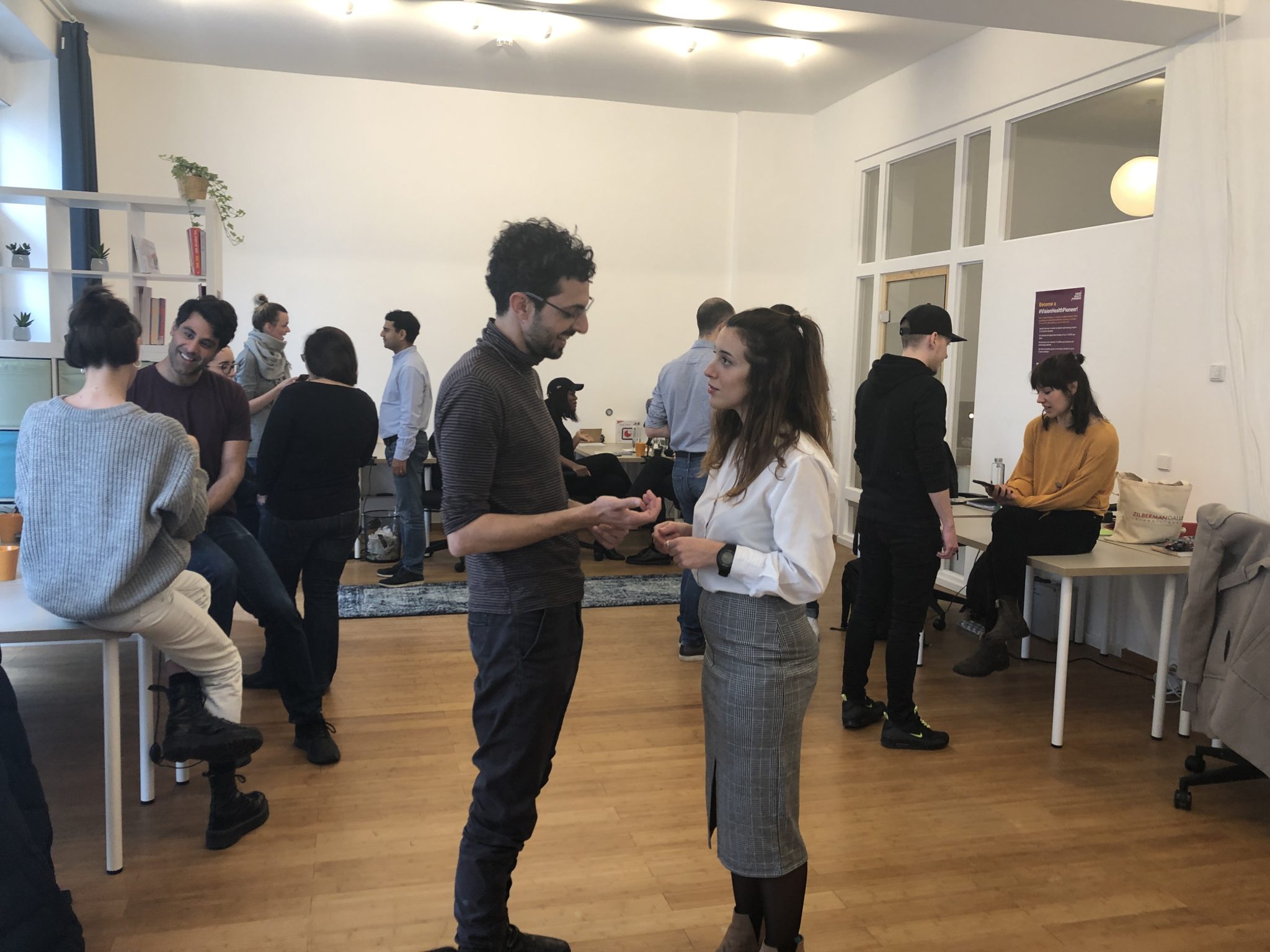
In the next years we will welcome all mentors, experts and coaches into our new space at Wöhlertstrasse 14 in Berlin-Mitte. With 25 desks, 4 small conference rooms, a spacious community kitchen, a green community backyard as well as strong WIFI – we are sure we will have a creative environment to innovate healthcare in Germany!
There are multiple benefits that can be obtained by just communicating appropriately within teams and groups. These can go from the maintenance of good interpersonal relations to the development and transparency of a business. In fact, communication allows people to cooperate better and overcome obstacles even in stressful situations.
As much as it sounds old fashioned, good communication strategies help teams not just to define the short- and long-term goals but also the roles within the team to work in a synchronized and effective way. If we consider a startup, having good communication between team members makes the difference in terms of performance: alignment and clarity result in rapid execution and the capacity to confidently take on more tasks.
Therefore, on March 5th we kicked off a communication workshop so that the teams of the Incubator get the right vibe and collaborate in the right way for the nine months of the program.
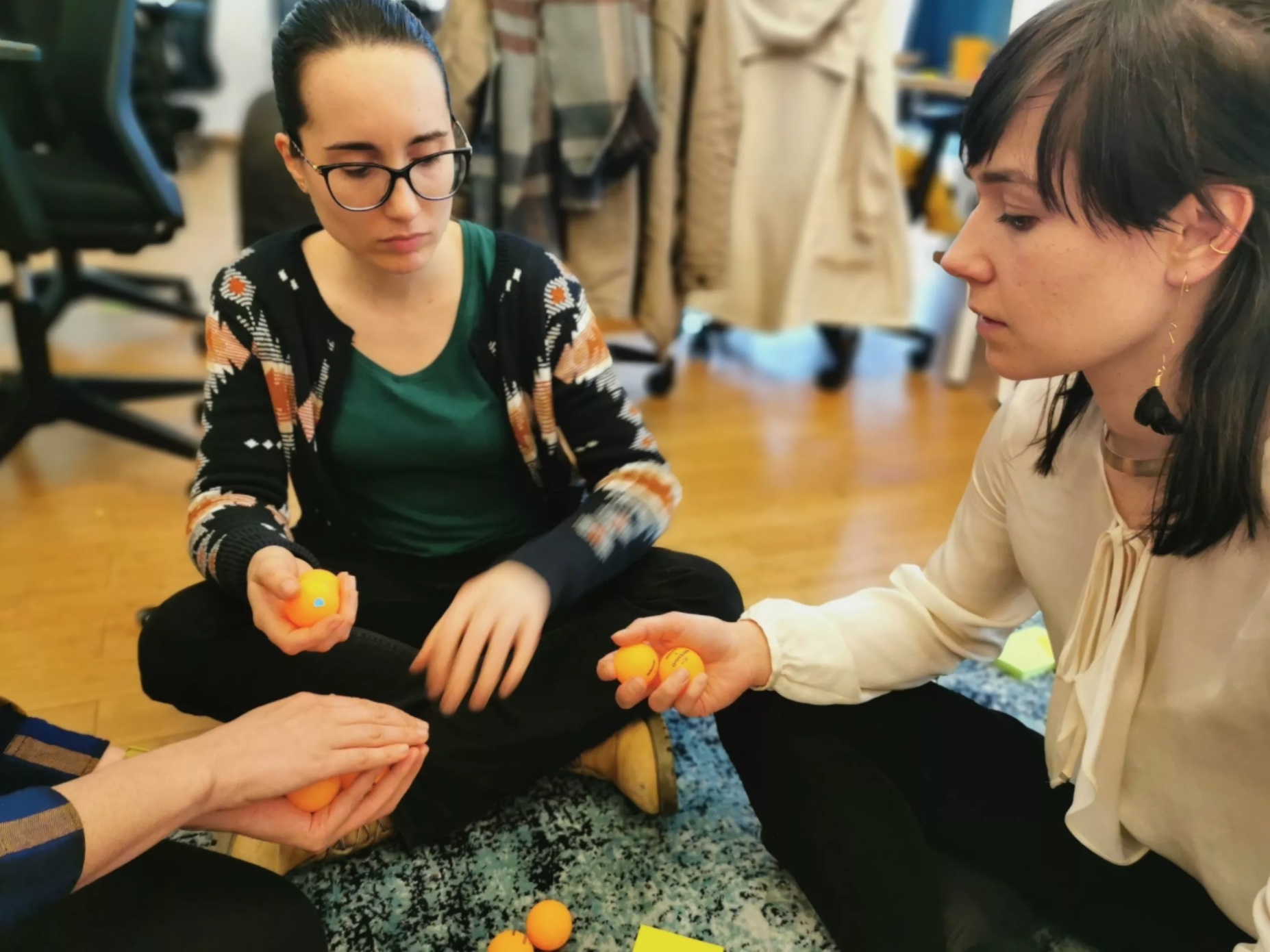
Our coach Edo was the guide and facilitator for this day. His exercises – all backed by scientific research – were fun, effective and highly interactive which led to great feedback among the participants. Also, with his methodology of “learning by doing” he helped the teams to understand how to create a good teamwork environment even in close contact and under pressure, and get the focus needed for the startup journey.
A few words about the coach
Edoardo Binda Zane of EBZ Coaching is a communication and leadership trainer and consultant. He provides team and leadership development workshops. His focus is enabling teams and leaders to operate better in dynamic contexts, and increasing their capability of generating value under pressure.
One thing is certain, the business world moves fast and so do startups!
Among all the challenges a startup faces are: adaptability to new changes, a need to find the balance between organizing themselves as a team and be flexible enough to overcome obstacles in their business development.
Agile teamwork and decision-making are therefore important best practices for young entrepreneurs to create sustainability in team organization and business. For this reason, one week after the launch of the first batch, Rakesh Kasturi held an “Agile” workshop to help the teams develop the right techniques and rituals to get ready for their entrepreneurial journey.
In particular, this “Agile Starter Kit” considered 3 important aspects in a startup development, which are alignment and collaboration, self-organization and decision making, and emotional intelligence.
The learnings
Established the core values and purposes of their team and business
Learned principles of agile methodologies and how to apply them in their environment
Understood Kanban and other agile tools
Applied decision making principles in real cases
Recognizes the importance of developing emotional intelligence in their startup journey with a few tips and tricks
A few words about the coach
Rakesh Kasturi known as Sprintdoctor helps leaders in startups and larger organizations to create a culture of collaboration using agile methods like the Google Design Sprints. His practice in both diagnostic and clinical has been peer-reviewed and tested at institutions such as Google, MIT, LinkedIn, and IBM.
If you were to ask me a month ago what would be my biggest worry about a possible worldwide lockdown I would answer the lack of connectivity. All facets of society benefit from the diversity of people and ideas, the fact that we don’t all come from the same bubble – not least the world of healthcare. My assumption would be that worldwide lockdown would stop our interactions and create inertia – halting the progression of everything that makes society better. In-fact I couldn’t be more wrong.
Lockdown has halted many things, work is limited in most sectors, people losing jobs if not being furloughed. My assumption would be that this would lead us to not only hulting any sort of progression but becoming more insular in how innovation takes place. However it would appear in the health sector this is not the case at all. it’s actually created a complete openness, and a general disruption of traditional ways of working which is creating expansive ideas. Innovation is all about ideas, the more ideas the more innovation. The world has never seen anything quite like Covid-19, there are many challenges facing the world that we not only want but need solutions to.
It’s very easy to despair and lose hope but that’s not what innovators do, they innovate.
The hackathon organised by Hacking Health Berlin and supported by Vision Health Pioneers during the Easter weekend is a great example of this in action. With over 150 participants from around the world, all of them with ideas, all of them brainstorming together, all of them debating strategy, and all of them coming up with solutions to address the challenges caused by Covid-19.
Six Challenges, 30+ different ideas
The hackathon began on Friday the 10th of April and ran until the early hours of Monday the 13th of April. It brought together creative innovators from all around the world with the general aim to come up with some sort of innovative idea that could help the Covid-19 pandemic. Teams were given six challenges to address with the aim of creating a solution with a lasting impact.
All 150 innovators went to work. The difference to other Hackathons? While in the past, the rooms where Hackathons are taking place became bee hives with conversations, interactions and break out sessions, Covid-19 forced the teams to work remotely. What could have been a problem, was turned into a challenge to master! Tools like Zoom, Mentornity and Mural helped. And while in local Hackathons innovators come from one region, the Easterhack was able to connected cities, countries and even continents. Time zones did not matter. Sleep did not matter. Impact mattered.
It needs pressure to create diamonds
The scope of ideas was remarkable. At the end of an intense weekend each team working on their project formed and presented their solution and their achievements. The prize money of 5000 Euros was split at the end to help push selected projects into fruition.
Aline Noizet, international digital health consultant and mentor as Vision Health Pioneers, was on the jury for the Hackathon. she emphasised the scale and novelty of the challenge we currently face – the fact that never before has there been a problem that so heavily affects everyone in the world. In New York, Delhi, Tokyo and Lima, every society is facing the same problem. This more than anything else means that everyone is fighting the same cause. People that have never been involved in the health sector now want to get involved, this is the case both in the hackathon and innovation worldwide.
The fact that a range of new innovators from different sectors were involved helped bring lateral thinking and a diversity of ideas. Any innovator knows the advantage of this to the development of new projects. Far too often these ideas are held back by corporate culture and red-tape.
“Things that might normally take up to 15 years are being done in a week or even just a few days”
This diversity and openness created an atmosphere of generosity. One in which it is in everyone’s interest for all of the ideas voiced to be successful.
Innovators united
LaurieAnn Scher a diabetes specialist based in the USA who is currently being furloughed as a result of the impacts of covid-19, was one of the participants in the hackathon. Having seen an advert for the event on LinkedIn, LaurieAnn decided that she would try and use her expertise for some sort of project that would help the most vulnerable around the world. Not only does LaurieAnn now have the time to help such a mission, she also has the want; having worked with vulnerable people in the health sector throughout her career she knows the importance innovation can have.
Having never been involved in a hackathon before LaurieAnn teamed up with Aaron Day – based in london and came up with the idea of ‘Do 3 things’ an app designed to support those with diabetes by collecting and collating information about the risk of infection in different areas around the world. This data would then be used to provide key advice for those most vulnerable. This is a common example of the wider idea of collective innovation in action; a type of specialist who is integral in health innovation not only having the time at the current moment to help drive ideas, but also the want. Teaming up with someone who she has never met, from the opposite side of the world to find solutions. This story isn’t unusual by any means, the hackathon was full of these examples. The Easterhack again was simply one of many spaces and events in which this sort of innovation has taken place during the past month.
The first mile in an exciting journey
Regardless of the progression and success of ‘Do 3 things’ the point remains, many ideas will not work, many won’t ever come into fruition, but it takes people with ideas to innovate. The Hacking for Health hackathon provided this space.
Advosense (formerly known as ‘PeriPower’), one of the teams in the Vision Health Pioneers incubator, was born in Berlin at the Hacking Female Health event in November 2018. At this hackathon, a jury of health experts awarded the female team first prize, and what started as a hackathon idea became a passion. The 3 founders have been working on the concept ever since. They were also awarded the ‘Best Pitch’ prize at the HPI startup bootcamp and in 2019, the entrepreneurs participated in Fraunhofer Venture’s AHEAD Program and further developed their idea. They are now in the latter stages of research on the mission to transform geriatric care, their new website has just gone live!: https://www.advosense.com/
The Hackathon weekend is just one example of the way in which people are connecting around the world to address the health challenge of Covid-19. Although lockdown has halted most of society, it has created the conditions for a huge surge in innovation, especially in the health sector. Hacking for Health like many other events brought people with ideas together, it is doing this which allows for ideas to flourish.
Staying positive
My biggest fear about lockdown was what I saw as inevitable inertia. This may well be the case in the majority of sectors, but in health care lockdown has only helped fuel innovation. For once in the world there is a collective problem, one in which finding a solution is in everyone’s interest. This paired with the free time many now have has caused not only a want but a need to innovate. Let’s hope the hacking for health hackathon is only the tip of the iceberg, we must not only innovate, but find solutions.
Thoughts on Covid-19 by Gabriel Furey, Student Entrepreneur in Residence at Vision Health Pioneers