Categories
Inside the incubator

Alois – Empowering people with memory loss to live independent and autonomous lives

Alois is on a mission to build a second brain for people with mild cognitive impairment and early stages of dementia. Their ambition is much like that of a hearing aid, where Alois will serve as a mental aid to help those with memory loss to continue living life to the full. 

In this interview we discover more about how Alois developed from a need to support caregivers and loved ones to a desire to build a platform that supports people with dementia themselves.


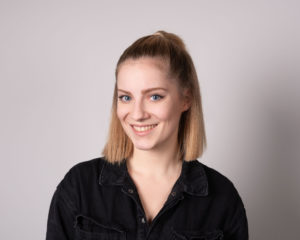
On meeting Co-Founders Zuzanna Bień and Franziska Seehuber you begin to discover why Alois is positioned to improve Zuzanna Bien - startup Alois Vision Health Pioneers Incubatorthe current status of dementia. From personal experiences to forming a startup team with an aligned ambition, the early-stage founders are driven to make a positive change. Somewhat surprising is they only formed in late 2021, but they are bringing their talents together in a way that teams must do when beginning their journey. 
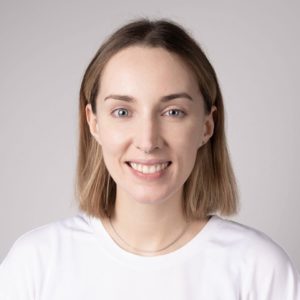
Startup team Alois originally came together in October 2021 after competing in the Rox Hackathon, an “invention marathon” where teams worked on real challenges facing the fields of neurology and oncology. During this experience, Alois formed and began to develop their business idea and ambition to help make a change to the lives of families who are currently impacted by the challenges of caring for someone with dementia. The inspiration for their name Alois, comes from Dr. Alois Alzheimer who was credited for reporting one of the first cases of a type of dementia commonly referred to as Alzheimer’s disease.

Zuzanna describes the hackathon experience, “Taking part in this virtual hackathon meant meeting each other for the first time via Slack after we had gravitated to the same challenge. We then finished in second place in the overall hackathon and with the feedback we received, started to get excited about our idea!” Franziska adds to this, “We were then offered to continue working on our project in an eight week program provided by Rox Health. After several conversations with experts we realised we could really turn our vision into reality and applied to the Vision Health Pioneers Incubator.”

The team hasn’t looked back since and it’s clear they are driven by not only a desire to improve the current situation but also each have a personal connection with dementia. Franziska, whose mother was diagnosed with dementia, shares why Alois is working hard to make a difference. “Having this personal experience means I have seen and continue to see the challenges. I have the ambition because it is sad to see that there is still so much stigma around this disease, making a lot of people feel like their lives are not worth living anymore. Finding support can be difficult and we believe there is nothing available that is similar to what we plan to provide.

The Alois Team 

Zuzanna and Franziska are joined by Matt Betts who is part of the wider team but not in the program. Franziska describes how Matt is a neuroscientist and is currently conducting research in dementia. “Matt’s research is in developing neuroimaging biomarkers for understanding the progression of Alzheimer’s disease which overlaps really well with our startup.”
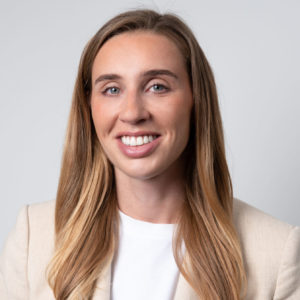
Franziska Seehuber - startup Alois Vision Health Pioneers IncubatorFranziska completed her Bachelors in Medical Engineering before changing her career path to UX Design. “I really appreciate how good design can change the value of a product. I’m still very interested in the medical field and enjoy having various hats that I can utilise while working on our platform.”

For Zuzanna, her education includes degrees in Psychology and Graduate Medicine before working clinically in London. A break from this intense work during Covid 19 was also part of the reason she formed the startup Alois with Franziska and Matt. “I’ve always been interested in the startup space and healthcare innovation. Competing in the hackathon which led to us joining the Vision Health Pioneers Incubator felt like the timing was just right. Moving to Berlin on short notice was adventurous but equally exciting!” 

The duo explained more about how they have found the experience with Vision Health Pioneers Incubator so far, having joined in January 2022. “It’s been really good for us, especially as we are an early-stage startup. The structure of the workshops and the way everything progresses are perfectly matched to our current status. We have felt supported in a space we have not operated in before. Having a community around us who we can connect with for various needs is so effective as well. This is so much easier than having to network from scratch and trying to write to someone on, say, LinkedIn.” Franziska says. 

Building a second brain

The Alois product is a cross between a personal assistant and a memory bank, allowing users to store and retrieve memories in a way that mimics natural human interaction. It evolves as the team gains further knowledge. “When a person gets diagnosed with dementia, that is often it. There is no additional support for those around that person who is suffering. Yet a caregiver has to do so much.” Franziska shares. “When we entered the hackathon, we were working on a platform for caregivers but this has developed into what we are now working on today.”

The team describes the current setup as a hopeless scenario for those who are diagnosed. “Whilst there is no cure, life is not over following a diagnosis.” Franziska says before Zuzanna adds, “We have worked on our product a lot and our solution is now a personal companion for those with memory loss. A way to easily access and retrieve memories, aided by a voice first interface. ”

Franziska describes their first aim is to have their product available via a smartphone. “Dementia is often thought about in its most severe form, but in truth it can start up to 20 years before the picture many have in their minds. The early and moderate stages can last for very long time periods. We therefore focus on earlier stages and aim to benefit people over a longer period of time. At the later stage we hope to develop a physical device but for now we focus on a mobile application.”

Zuzanna adds that their ambition for the application is to have a fully functional prototype before the end of their 10 month program with the Vision Health Pioneers Incubator. “We are starting by identifying key features that would be most useful for users. With a limited spec we then plan to expand it.” Franziska adds. 
Zuzanna Bien - startup Alois Vision Health Pioneers IncubatorAs the team works through its research and creates their first prototype, they are also exploring system architecture and what components are needed first. For Franziska she is responsible for design and prototype building whereas Zuzanna focuses on pitching and providing a front face for the company. She describes their activities, “Because we’re at such an early stage, everyone is keen to get involved in all aspects of the startup, so we all play an overlapping role but try to stay disciplined.”

The vision of Alois is to support those with memory loss with their daily living and help them to continue living an autonomous life for as long as possible. To do this they are constantly improving their application and are making it more sophisticated by adding additional features. “We want people to be able to reminisce about their memories in all aspects of their lives, by providing an easily accessible platform. We know that we can’t replace something that is lost, but we can at least try to help support those when early issues arise.” Franziska describes, before concluding, “The go to strategy for most people affected is currently to deeply rely on their loved ones or using some form of sticky notes to remember important information. We imagine that Alois can work as a replacement to this and help people to live an independent life for longer.” 

The Alois team is aware of the challenges that they will face – from building relatively sophisticated technology to complex engineering. “We know we can’t develop something over a weekend. But with the advancement of voice recognition, language and processing technology, how things look in just one year from now will be very different.” This is how Zuzanna describes their approach and Franziska joins in, “There is definitely a challenge in how accessible our product will be for those who are experiencing memory loss. We are currently trying out different approaches to see what design decisions have to be made in order to make our platform work out as a real benefit for this specific user group. Proactivity as well as working with sound and visuals will definitely play an important role in making the storage and especially the retrieval of information as seamless as possible.

Alois is positioned to help support those suffering with memory problems and loss of identity which can be so damaging for both the person and their loved ones around them. The team have recently looked for a Technical Co-Founder to help take their startup to the next level and are now focused on building their prototype. It is an exciting time and with 200,000 new diagnoses of dementia in Germany alone every year, a much needed addition to the healthcare world.
Categories
Events Our Network Program

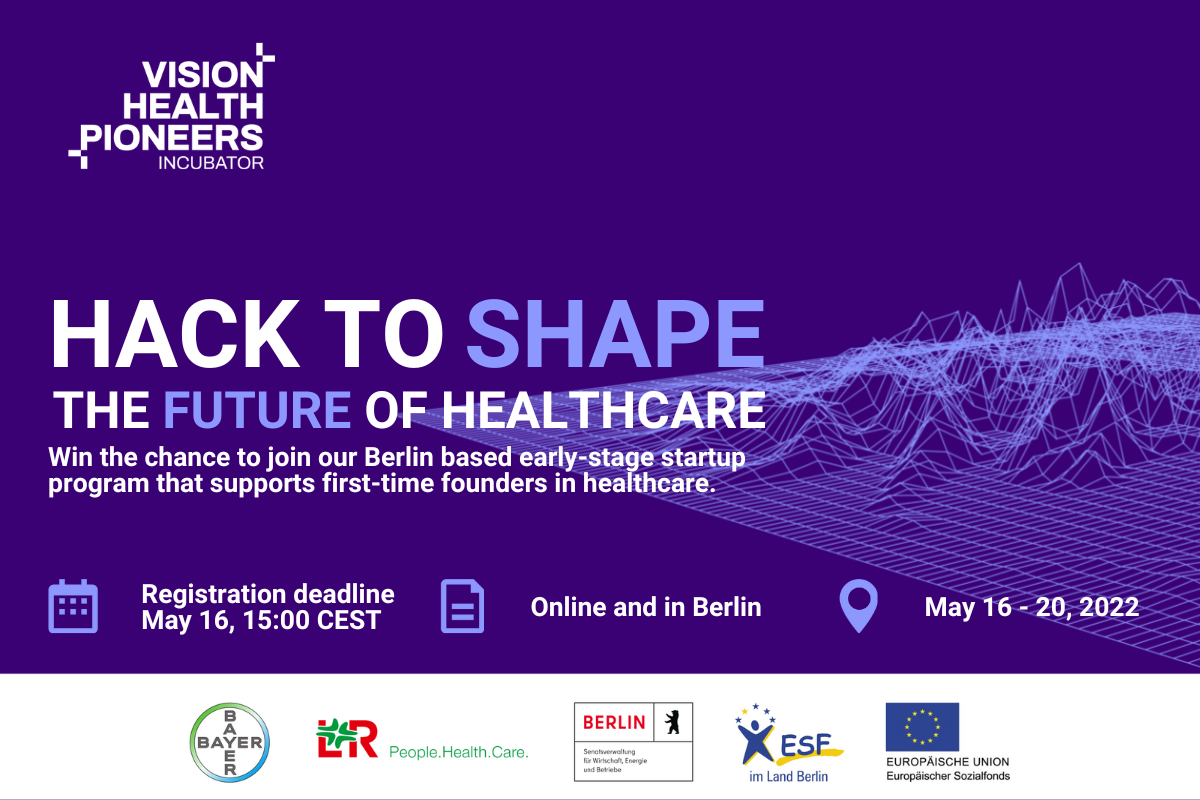
Hack to shape the future of healthcare

Hack to shape the future of healthcare!


Vision Health Pioneers Hackathon May 16 – May 20.

We are eager to welcome you to this route to joining Vision Health Pioneers Incubator’s last cohort for 2022. This hackathon acts as your gateway into our 10-month startup program that supports first-time founders from Europe in launching their healthcare startups.

Register for the hackathon on TAIKAI

Teams that enter our Berlin-based startup program benefit from coaching sessions with experts in various disciplines, and mentoring from professionals who are leaders in their field of expertise, they will be introduced to our network and get access to our free co-working space at Unicorn Workspaces. We also support teams with equity-free, non-refundable scholarship funding of up to 20,000 euros per person. So your team, of up to 4 team members could win 80,000 euros in this hackathon! (Eligibility criteria applies).

During the hackathon we are holding workshops with some of our proven experts – so use the week-long hackathon to gain further knowledge and apply it to your startup. We also provide access to some of our great ecosystem of mentors who are there to support you in various areas. Dedicated expert mentors will also evaluate your team during the week. On the last day, Friday May 20 we are holding a Pitch Day, live from the virtual stage, so use this opportunity to wow the judges and make an impact.

Hack to shape the future of healthcare

  • The hackathon is open to those with pre-existing teams, teams who would like to find additional teammates (up to 4 per team) and individual entrepreneurs who are on the lookout to join a team that needs their skill sets and experience.
  • Startups that already applied via the F6S page for Vision Health Pioneers Incubator can and are encouraged to join.
  • At the end of the hackathon,  you can decide if you are ready to take the leap and start your own venture!


Join ‘Find our perfect match’ on Wednesday May 11, 2022 to find your teammates

If you are at the idea stage or have incorporated your idea, do not hesitate to pitch your project to your fellow hackathon participants, form a team and tackle the hackathon together. Please note if you have already incorporated your idea, certain eligibility criteria apply.

Join us online or in Berlin

For the last 48 hours of the hackathon, you are welcome to join us in Berlin at one of our coworking spaces. Every team that enters benefits from their own private project space in TaiKai (no one else will be able to access it) and in here you can exchange messages with fellow hackers, mentors and our Vision Health Pioneers Incubator team. We also have dedicated Slack channels to provide you with quick communications and updates.

Key links:

Categories
Inside the incubator

The missing puzzle piece for at home testing – Physikit

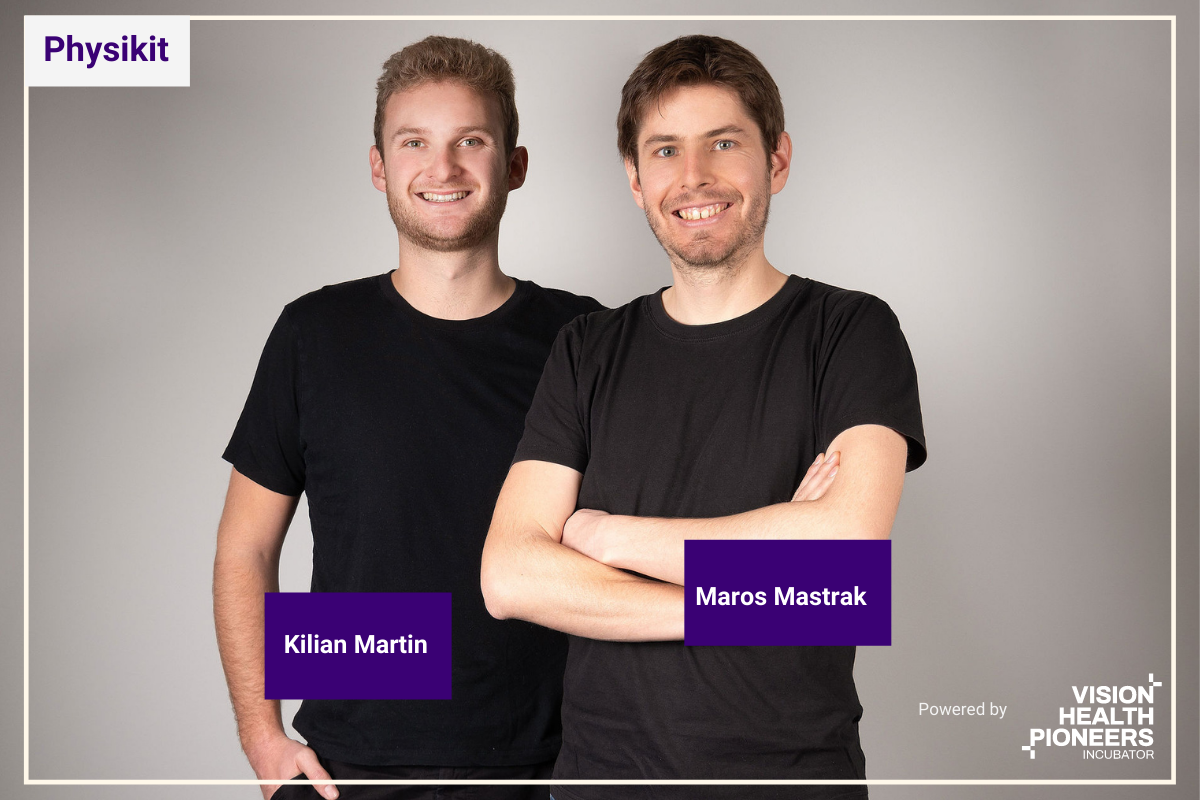
Physikit joined Vision Health Pioneers Incubator in the third cohort at the beginning of 2022 have a clear purpose: to bridge a gap which will fuel the growth of eHealth in the future. According to the Co-Founders Kilian Martin and Maros Mastrak, “eHealth will become just health and we want to facilitate that transition.” In this article we will discover how Physikit plans to do this and how prevention is at the core of it.

“A key question is: why is there still a gap between eHealth and health? The answer is simple: eHealth is limited by digital-only solutions. However, healthcare strongly relies on a holistic, physical analysis of patients. We need to close this gap so that eHealth can reach its full potential.” explains Kilian Martin. His Co-Founder, Maros Mastrek, follows up: “Current digital solutions can solve some problems, but what you don’t have right now, is the whole picture. These solutions are restricted because they lack the ability to look inside the body. For the holistic picture, you need to measure biochemical and physical parameters.”

Physikit argues that while digital health players provide quality medical advice and solid digital products, they lack the skills to effectively deal with the physical aspect of health (e.g. blood tests, laboratory analysis, sample logistics etc.), all of which Kilian describes as “a completely different world”. This is where Physikit comes in.

It became clear for Kilian and Maros immediately that their skillsets would provide a fine, complementary balance to solve these problems. Kilian is a former McKinsey consultant who brings the business and tech perspective into the startup formula, while Maros, a molecular biologist, leverages his technical, scientific expertise to challenge what is possible in (blood) testing. Putting their backgrounds into practice, they launched Physikit.

A B2B model for dried blood spot testing

The duo describes how their solution includes test kits and how this technology is already being used today. “We send physical dried blood spot kits to homes of patients. With the help of the kit, the patient pricks one of their fingers, applies a few drops of blood on a filter paper card and uses a return envelope in the kit to send the card to one of our partner laboratories. This technology has been around for more than 50 years, but was not needed beyond some specific use cases.” explains Maros. Kilian proceeds: “Some may know it from metabolic diseases testing for newborns. There, small, moving baby arms and big needles didn’t fit well together, so a solution had to be found: dried blood spot testing. Since the 1960s, within a few days after birth, each baby is pricked in their heel, and a few drops of blood are collected on a filter paper card. Beyond some use cases like this, dried blood spots were not needed, because patients would come to the doctor physically anyway. But this completely changes with the rise of eHealth.”

“At heart, Physikit is a B2B provider that takes care of the complexities of at-home blood collection by fully orchestrating it for eHealth platforms, apps and hybrid solutions. We bridge the gap between the digital and physical worlds, so these providers can focus on what they are best at. They simply use our state-of-the-art API to notify us which patient to test for what, and where they live. We take care of the physical backend processes required to collect a blood sample at home. Providers can continue to focus on their core competencies, while we help them add the critical functionality.”

Maros explains how the laboratories enter into this constellation: “Normally, they require large volumes of samples to work effectively and eHealth hasn’t been able to provide this. This is why we aggregate demand across many eHealth players and include some hybrid use cases (mix of digital and physical applications) as well. In this way, we become a significant partner for laboratories, and can work with them to innovate at-home testing.”

Maros Mastrak, Co-Founder of PhysikitOriginally from Slovakia with education and career at leading bioanalytical institutions in Austria, molecular biologist Maros shares more on his time of working in laboratories. “It was a fascinating experience, and I grew a deep understanding of how laboratory analysis works, but I soon realized there was a large gap between the theoretical and the practical world.” Eager to contribute to closing this gap, Maros founded a startup for virtual clinical trials. “In my home country, I leveraged the power of dried blood spots to give inputs into clinical trials, making them better and cheaper at the same time. But after some successful trials, I wanted to use what I learnt in a faster moving environment. And with a complementary co-founder. So I joined Antler in Berlin, where I met Kilian.”
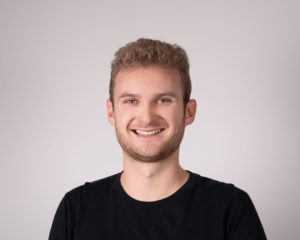
After meeting in a Co-Founder matchmaking session in the Antler Accelerator, both quickly understood how well they complement one another. The duo jokes that when they have meetings, they both leave energized by different parts of the conversation. It is perhaps these qualities that teams need so much when creating their early-stage healthcare startups.

Kilian Martin, Co-Founder of PhysikitKilian, whose excitable energy complements the more relaxed words from Maros, remarks: “I provide the business & tech side and Maros provides these essential insights from his background and experience.” Maros adds onto this, “Kilian has a great ability to look at the bigger picture and look almost from above, whereas I focus on the technical side and countless details that are required to make our solution work.”
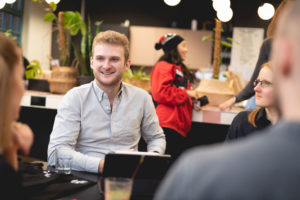
Kilian, from Germany, shares his background. “I’ve always had two hearts beating in my chest. The first is a love of business and the second is a love for technical applications. My experience ranged from supermarkets to tax to logistics. Each brought different learnings.” After his initial business education, Kilian worked for four years for McKinsey, focussing on product management and digitization topics. “I always knew I wanted to gain a deeper technical understanding and so I completed a second masters in Computer Science. This helps me to connect the two worlds I am deeply passionate about. However, I realized that I wanted to do this in a less constrained context: within my own startup. This led to my journey to the Antler program and meeting Maros. After the first conversations around dry blood spots, I was fascinated by their potential to fix a broken patient journey in eHealth.”

Physikit would soon be born and they would shortly after become part of the Vision Health Pioneers Incubator. “We were so excited to be accepted and the timing was perfect.” Kilian shares. “We have really appreciated the expert coaching – whether topics such as regulations, insurance, software development and more. Each session has led us to further improve and refine our business model.” Both Maros and Kilian highlight mentor Johannes Starlinger in the network as someone who has helped their journey. They also share that originally it was a connection to alumni Vision Health Pioneers Incubator startup Nilo.Health (formally mila.health) that led to their discovery of the program.

Physikit quickly put everything into practice and launched its first pilots in early April 2022. “We want to solve real customer problems, and refine our offering.” Kilian explains before Maros adds, “We quickly wanted to move from ideas to actual hands-on work.”

Kilian Martin PhysikitWhilst confident, both Co-Founders recognise the work ahead of them. “We truly believe we are the missing puzzle piece between eHealth and physical healthcare. We can see that digital health can dramatically increase its value by providing blood or other kinds of analyses that can start at home.” Kilian says, highlighting their determination and desire for positive change.
Kilian and Maros outline their future vision where prevention analysis is leading the line, rather than treatment. “We could catch things earlier, we can make weekly and monthly tests more accessible and, in this way, increase the “resolution” with which we see health and disease now. And, we can provide better healthcare in rural areas while enabling doctors to spend their time in a more efficient way.”

Categories
Inside the incubator

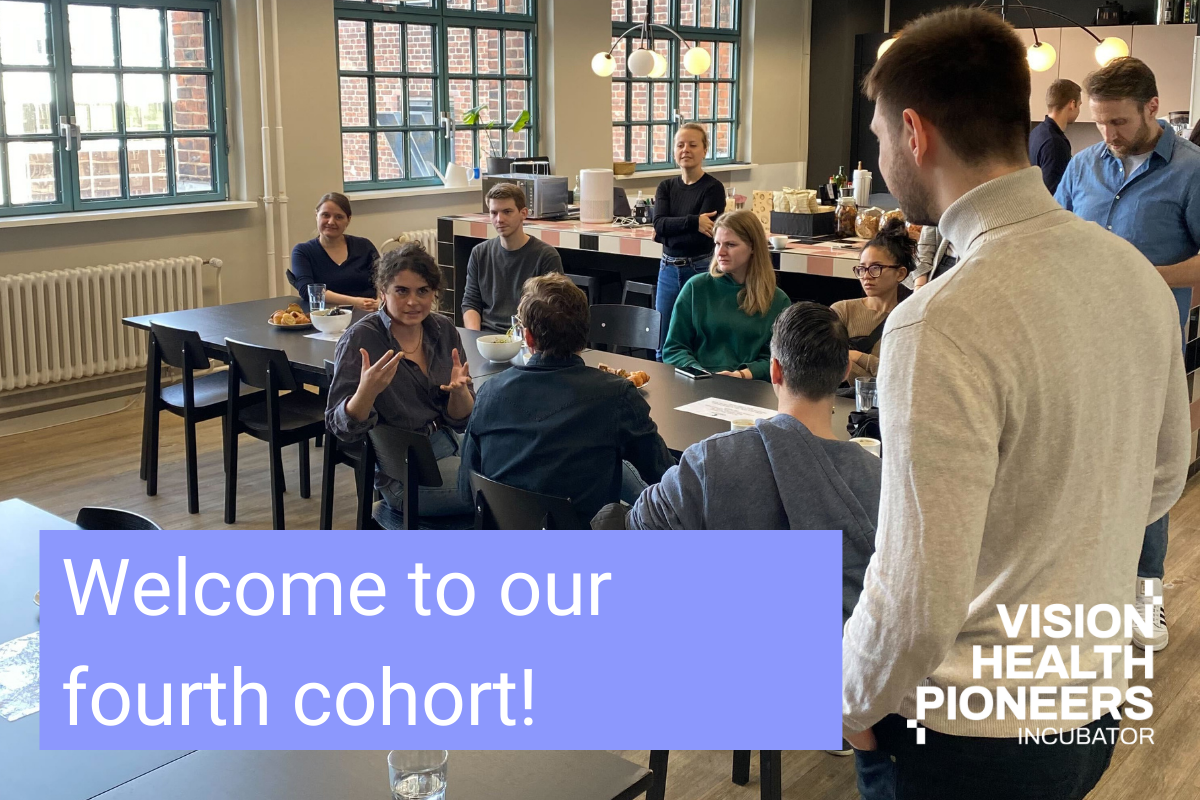
Welcome to our fourth cohort!

With a spring in our step, we started the fourth month of the year with a bang as our fourth cohort joined us at our crib for the start of their ten months with us! We are pleased to present HYPT, Blended Support and Noah Therapies who began their journey with us in April 2022. Now the teams will develop in our healthcare incubator in Berlin and benefit from scholarship funding, coaching and mentoring, free coworking space and access to experts and testing beds. We can’t wait for your to meet them. For now here is a short overview.[/vc_column_text][/vc_column][/vc_row][vc_row css_animation=”” row_type=”row” use_row_as_full_screen_section=”no” type=”full_width” angled_section=”no” text_align=”left” background_image_as_pattern=”without_pattern”][vc_column width=”1/4″][vc_single_image image=”20313″ qode_css_animation=””][vc_empty_space][/vc_column][vc_column width=”3/4″][vc_column_text]HYPT – We know that living with ADHD can be difficult – We Are HYPT to help! Using a unique combination of AI, genetic research, world-class experts with ongoing remote monitoring, HYPT will digitalize the process of getting ADHD diagnoses, personalized treatment and tools to unlock the full potential of our clients. We are hypt about solving the diagnostic and care delivery problem by building the leading ADHD omni-channel patient ecosystem.[/vc_column_text][/vc_column][/vc_row][vc_row css_animation=”” row_type=”row” use_row_as_full_screen_section=”no” type=”full_width” angled_section=”no” text_align=”left” background_image_as_pattern=”without_pattern”][vc_column width=”1/4″][vc_single_image image=”20314″ qode_css_animation=””][vc_empty_space][/vc_column][vc_column width=”3/4″][vc_column_text]Blended Support – To support people in walking the path of healing. Our aim is to provide people who have experienced trauma with fast and effective support to overcome their experiences… and perhaps to grow from the fact that they have managed to do just that… from anywhere, barrier-free and self-effective.[/vc_column_text][/vc_column][/vc_row][vc_row css_animation=”” row_type=”row” use_row_as_full_screen_section=”no” type=”full_width” angled_section=”no” text_align=”left” background_image_as_pattern=”without_pattern”][vc_column width=”1/4″][vc_single_image image=”20312″ img_size=”medium” qode_css_animation=””][vc_empty_space][/vc_column][vc_column width=”3/4″][vc_column_text]Noah Therapies – Noah is a holistic therapy management system for cancer patients. We lift the administrative weight off of patients shoulders by automatizing their therapy schedule and provide guidance for a higher quality of life on the basis of integrative medicine and data intelligence.[/vc_column_text][/vc_column][/vc_row][vc_row css_animation=”” row_type=”row” use_row_as_full_screen_section=”no” type=”full_width” angled_section=”no” text_align=”left” background_image_as_pattern=”without_pattern”][vc_column][vc_separator type=”normal” color=”#ffffff”][/vc_column][/vc_row][vc_row css_animation=”” row_type=”row” use_row_as_full_screen_section=”no” type=”full_width” angled_section=”no” text_align=”left” background_image_as_pattern=”without_pattern”][vc_column][vc_column_text]The first weeks in our incubator for cohort #4 include getting to know each other, beginning to attend their dedicated workshops, meeting mentors and much more. They can also benefit from interacting with cohort #3 who joined in January 2022 and have already been in the startup healthcare program for over three months. Both cohorts will be joined by our fifth cohort in July 2022 and all will be based at our free coworking space of Unicorn Workspaces in Berlin. Make sure to follow Vision Health Pioneers Incubator across social media, for example on our LinkedIn, to discover more about these exciting first-time founders in healthcare.[/vc_column_text][/vc_column][/vc_row][vc_row css_animation=”” row_type=”row” use_row_as_full_screen_section=”no” type=”full_width” angled_section=”no” text_align=”left” background_image_as_pattern=”without_pattern”][vc_column][vc_separator type=”normal” color=”#ffffff”][/vc_column][/vc_row][vc_row css_animation=”” row_type=”row” use_row_as_full_screen_section=”no” type=”full_width” angled_section=”no” text_align=”left” background_image_as_pattern=”without_pattern”][vc_column width=”1/2″][vc_single_image image=”20322″ img_size=”medium” alignment=”center” qode_css_animation=””][/vc_column][vc_column width=”1/2″][vc_single_image image=”20321″ img_size=”medium” alignment=”center” qode_css_animation=””][/vc_column][/vc_row]

Categories
Our Mentors

Emil Kendziorra of Tomorrow Biostasis on extending the human lifespan

We love innovation in healthcare and are privileged to have a host of mentors in our ecosystem working on exciting ideas and new thinking in this world. Amongst them, in a very-much future positioned business is Emil Kendziorra, the Founder and CEO of Tomorrow Biostasis. Recently we interviewed Emil on how his activities are focused on extending the human lifespan. In this gripping piece, Emil shares more on his journey, what ‘medical cryopreservation’ involves, views on the greatest future challenge in healthcare, and much more.


1. Please briefly explain your role and your company.

I’m the founder and CEO at Tomorrow Biostasis in Berlin and the President of the Board at a non-profit research foundation in Switzerland called European Biostasis Foundation. Both are working on ways to extend human lifespan. If someone is interested you can find more info at www.tomorrowbiostasis.com or www.emil.bio


2. How did you come to specialize in your field?

Ever since I was a child I was interested in the longevity and life extension field. In my mind, it should be an individual’s choice how long they would like to live. I studied medicine, went into (cancer-) research, and then entrepreneurship to do everything I can to make that happen. The organization I’m now running  I don’t plan to sell or leave at any point in time, they are mission-driven organizations for this long-term goal!


3. You are working on some exciting deeptech medtech products, such as medical cryopreservation, are you able to share some insights into this?

Tomorrow Biostasis is a biotech research company that offers what is called “medical cryopreservation”. Cryopreservation uses ultra-low temperature and specific cryoprotective agents to preserve organs or whole bodies to avoid degradation. Should one of our members/customers die, they signed up to be cryopreserved after death for the chance that the disease that led to their death will be curable and in the future resuscitation will be possible. It’s important to state that there is still a tremendous amount of research to be done to make this possible. So it’s just a chance for now. We’re also a biomedical research organization that does that very research.


4. How do you describe your ambition to continue focusing on “longevity escape velocity”?

“Longevity escape velocity” is the idea that at some point in the (potentially far) future, medical technology will have advanced enough that new treatments can cure diseases and improve health so efficiently that every year you live, you can add more than one year of additional life span. Once that is the case, people would be able to choose how long they want to live without diseases or old age limiting their life span. I think this is a very worthwhile goal, albeit I think it will take a very long-time to achieve it (biology is just extremely complex). That is why I decided to focus on cryopreservation.


5. What drives your vision at your business Tomorrow Biostasis?

Providing everybody with the chance to live as long as they want, at an affordable price. I’m personally motivated by that and I think everybody should have the opportunity to choose how long they would like to live. In the end, we’re working to give people a choice about how long they would like to live.


7. What do you see as the greatest healthcare challenge in the future?

Most important from a research/science point of view: solving the replication crisis (i.e. little biomedical research can be replicated), new models to incentive and reward research, better science communication, and novel approaches to research publishing (e.g. DeSci, but quite difficult in detail). Otherwise, realizing the promises of personalized medicine, moving healthcare compensation to an outcome-based system, etc etc etc. Much to do 🙂


8. If you were hosting a dinner party, who would be your dream guests and why?

Anybody who does unique things and/or has a good answer to why they do what they do. Since we actually regularly host dinner parties, feel free to reach out if you want to join 🙂


We thank Emil for his time and the fascinating insights into his activities. Having strong mentors from various fields is so important for our startups. They can learn, grow, develop and advance under the guidance and with the experience of those who have done it before or worked in related fields.
Categories
Events

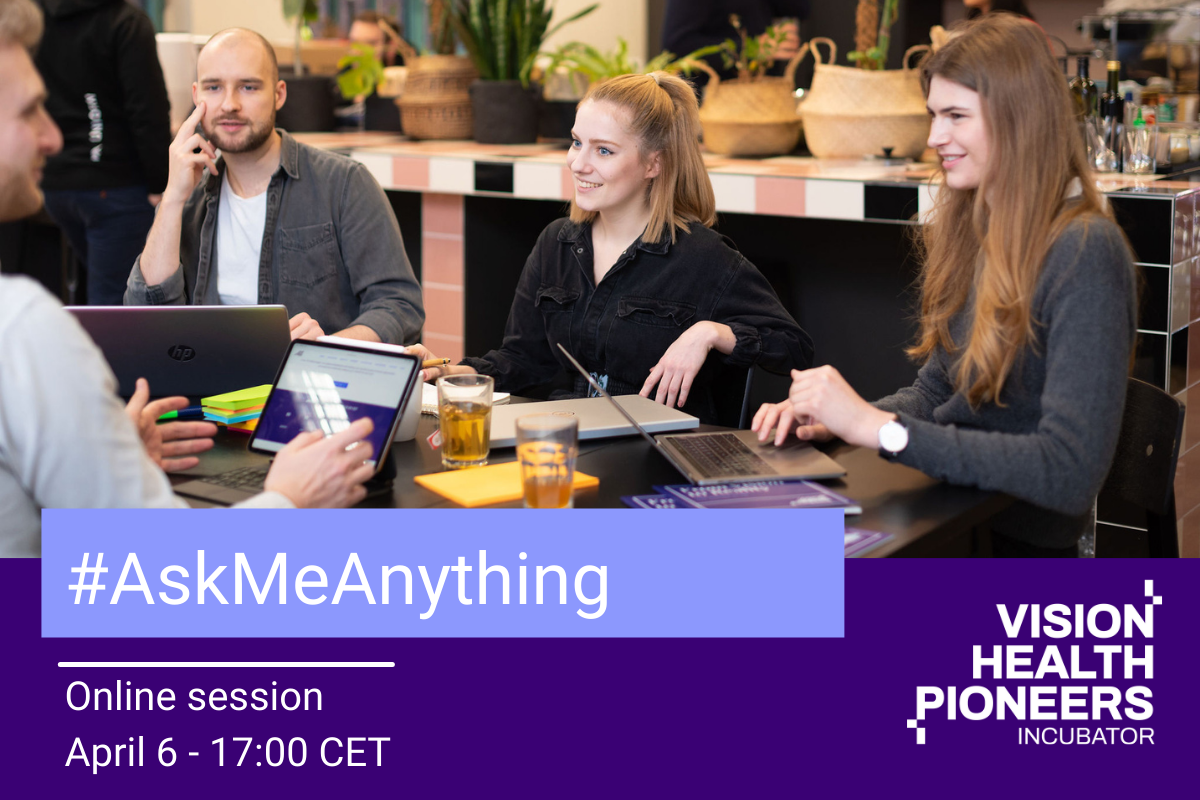
#AskMeAnything Session – 6th April 2022 17:00 CET

#AskMeAnything Session – 6th April 2022 – where you can find out everything you need to know about joining the Vision Health Pioneers Incubator.

ABOUT THIS EVENT

Do you have an idea that will change the medical world as we know it? Or do you have a concept that can solve a problem that currently exists in healthcare? Or perhaps you have something in between the two of them? Wherever you sit, if you have an idea in some shape or form but are not sure where to go next, this could be the event for you.

Join the Vision Health Pioneers Incubator team for an #AskMeAnything evening where we will take you through what the program is, how it can benefit you and answer any pressing questions that you may have.

With input and stories from members of the alumni, this relaxed evening gathering may just be the first step to an exciting journey with #VisionHealthPioneers.

Register on Eventbrite here.

Check out our Demo Day 2021. In this event, our cohort #2 startups pitched their businesses to an in-the-room and online audience:

We are currently looking for young teams of 2 to 4 first-time entrepreneurs that would like to join our last batch for 2022:

  • Batch #5 (July 2022 – April 2023) – apply by 23:59 on 15.04.22

We will support each team with equity-free funding of up to 80,000 Euro, plenty of workshops and training on topics such as regulation, access to the market, business models in healthcare and certification. You will also get free access to our coworking space in Berlin for the 10-month duration of the program. And lets not forget our brilliant mentor and partner network who will help guide you through your first months as a full-time founder.

Register on Eventbrite here.

We look forward to seeing you there!

Categories
Our Network

The need for more courage and visionary spirit

We were delighted to recently speak with Dr Reinhild Schwarte, Head of the Eating Disorders Department at Oberberg Specialist Clinic Konraderhof

In this fascinating interview we are given an insight into the numerous areas Dr Schwarte operates in and explore the current situation with eating disorder treatment for both patients and their close ones. We also look at future challenges and why innovation may be required. We thank Dr Schwarte and the Oberberg Specialist Clinic Konraderhof for their time. 

1. Please briefly explain your role and your company.

I head the Eating Disorders department at the Oberberg Specialist Clinic Konraderhof. The clinic for child and adolescent psychiatry, psychotherapy and psychosomatics at the Oberberg private clinics has three wards with a total of thirty-nine treatment places and ten adjoining day clinic places. The three wards are divided into a children’s ward and two youth wards. In the clinic, the entire spectrum of child and adolescent psychiatric disorders is treated in children and adolescents between the ages of five and twenty-one, provided that this can also be done without a protected person, accommodation is possible. The treatment focuses on eating disorders, obsessive-compulsive disorders, emotion regulation disorders, anxiety disorders, depressive episodes, school absenteeism and hyperkinetic disorders. The percentage of patients with eating disorders is 20-40%. A follow-up outpatient clinic with integrated home treatment as a treatment option is new.

2. How did you come to specialise in this field?

I have wanted to work as a psychotherapist with young people since I was 14. At that time, a psychologist at school really impressed me and I found the job exciting. In 2004 I was lucky enough to get a job with Professor Herpertz-Dahlmann in child and adolescent psychiatry at the University Hospital in Aachen. In the department there, the area of ​​eating disorders is one of the focal points of treatment and research. At that time, a multi-centre research project for the day-patient treatment of anorexia nervosa was being set up. As a young therapeutic assistant, I was offered the management of the project and accepted it. At the time, I was particularly impressed by the prospect of treatment of the serious illness that was closer to everyday life. During the course of the project, I was particularly impressed by how the treatment led to a holistic and comprehensive change for the patients: With an improvement in their nutritional situation, it was possible to get to know the patients better and better.This aspect is certainly the one that tied me to the special area.

3. One of our startups called aidable focuses on follow-up therapy by supporting the family of the person suffering from an eating disorder. They have personal experiences and therefore believe that there is a lack of support in this area. What do you think?

I think that every affected family would see it in one way or another. Our healthcare system is extremely focused on the individual patient, this also applies to children and young people. However, when it comes to mental illness, it is for two reasons important to involve the environment in the treatment. On the one hand, the environment often suffers massively: mental illnesses represent a massive stress factor on the environment around the person, the topics are often interwoven with shame and a feeling of guilt and there are too few social support options in our functionally oriented society. This often leads to subsequent problems that could have been prevented. On the other hand, it is often the case that a helpful and emotionally very committed environment can contribute to the maintenance of illnesses through insecurity or high emotionality.

4. Therapeutic follow-up can reduce recurrence rates – as much as 11% in some cases. How important are the people around the sick person for the recovery process?

In the case of eating disorders in particular, there is actually little leeway in this regard, as numerous studies have shown the relevance of treating the environment /family as well.

The environment can also have several relevant tasks with regard to the recidivism rate. For example, as the first instance of detecting a relapse, it can contribute to early intervention. Secondly, it is helpful to enable appropriate follow-up care in the healthcare system. Third, by making changes of its own, it can help create conditions conducive to recovery. We know that aspects such as motivation, eating training, social support etc. can reduce the recidivism rate. These aspects are of course also linked to the living conditions and the environment/ family.

5. What is your estimate of the burden and possibly psychiatric symptoms for key family members of patients with eating disorders?

Experience has shown that the burden on the relatives of patients is very high. The food and the medical condition of patients are especially two very existentially threatening aspects that understandably have a massive impact on the environment. Concern, shame, feelings of guilt arise, often power struggles as well, which come in the ambivalence of the illness are co-founded. A great deal of responsibility is still ascribed to the environment in the genesis of eating disorders. In my doctoral thesis I was able to prove that the parents of anorexic, adolescent patients are often characterized by a high degree of depression and that the communication of the affected families is characterized by a high degree of critical communication and emotional involvement. Both act as potentially maintaining conditions for the symptomatology. It can be clearly shown that more severe eating disorder symptoms are associated with greater depression and greater emotional involvement. This applies in particular to younger patients.

6. How do you see the care of people with eating disorders in general in Germany at the moment? What are the barriers, successful care methods/models, etc.?

As with many other mental illnesses, the care of those affected is often not sufficient and associated with long waiting times. In the case of eating disorders, this is particularly fatal because waiting times can go hand in hand with deterioration or even real life threats. In addition, the importance of early intervention for a good prognosis is well established. For those affected, the access options to offers of help are extremely confusing. You are extremely dependent on finding good advisors. Outpatient and inpatient therapy are established in Germany as care structures, and day-patient models are being added more and more. Innovative models such as home treatment, in which relatives can be involved much better in the treatment, which can be close to everyday life and inexpensive, have so far only been partially covered by health insurance and are associated with great organizational effort for the treating institutions. The bureaucratic access routes here are often very complicated. Better, more flexible patient care would certainly be possible if the therapists were allowed more personal responsibility with secure financing.

7. Innovation and novel solutions are in demand in many areas of healthcare and have become highly relevant for comprehensive treatment, do you also see this in your specialty?

The influences on the psychological wellbeing of the population are changing rapidly. Digitization, climate crisis, pandemic are three main factors that are immediately obvious to everyone, that everyone experiences and that are also easily verifiable in studies. It is actually only logical that these changes also require innovative new offers on the treatment side. So the challenges for the area of mental illnesses is still significantly greater than in other areas, but it is precisely here in particular that old structures are often retained.

The challenge in the implementation is often the recognition and financing by the health insurance companies. In Germany, we attach great importance to generally accessible health care, which also works well in most areas and ensures treatment. The supply systems often function in a very bureaucratic manner and are not very willing to change. I would wish for much more courage and visionary spirit here, as well as cooperation with universities to carry out pilot studies and the like.

Categories
Inside the incubator

Supporting the supporters. Together without eating disorders – aidable

The road to recovery for someone who is suffering can be long, difficult and lonely. For those lucky enough to have family and friends around who can and know how to support them, it can make a huge difference to the recovery process. These supporters are an essential pillar, but are they forgotten about when it comes to their own health and wellbeing? Do we need to look at how we can support the supporters as well? Should they not be supported as well? This is where the startup aidable comes in. 

aidable hold a vision of “together without eating disorders” and that no one should suffer on their own. If recovery is viewed as a team process, everyone in that ‘team’ should be supported for the best possible results. 

aidable is the vision of Anne Reisig who was inspired to do something from her own experiences. Anne suffered from an eating disorder in her late teens and even after she got better, she couldn’t stop thinking about what she had been through. These feelings have turned to drive and have led to aidable entering Vision Health Pioneers Incubator as a startup in the third cohort in 2022. Anne focused on this in her studies at University. “I really started thinking about doing something related to this area after handing in my bachelor thesis which received positive feedback. So I continued this in my master’s studies in UX and UI Design and Communication Management. Along the way I found a team who also cared about this topic.” 

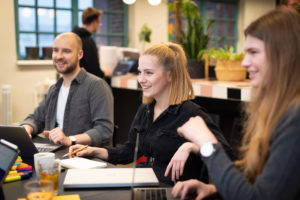
candid shot of startup team aidable
Lukas and Anne of startup team aidable

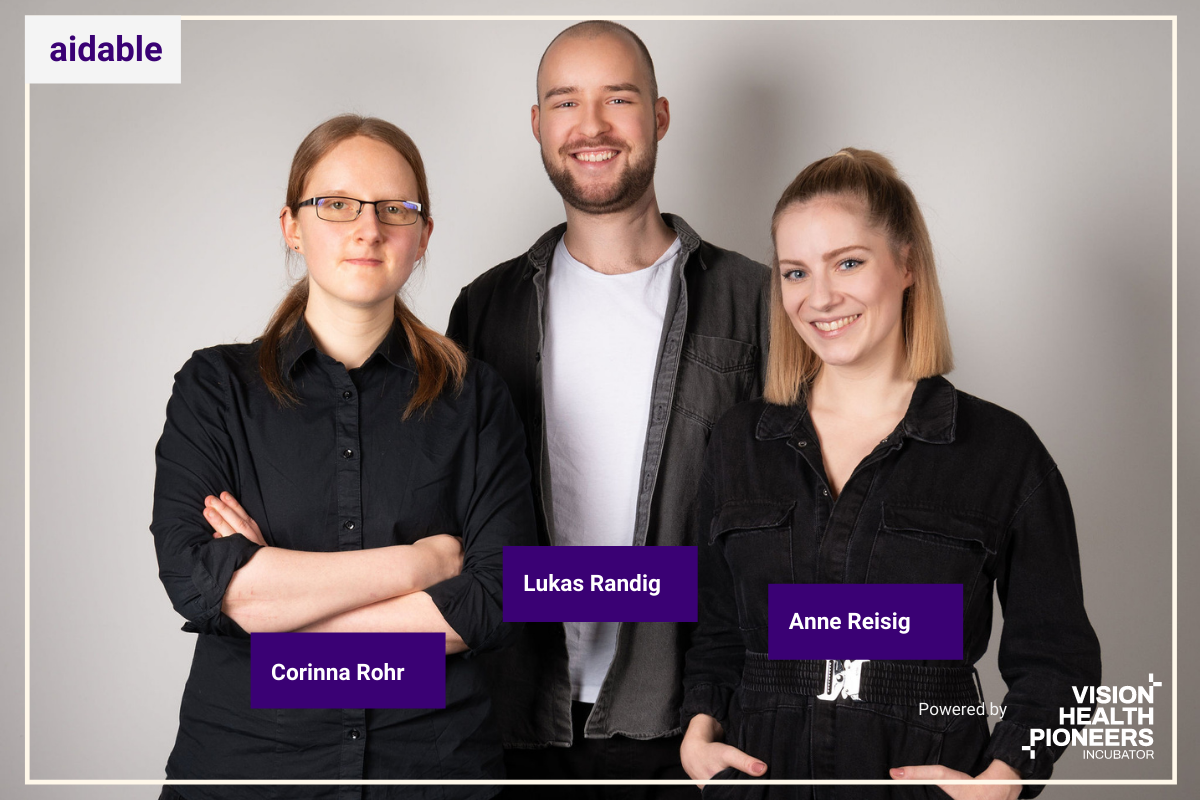
This team Anne speaks of is Lukas Randig, who has experience in business administration, especially controlling and accounting and Corinna Rohr, a software developer. Combined, the team of three formed to power aidable to the next level and first met together in-person at deGUT, Germany’s largest trade fair for start-ups in 2021. Previously restricted by the corona situation, the team had worked online together. It was at deGUT that they met the Vision Health Pioneers Incubator team and would lead to them coming together in Berlin to attend the program. 

“We attended some great workshops at deGUT and were positively surprised to see some of the best ones were hosted by mentors within the Vision Health Pioneers Incubator community.” Anne explains before adding that whether inspirational figures they met at conferences or guest speakers whilst studying, the feedback they continuously receive is that the team is passionate about their topic and that they can make aidable into a solid, successful business.

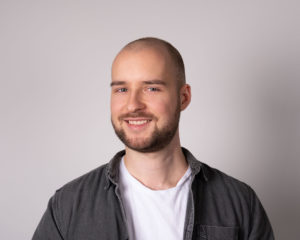
Lukas Randig of startup aidable

As with any startup, first-time founders change their approach a handful of times. This is no expectation for aidable. What started with an original idea of a book, turned into an app. “We are always learning and trying to get better as a result of this. We now have an absolute focus for helping the relatives of those with eating disorders. But the way in which we do that is fluid. We don’t want to be too strict and our focus is to build a community. We want to do something that actually helps.” Anne explains before Lukas goes into a little more detail on this focus. “We were creating an app but we are currently working through what is the right tool, service or product to create – whether a web app, smartphone app, an online course and more. Nothing is set in stone. We want to develop something that people will use. At this stage we are asking customers what they want.”

Although early-stage, the team opening shares how they have failed at times during this process. “We tried sending messages to select groups of people on Facebook and hold online sessions but nobody came. We realised we needed to build trust and so took one step back and instead talked to everyone we knew. We asked if they were in contact with anyone who was suffering from an eating disorder and then directly and indirectly began to make personal connections. We found trust and started to hear answers such as “yes, I know someone.” We began to connect with parents whose children were suffering from these serious illnesses.” The team have clearly reflected and learnt from their experiences so far. “Corinna then had the idea of researching various institutions and clubs that tackle the topic of eating disorders.” Lukas adds. “We began to form connections with them and ask how we could help them, help their patients. We have now reached even more people.”

From a personal place.

Anne Reisig of startup aidable

When speaking to Anne today she is very open and it’s hard to imagine that at one point she couldn’t tell anyone about what she was going through for a long time. It is this personal experience that helps drive aidable forwards. “My parents found out after a year and my best friends after four years. It wasn’t until I began to present my bachelors project at university that I felt I needed to talk about it. A parent’s reaction may be to interrupt the eating disorder but part of the illness is that it wants you to stay sick and get even sicker. A relative may push the sufferer to eat but when you’re struggling and the sickness is telling you to ignore them, it wants you to continue to suffer until you’re dead.” It’s clear Anne had to go through something incredibly difficult. She adds, “I realise now that I didn’t have the energy to tell them and was desperate for an app that would have helped. If it could say to a parent how they should react. To not try and push their child to eat and instead work in a team. When a parent doesn’t have any input, it can cause conflict and turn relationships sour. If something like an app can support this and bring a family together, it can help everyone.”

Lukas, who has known Anne for some time, was part of her recovery journey. “I also have a relative who suffered from an eating disorder, so both experiences have made me want to do something with a purpose.” Lukas also explains how there is a stigma around eating disorders and this makes all three of them want to do more. “You can’t see a mental illness like you can with someone who has a broken leg. Equally people often don’t want to openly talk about it. But when we can open up, tell our stories and extend our trust, a safe protective space is formed.” Corinna also shares her personal experiences. “As a teenager I had friends going through the difficulty of eating disorders but no one ever explained more about it. What we should or shouldn’t do. Whether we should talk about something or not. I felt helpless and on reflection felt there needed to be an easier way to access knowledge on how to communicate and treat people.”

The unseen sufferer and supporter.

“Some people argue you can see an eating disorder, but if you are not very close to someone, you really can’t see it. Many of those with bulimia have a normal body weight. The sick behaviour only usually happens in secret. No matter what body type a person is, they may still eat tons of food and then throw up in secret. often surprise you who is suffering. In your close circles it can be helpful to know how not to trigger others. Triggers can be so easily done and begin with comments such as “I eat so much food at Christmas and now I can’t eat for a week” – without awareness, things like this can cause big problems.” Anne shares. 

Equally what the supporter is going through can be unseen. Studies have been conducted into the burden and psychiatric symptoms on key relatives of patients with eating disorders but is still relatively unknown. 

One of the main features of aidable is short concrete advice. Anne explains, “we realised you can find information online and in books on how to treat eating disorders but that information is very general. It lacks how to apply the information correctly and what relatives often want is simply solid advice. They want an answer to how they should react to a challenging situation.” It is this information that aidable plans to present so people can inform themselves in calmer situations. To make it easier to find professional help like therapy or inspiration – such as that with interviews of relatives of sufferers. 

Lukas explains that they also want to help the overall process of those who may need to go through rehabilitation. “When you are suffering from an eating disorder, you don’t always have the energy to call the bureaucratic powers between their phone line opening times. You may want and need treatment and rehabilitation but it’s a complex process.” 

Aidable hope to form close collaboration with health insurance providers or individual companies themselves. This could come in the form of programs that support the employees of a company.

Corinna Rohr of startup aidable

Whilst it’s still early days for aidable, they are enjoying being involved in the third cohort of Vision Health Pioneers Incubator. Corinna shares, “It’s been really nice to meet each other in person when possible. To talk to the other startup teams and get to know others.” Anne adds, “we’re extremely happy to be in this program. To be financially covered and really focus on our startup and not have it as only a side project.” 

They are a young team, but the three of them are enjoying the process of building something special. Anne thrives on interviews with the relatives of those who are or have suffered because it reminds her of why they are doing what they do. “I have so much energy after speaking with others and hopefully can give them advice. My goal is that even if we only impact just one person, it will all be worth it.” 

They will go far beyond this modest goal. But it does emphasise how aidable is focused on making as much difference as possible and completed in the best way possible. Although early into their time in the program, the team is benefiting from the insights from the coaches and mentors and working hard to make aidable as successful as those who interact with the startup know it can be. 


Categories
Inside the incubator

Behind the scenes – first week in the Incubator

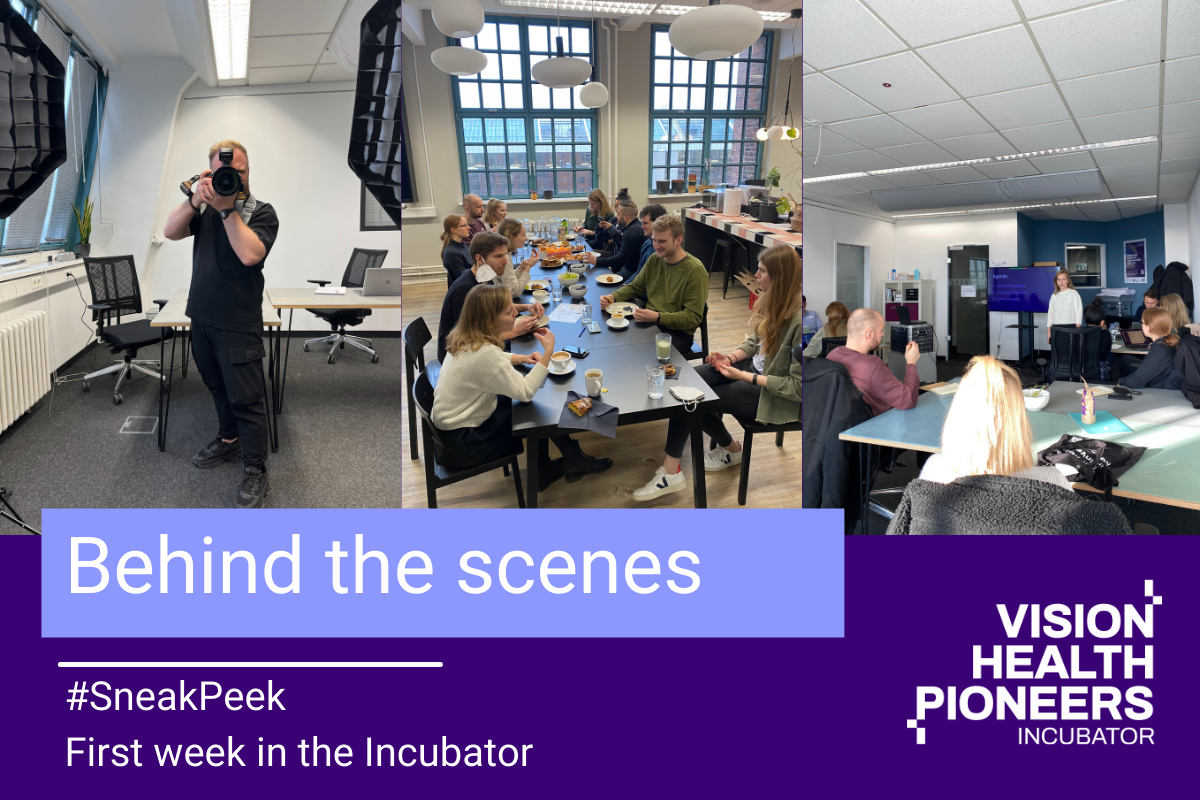
A behind the scenes look at the first week in the Incubator. In January 2022, the third cohort in the Vision Health Pioneers Incubator stepped through the doors to begin their thrilling journey. They follow in the footsteps of the first two cohorts who have taken their startups from a vision to a reality and will themselves be followed by another two cohorts. They will join them in April 2022 (fourth cohort) and July 2022 (fifth cohort). All three will spend an extended 10-months in the Incubator and benefit from a new and improved program. This includes coaching in smaller group sessions, mentoring from some of the best experts in the world of healthcare and overall general support which ranges from access to test sites, to challenging their business models, to pitch training, to deep dives and much more. They will also benefit from a growing alumni network who have ‘been there, done that’ and can pass on their experience and wisdom.

All combined the Vision Health Pioneers Incubator is a thriving ecosystem which propels healthcare startups and fuels a growth of problem solvers. The entrepreneurs grow as individuals, grow as teams and grow alongside their fellow cohorts. Whilst the speed of growth will naturally vary between each team, they have all entered the Incubator at exactly the same time and in exactly the same position: they are all first-time founders of early-stage healthcare startups.

Here is a brief behind the scenes look at some of the things that happen in the first week with Vision Health Pioneers Incubator:


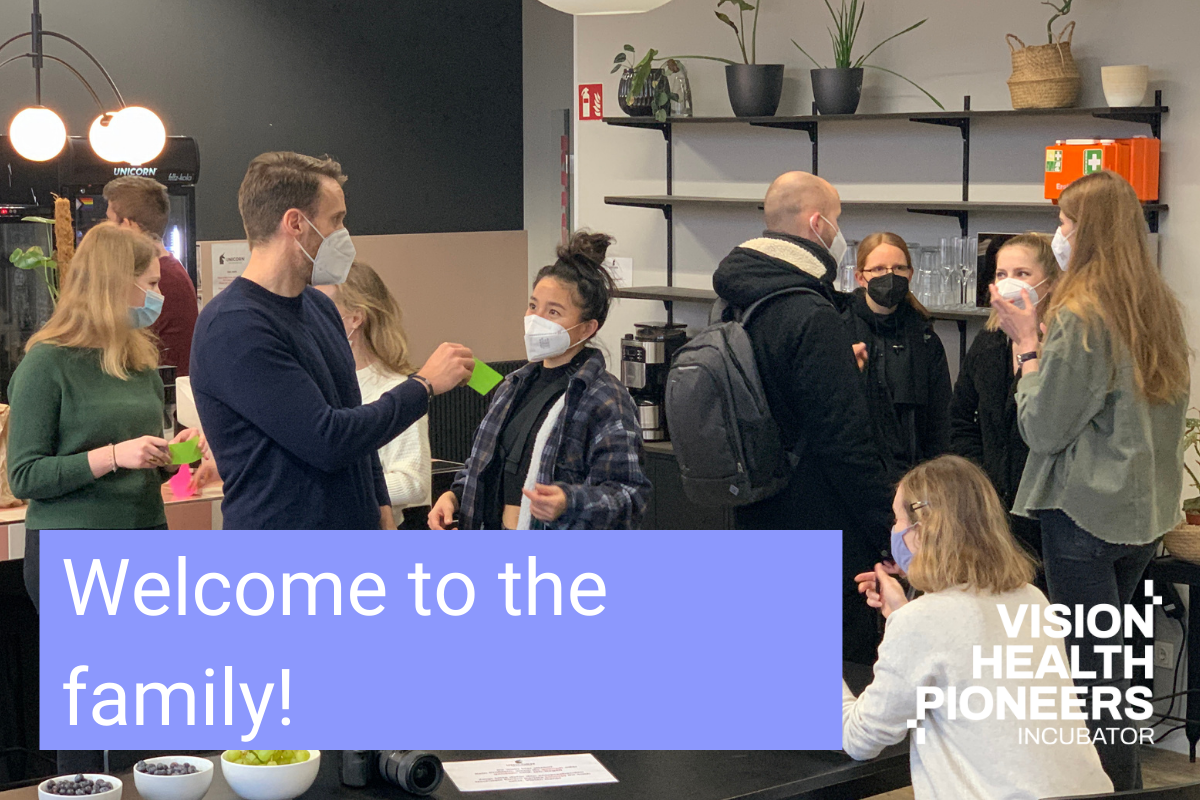
welcome breakfast at vision health pioneers incubator The Vision Health Pioneers Incubator Welcome Breakfast. After all Covid-related safety checks, our entrepreneurs pull up a chair, sip from a glass of champagne, nibble on a croissant and meet everyone else! An important part of any successful relationship is the welcome and this is always done with a bit of style at Vision Health Pioneers Incubator. This was the chance for the startups to find out more about each other and also get to know the Vision Health Pioneers Incubator team.

Introduction to the Vision Health Pioneers Incubator programAfter this warm welcome our Vision Health Pioneers Incubator team introduce the program and talk everyone through what happens during their 10-months in the Incubator. Our structured program is designed to guide them all through the key phases of product development and a go-to-market launch. It’s supported by our exclusive partner network, which includes experts in healthcare, business, tech and innovation.
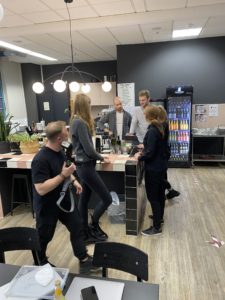
behind the scenes photo shot Strike a pose! Our trusted photographer Dominik Tryba takes portrait and team shots for all the startups which are used in all future communications about their exciting businesses. Dominik has taken all the entrepreneurs headshots and group shots since Vision Health Pioneers Incubator began and this provides a consistent style approach. His approach will always eventually get a smile out of everyone. Here is a behind the scenes look of the photography in action!
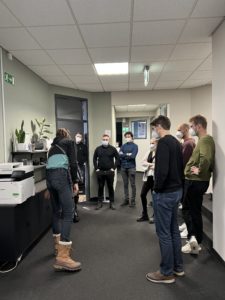
Tour of Unicorn coworking spaceOur new crib is Unicorn Workspaces and so during the first week our latest cohort took a tour of the impressive site. With the engaging and welcoming on-site barista team, we are sure our startups will enjoy the instant availability of a coffee or tasty treat. As well as their private room, our startups can use private phone booths, a barista room for important breaks and for those who need a few minutes shut-eye, there is even a napping room.


It’s a non-stop first week for our startups when they enter the program. This welcome provides the perfect introduction to what is about to happen and is a strong grounding for the overall appreciation of everyone in the exciting journey. We love supporting startups and watching them all develop for an even stronger future of healthcare.


Categories
Inside the incubator

Welcome to the family! Our third cohort

We welcome our third cohort to the family! In January 2022 we welcomed the third cohort into the Vision Health Pioneers Incubator. After a few months exploring many exciting early-stage startups, our team and jury reviewed all the applications we received and five startup teams were chosen. As the New Year began, their new journey started in our new coworking space and for 10 months they will receive coaching, mentoring and overall support from experts in the world of healthcare.

We are delighted to present the startups who have joined us in January 2022.

Welcome to the family to our third cohort!


aidable logoaidable

“Support for the supporters: tool for relatives of eating disorder sufferers”

aidable focus on supporting family members of those suffering from eating disorders, in particular in the therapy aftercare where they want to reduce relapse rates. With their tool they want to act as a guide and as a source of information that enables the best possible support for the road to recovery.

askalois logoAskalois

“Empowering carers to support their loved ones with dementia at home”

Askalois is a platform that provides a personalised plan and ongoing support to empower first-time carers to support their loved ones. With 200,000 new diagnoses of dementia in Germany every year, they aim to tailor their solution to both location and situation.

NeuriTec logoNeuriTec

“We are building the pacemaker of the brain”

NeuriTec aims to enhance the outcome of stroke patients and support their rehabilitation. With an AI based, closed-loop brain-computer interface they want to prevent the full impact of neurological deficits after a stroke and increase recovery outcomes.

Physikit logoPhysikit

“Enabling at-home (blood) testing as a service for eHealth”

Physikit is the missing puzzle piece between the digital space of eHealth and the physical world of medicine. With its plug-and-play solution, Physikit enables at-home blood collection and subsequent blood analysis for any eHealth service on the market. Services of Physikit include lab search and coordination, selection of the best test kits, orchestrating logistics and integration with lab IT systems. The eHealth developers only have to integrate the Physikit API, and can immediately provide their users with convenient at-home blood collection for monitoring of key health parameters.

Seeme Health logoSeeme

“The first computer vision indicator for mental health in children”

SeeMe is an AI driven service that monitors the health of patients. We provide an additional layer of information to doctors and patients derived from facial analysis (valence, intensity, engagement, attention, variety of emotions, and heart rate) during video assessment. SeeMe makes sure the patient gets the best after-diagnosis care by offering automatized check-ups that monitor any changes in their behavior. Especially helpful with chronic patients, seniors, and pregnant women.


We look forward to sharing more details soon and can’t wait for you to meet them. They will be joined in April 2022 by our fourth cohort and then our fifth and last cohort for 2022-2023 in July this year. Applications are still open to join us in July – apply by 15th April 2022.