Emil Kendziorra, the Founder and CEO of Tomorrow Biostasia - Vision Health Pioneers Incubator Mentor
We love innovation in healthcare and are privileged to have a host of mentors in our ecosystem working on exciting ideas and new thinking in this world. Amongst them, in a very-much future positioned business is Emil Kendziorra, the Founder and CEO of Tomorrow Biostasis. Recently we interviewed Emil on how his activities are focused on extending the human lifespan. In this gripping piece, Emil shares more on his journey, what ‘medical cryopreservation’ involves, views on the greatest future challenge in healthcare, and much more.
1. Please briefly explain your role and your company.
I’m the founder and CEO at Tomorrow Biostasis in Berlin and the President of the Board at a non-profit research foundation in Switzerland called European Biostasis Foundation. Both are working on ways to extend human lifespan. If someone is interested you can find more info at www.tomorrowbiostasis.com or www.emil.bio
2. How did you come to specialize in your field?
Ever since I was a child I was interested in the longevity and life extension field. In my mind, it should be an individual’s choice how long they would like to live. I studied medicine, went into (cancer-) research, and then entrepreneurship to do everything I can to make that happen. The organization I’m now running I don’t plan to sell or leave at any point in time, they are mission-driven organizations for this long-term goal!
3. You are working on some exciting deeptech medtech products, such as medical cryopreservation, are you able to share some insights into this?
Tomorrow Biostasis is a biotech research company that offers what is called “medical cryopreservation”. Cryopreservation uses ultra-low temperature and specific cryoprotective agents to preserve organs or whole bodies to avoid degradation. Should one of our members/customers die, they signed up to be cryopreserved after death for the chance that the disease that led to their death will be curable and in the future resuscitation will be possible. It’s important to state that there is still a tremendous amount of research to be done to make this possible. So it’s just a chance for now. We’re also a biomedical research organization that does that very research.
4. How do you describe your ambition to continue focusing on “longevity escape velocity”?
“Longevity escape velocity” is the idea that at some point in the (potentially far) future, medical technology will have advanced enough that new treatments can cure diseases and improve health so efficiently that every year you live, you can add more than one year of additional life span. Once that is the case, people would be able to choose how long they want to live without diseases or old age limiting their life span. I think this is a very worthwhile goal, albeit I think it will take a very long-time to achieve it (biology is just extremely complex). That is why I decided to focus on cryopreservation.
5. What drives your vision at your business Tomorrow Biostasis?
Providing everybody with the chance to live as long as they want, at an affordable price. I’m personally motivated by that and I think everybody should have the opportunity to choose how long they would like to live. In the end, we’re working to give people a choice about how long they would like to live.
7. What do you see as the greatest healthcare challenge in the future?
Most important from a research/science point of view: solving the replication crisis (i.e. little biomedical research can be replicated), new models to incentive and reward research, better science communication, and novel approaches to research publishing (e.g. DeSci, but quite difficult in detail). Otherwise, realizing the promises of personalized medicine, moving healthcare compensation to an outcome-based system, etc etc etc. Much to do 🙂
8. If you were hosting a dinner party, who would be your dream guests and why?
Anybody who does unique things and/or has a good answer to why they do what they do. Since we actually regularly host dinner parties, feel free to reach out if you want to join 🙂
We thank Emil for his time and the fascinating insights into his activities. Having strong mentors from various fields is so important for our startups. They can learn, grow, develop and advance under the guidance and with the experience of those who have done it before or worked in related fields.
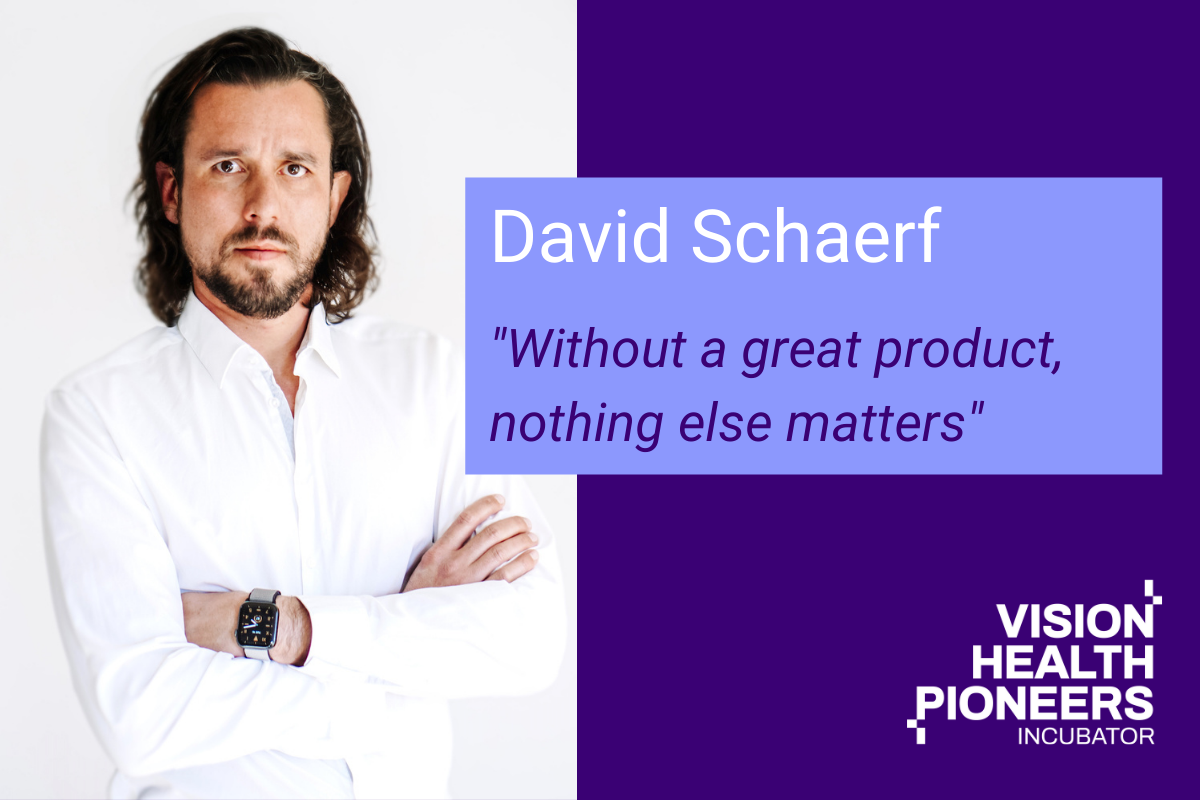
We were delighted to recently interview David Schaerf, one of our mentors at Vision Health Pioneers Incubator. David shared his insights on his own founders journey and experience in healthcare but also advice for any entrepreneurs who are wanting to shape the future of digital healthcare. These lessons from someone who has founded companies is essential reading for those in or about to embark on their startup adventure and we thank David for his open answers.
You have vast experience in founding startups, what do you enjoy most about launching these?
In any venture the launch phase is uber exciting and even slightly more enjoyable than running an established company. I also enjoy the step before, which is to vet startup ideas and go through the motions of validating the viability of potential product concepts. In most cases these ideas don’t make it passed this first stage, which is a good thing as it saves time, sweat and tears down the road.
As a product expert – what knowledge do you enjoy passing onto other startups?
My mantra is: *without a great product, nothing else matters.* I often observe that “product” is often only one of many aspects that founders have on their radar and thus wait way too long to really deeply understand and subsequently solve the pain points of their intended users. Many founders have an amazing vision but struggle to set up the right product foundation and make critical mistakes right from the get go.
Especially at the outset, it is vital to get out of your comfort zone and immerse yourself into the intended environment and really identify and understand the pain point in as much detail as possible. Talk to as many patients, medical professionals, regulators, decision makers that you can get in front of. Value their feedback but extract only what is valuable to you and don’t get too distraught by skepticism of naysayers. As soon as you have a prototype or MVP, start testing and collect data that will help you understand if your hypotheses are proven correct, then iterate. Only then will you be able to have the insights needed to invest time and resources into new features or use cases. This is at the heart of my work as a mentor in the program as well as the advisory work I do at North Star Labs.
How did you enter this particular area of expertise?
In short: totally by serendipity. I was always very tech-savvy and had a heart for product development. I started my career in business consulting, working (on what was called *e-business* at the time) across various industries and was lucky enough to team up with talented people at the intersection of tech, strategy and product / UX. I had an epiphany while working for a Pharma client around 2011, realising that the healthcare sector was at a pivotal moment, ripe for massive disruption. So over a number of steps, I naively founded a digital health company at a time where scepticism was abundant and one healthcare executive even warned me that I might go to jail for our intended use of patient data (needless to say he wasn’t a fan of digital). I quickly had to learn about native app development, medical guidelines, regulatory frameworks and the ins and outs of the very complex German healthcare system.
“The German healtchare system is complex to say the least and founders need to understand and speak the right “language” to be taken seriously by stakeholders.”
What is the biggest advantage and also greatest challenge for entering the German market?
One clear advantage is certainly the size of the market and its advanced regulatory environment in a somewhat homogenous European market, offering various pathways for medical products that have proven medical evidence. At the same time, these pathways require significant investment into areas such as data privacy, clinical evidence, quality management, interoperability, etc. The German healtchare system is complex to say the least and founders need to understand and speak the right “language” to be taken seriously by stakeholders. Another advantage is that the German digital health ecosystem is growing and becoming quite robust, especially the hub in and around Berlin.
At this moment in time, how do you view the current digital health space in Germany?
Having been part of the first wave of the German digital health startup scene and witnessing its progress over the last decade, it is no understatement to say that the last 18 months have been immensely positive for our sector. The impact of Covid-19 has created a tsunami, in the positive sense, leapfrogging digital health transformation forward by at least 5-10 years. So while some effects may be short term, flattening out over the next 1-2 years, most changes will be permanent and hopefully creating a golden decade for digital health.
What do you enjoy most about coaching the entrepreneurs in Vision Health Pioneers Incubator?
Throughout my career I’ve been lucky to have had great mentors and coaches that helped me make bigger steps than I would otherwise have been able to make. Now being able to give back is rewarding on a number of levels, most notably revisiting some of the same crossroads and being able to draw on my experience to help founders make difficult decisions
What advice would you give to an aspiring entrepreneur who is thinking of entering a program like this?
Having been a participant as a founder myself and now being a mentor on a number of programs, I know how demanding it is to juggle the fast-paced curriculum while building a company at the same time. Therefore try to avoid the temptation to cut corners and rush through the program because you think you need to focus only on your business. Instead, really make an effort to immerse yourself into the program and make full use of the mentor network as this will benefit your company long term. It’s unlikely that you will have access to such amazing resources for free (and zero equity) any time soon.
“Be patient and have faith; most things will take twice as long as initially planned and often enough the path to success is not yet visible when you initially set out.”
Is there any advice you would give to your younger self?
Be patient and have faith; most things will take twice as long as initially planned and often enough the path to success is not yet visible when you initially set out. Life is not a sprint race but a marathon and it’s very easy to forget to enjoy the journey. Often enough times of struggle are those that you cherish most when you look back later in life. Ps: buy bitcoin at $10
What is the best advice you have ever received?
Some things are simply not meant to be. So don’t run after opportunities that are not working out. In life and business we sometimes come across opportunities, which seem so grand and important that we chase them with the utmost perseverance while possibly ignoring our instinct, advice from peers or our long term vision. Often enough you will find out later why an opportunity did not work out and why that is a blessing in disguise.
If you were hosting a dinner party, who would be your dream guests (dead of alive) and why?
I would invite a colorful mix of some of my idols, inspiring inventors, entrepreneurs and artists: Michelle Obama (amazing charisma and leadership), Bill Campbell (possibly the best creator of team culture and spirit), Steve Jobs (vision of technolgy this century and beyond), Sylvia A. Earle (her vast experience in ocean exploration and conservation), Leonardo da Vinci (as the most amazing inventor of all time: how can we stop global warming), Coco Chanel (her influence in female leadership and design), Tony Robbins (the amazing energy), Sean Connery (beyond charismatic and cool), Nikola Tesla (how would he solve the clean energy challenge), Snoop Dogg (as master of ceremony), Albert Einstein (his ideas about the universe and the future of mankind).
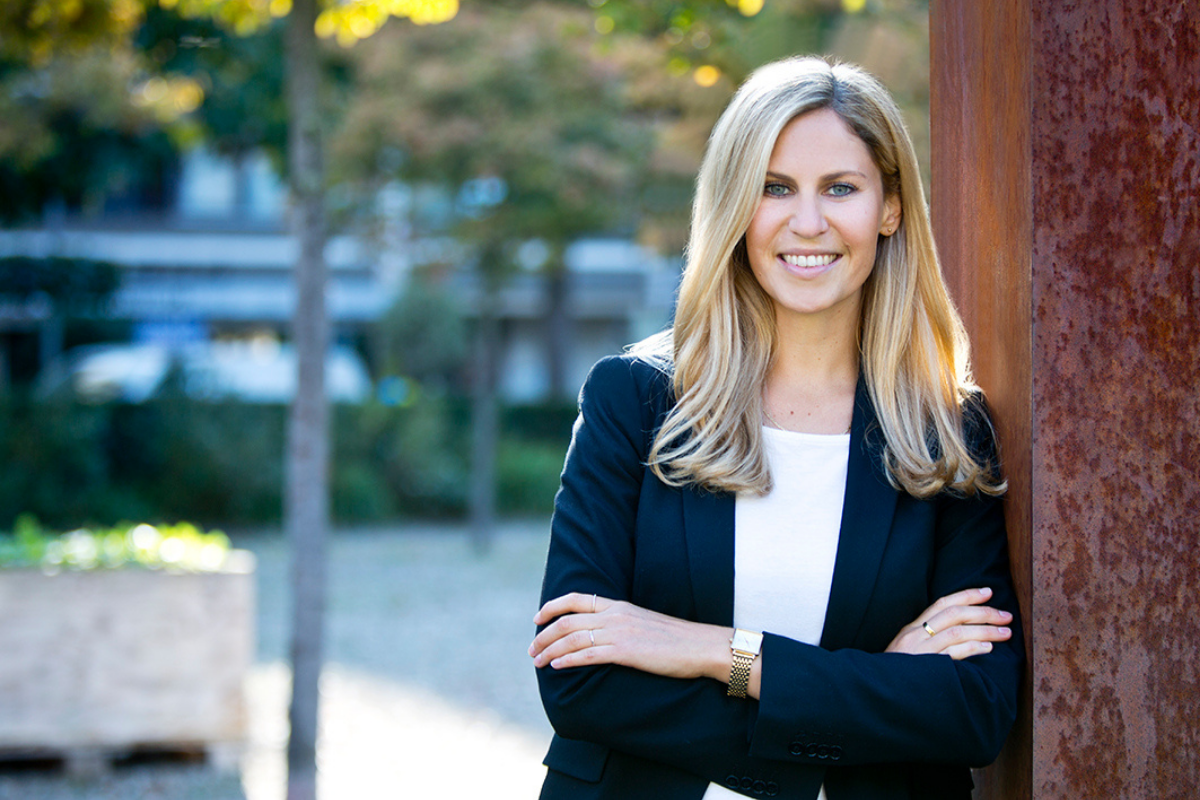
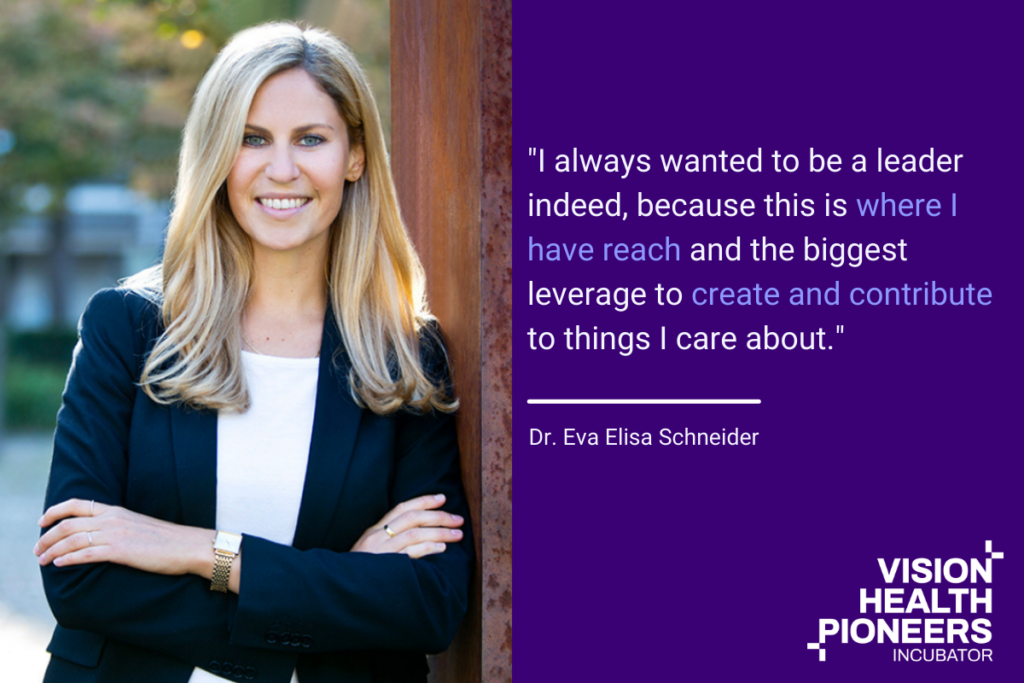
Dr. Eva Elisa Schneider is a mental health expert, psychotherapist and coach. She is the Founder of the mental health lab that supports individuals, teams and organisations in the creation of a people centred and needs oriented culture. A passionate advocate for mental health, Eva views it beyond the ability to meet everyday challenges in coping with stress in a non-harmful way. Rather, she sees it also as the psychological and behavioural flexibility to take on opportunities to grow and contribute within someone’s scope of action.
Unsurprisingly, she is also the team lead of nilo.health. Alumni’s of our Cohort #1. nilo.health is opening up the space for mental health in the workforce. Bringing counsellors, therapists and mental health content on one platform, nilo.health is empowering employees to be proactive and take charge of their mental health.
What issues or topics are you most motivated to tackle and what Digital Health issues are particularly on your mind at the moment?
First, bringing together mental health care and digital solutions. Mental health is a sector which has been practiced in a very traditional way for decades, however, the Corona-pandemic has promoted people’s acceptance towards digital mental health solutions. People started to realize that digital healthcare is actually beneficial and can come with many advantages, e.g. location independence.
Second, motivating health professionals for using and recommending digital health solutions themselves. Many professionals stick to their usual day-to-day routine and don’t directly realize the huge added value of digital health products. Health professionals are the crucial bottleneck when it comes to stakeholder management, which is why I believe we have to show them how digital solutions can spark joy. As Marie Kondo would say!
Third, making digital health solutions accessible and easy to use for everyone, including people that haven’t been in touch with any mental health support before or generations that didn’t grow up with an intuitive understanding of digital devices and solutions.“
What advice would you give your younger self?
Always pay attention to your gut feeling! And that you don’t have to stick to prototypical career paths, even if many people suggest you to do so – it’s a great character trait to stay curious and to have many interests. Many people kept telling me that I should finally focus on one particular direction, but this always felt very limiting. Being active in many different projects and engaging in things I care about is a huge strength of mine and I would tell my younger self that this is a great skill and not a weakness.
What is the best advice anyone ever gave you?
You have to find your very own way.
Who is your role model/mentor and why? What are the qualities of an effective mentor especially in this space? What motivates you to be a mentor?
For a very long time I was looking out for role models that have walked a similar path like me and are active in the digital (mental) health sector now. Meeting a licensed psychotherapist in the digital health space is still rather rare, but there are a few now, which feels very refreshing and it’s a great experience to connect with them.
At this point in my life, it’s a big motivation to show other people from my profession that leaving the typical psychotherapy and science career path is perfectly possible and a great option to pursue, even if it might puzzle some people. This is also what I tell my mentees: If it feels right, stick to the very individual pathway you are going!
Having been both a mentee and a mentor myself, a huge motivation for me is to give something back. I have received a lot of valuable support in my life so far, and I believe that whenever you receive something, it’s important to give something back somewhere else.
A mentor has to be a reliable sounding board for whatever topics come up. I believe that mentoring is not limited to time, positions or programs, it’s a trustworthy relationships that exists beyond respective borders.
How would you describe or characterise your digital health journey? Did it have big highs and lows, and if so, how do you feel about those experiences, now?
I have experience in inpatient and outpatient care, in health science, in the digital health sector and as an organizational consultant. All those different lenses help me to understand pains and needs from various perspectives. The classical health sector is often characterised by very strict guidelines, slow processes, complicated workarounds and few financial resources, which felt like navigating it with the brakes on. Yet, our current healthcare system provides a lot of safety, which is of course beneficial when it comes to anything around health. In the classical health sector, you are often confronted with a “no” or a deprioritization whenever it comes to anything digital, often because of financial reasons or because people fear they might destroy all the routine processes that were built over years and years. In the private sector on the other hand, people have a bigger credit of trust for innovation and new ideas.
When I entered the digital health space I was amazed by how fast things are being implemented, tested and refined. The mindset is completely different and a lot more agile: Get your product out, test and iterate as often as possible, learn by exploring, not by discussing everything in theory.
The pace in how ideas and products develop is so much faster and the willingness to take a risk is higher, which was a huge game-changer for me. Despite all the differences, I also see a common goal: anything that will help people in the long-run is a key motivation!
Explore how nilo.health is making mental health support easy for your entire organisation
What have been you biggest challenges in working through a pandemic, and have you found any silver linings?
The pandemic hit me in waves. At the beginning in 2020 I had huge boost in creating new concepts and making a virtue of necessity. For example in my lectures I was teaching therapy and conversation techniques, so I was wondering how in the world I am supposed to translate something so analogue into the digital space. However, there was no alternative, which eventually led me to rethink my lectures from scratch and to build innovative concepts. I think when we are constrained most, we develop the biggest innovative power, because there is simply no other way to move forward.
For me, the beginning of the pandemic was like learning a new language: when you move your work into the digital space, you have to collaborate and plan in a completely different way. I often hear that people are missing many aspects of analogue work and try to adapt them into the digital space, which I understand in a way, but I think we really have to stop comparing both worlds, because they are simply different, both have strengths and weaknesses.
It’s like two different languages: You can try to translate things back and forth, but the basic structure and functioning will remain different. Later during the year, i.e., in fall and winter, I moved to Berlin and the situation was really challenging for me. Coming to a new city which is basically in a long-term artificial coma made it very hard to arrive here. However, I used the time to expand my freelance activities and to connect with other people from the digital health space. Just sending out messages to people whose work I find cool via LinkedIn was something I would never have done before, now it’s the most natural thing to me. Next to my professional activities I also put a big emphasis on doing things that stimulate other domains in my life, for example I taught myself an instrument during the winter, which was a great experience for me. Making music has not been a part of my life at all so far. Keeping a balance by engaging in a variety of activities was probably what kept me sane during that time.
Did you always want to be a leader in digital mental health? What do you think you might have been if you had taken a different path?
Now that I look back, digital health was like a magnet to me, because it combines many of my interests: it’s highly professional, innovative, human, dynamic and has a lot of room to grow. If I had taken another path, I probably would have done something creative, which is a big passion of mine as well.
What do you do to unwind?
Luckily, I have a good intuition for my needs, which is something very precious. Psychological work is often a very abstract type of work, yet very demanding – both cognitively and emotionally. This is why I love to do things that are a good counterpart to that: bodily activities like sports, being outside, spending time with loved ones, or being creative and crafting: I love when I see an immediate result in my hands, which is something I often don’t get to see in my daily work. I also find energy in good and deep conversations about topics I am passionate about, e.g. feminism. And I’m a big nature lover!
In these challenging times, what are some of your go-to strategies to stay on top of things?
Having a clear-cut separation between work and leisure time, surrounding myself with loved ones, reflecting my happy moments every day together with my partner.
Whilst Vision Health Pioneers Incubator is based in Berlin, Germany, teams enter the incubator from all over Europe. Many of our Mentors are internationally based and they provide fascinating insights and learnings from their global experiences. Aline Noizet, Founder of Digital Health Connector and expert in startup investment shares her thoughts on why having a global focus can be crucial for startups, why it’s never too early to network and why understanding a country’s healthcare system is vital.
Aline has been working with Vision Health Pioneers Incubator for the current and inaugural cohort of startups. Her expertise lies in a range of areas and she specifically helps mentor the startups when it comes to networking and connecting them with potential investors. Based in Barcelona, Spain, she shares her approach.
“For networking sessions I focus on the components of networking – what is networking, why you need to network early, how to build your branding and network in a virtual environment. That has been important in recent times because there has been a lack of access to physical events and therefore startups had to build their brand and their network in a different way.”
Aline also monitors opportunities, for example for startup investment and was recently able to support our startup team Karis with their pitching experience at 4YFN in Barcelona. “By understanding Karis and their background, I knew that the Spanish speaking market was for them. Culturally it was a chance for them to present their business in a home market and gain insights and experiences. Often startups will argue that they are not ready to network or pitch and that they don’t have the time. I say it’s never too early. You are in control of what you pitch and what you want to share with the audience.You never know who you will make contact with and whilst the timing may not be right just yet, they may serve you well in the future. It’s all about building relationships that will be useful further down the line.”
Video of David Garrido, CEO and Co-Founder of Karis pitching at 4YFN:
Events are now beginning to open up as Covid-19 restrictions are relaxed, but it isn’t always easy as Aline explains. “None of the attendees at the 4YFN conference had name badges. In previous years they had their name alongside a colour code system, so you knew who the investors were for instance. Without this it made it more difficult to network because you didn’t necessarily know how to identify your targets.”
Aline is vastly experienced with investor relations and provides the startup with support in this area.
“I have worked with investors for many years. I’m involved with different investor groups so I understand what they are looking for and what they want to see. I share this knowledge with the startups and help them prepare things like one pager summaries. I also help them connect with investors by reaching out to my network.”
Aline has noticed how Covid-19 has actually had some positive impact on a startup investment relationships with investors. “Many investors are now investing outside of their usual geographic areas. More and more investors from the Bay area are looking at European companies for instance. This is great news for entrepreneurs.”
When investors are exploring potential startups to invest in, their ability to work across borders is of great interest. The more scalable to different markets a product is, the better for investors. Aline explains how startups can benefit from understanding other markets better and how sometimes your home market is not necessarily the best market fit for your product. It’s equally important to consider differences when it comes to healthcare models and areas such as insurance: Markets like the US have a bigger consumerism culture so B2C models may be easier. When it comes to payers, self-funded employers are a privilege to go to market channel in the US, but not in Europe, where the prefered channel would be insurance companies.
These sorts of insights are key for the startups in the Vision Health Pioneers Incubator. They use these experiences and industry knowhow so that once they reach a certain level of maturity, they can bring their innovative solutions to even more people around the world.
Dr.-Ing. Dr.med.univ. Johannes Starlinger is an experienced digital health and information technology consultant, developer, researcher and interdisciplinary project manager. Having spent significant time in academia with a background in medicine and computer science and a TÜV certification as a specialist for software as a medical device, Johannes is a man of many hats.
He supports companies and young startups in the field of digital health, founded his own company Howto Health – Digital Business Solutions, still teaches occasionally, is a devoted parent and an invaluable mentor to our startup teams here at Vision Health Pioneers Incubator.
What issues or topics are you most motivated to tackle, what Digital Health issues are particularly on your mind at the moment?
“What I find extremely fascinating at the moment is the forthcoming shift from classic, episodic healthcare provided in healthcare facilities towards a more continuous care-for-health with the patient themselves as the point-of-care – whether they happen to be visiting a physician or are enjoying healthcare from the comfort of their home.”
We are currently seeing big tech companies starting to move into this space already and I think it will be very interesting to see how this shift not only transforms the healthcare market, but even more will transform healthcare as we know it.
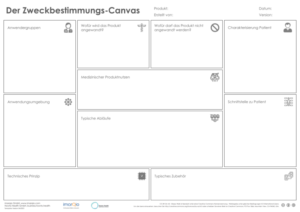
To help young companies in defining their product strategy better, Johannes Starlinger developed a special canvas for healthcare products.
What does success mean to you?
To me, success means being happy with who I am and with what I’m doing today, and with the person I see myself transforming into.
What is the best advice anyone has ever given you?
Don’t take advice from anyone who’s not where you want to be.
How would you describe or characterize your digital health journey?
Well, at the end of my medical studies, I realized how fascinating the possibilities are that digital technologies provide – for applications both within and outside the healthcare system. So I went ahead and studied computer science right after finishing my medical degree. I was lucky to already start exploring the area of biomedical informatics as a working student and continued working as a researcher in this area for over a decade. My focus was on data-powered applications, including, for example, software architecture for distributed processing of biomedical data, the use of genetic data to improve cancer treatment, or the use of data from general practice patient records to predict dementia.
Next to working as a researcher, I’ve been providing IT and digital health consulting and software development services for more than 7 years now and, eventually, found that I enjoy this product-oriented type of work slightly more than the more publication-oriented goals academic research strives for.
“It was an eye-opener for me to do regulatory training and learn about how to actually transform research findings and ideas into medical device products. It still feels like the regulatory know-how was my personal missing puzzle piece to be able to fully interweave my medical and computer science knowledge in the area of digital health.”
So I finally decided to leave academia (for the most part, I still do some teaching) and fully went industry with my own company some 1,5 years ago. The process is still ongoing. I’m very happy with who it’s transforming me into 🙂
What have been your biggest challenges in working through a pandemic, and have you found any silver linings?
As a father of three, managing home kindergarten, homeschooling, and home office all at the same time during the second lockdown was incredibly challenging, not to say nerve-wracking. As with most challenges, there was a great deal of learning to take from it (after getting over the wracked nerves), both on a personal and on a professional level. I hope we don’t have to go through that again, though.
Did you always want to be a leader in digital health? What do you think you might have been if you had taken a different path?
I’m not actually sure I see myself as a leader, I must admit. I’m someone with rather deep knowledge and experience on a rather broad spectrum of all the elements important in digital health: med, tech, and regulatory. And I love to use this knowledge to enable change in the way health and healthcare are delivered and consumed. That being said, I tend to have strong opinions and a certain vision for what healthcare may look like 10 to 20 years from now – and especially how we as individuals make use of the tools given to us to care for our own health much more than we do today, and in a more holistic way.
My alternative path would have been non-health tech. There are so many awesome things digital technology can do in all sorts of areas. And it’s just fun, too 🙂
How would you characterize the digital health space in Berlin/Germany – what are its relative strengths and weaknesses?
I think Berlin (and selected other places in Germany) has a great mix of creative power and all the different skills needed to drive innovation in digital health. This includes a vibrant startup scene, various funding opportunities, a plethora of biotech industry and startup-friendly universities. At the same time, I think the interlink between digital health innovation driven from outside the healthcare system, e.g., by innovative startups, on the one hand, and participants within the healthcare system on the other hand, could be much better. Currently, it’s often very difficult for startups to engage with partners within healthcare.
What do you do to unwind?
Cycling relaxes me almost instantly. Decent booze with the right company does the trick in the right circumstances.
“Going for a walk, possibly with some good music, does many good things.”
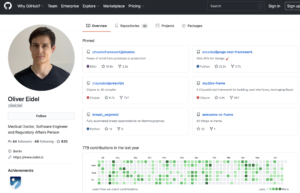
Mentor Oliver Eidel is a medical doctor, self-taught programmer, and founder of OpenRegulatory, helping startups become compliant since 2020. At Vara, he was an integral part of the team that developed Germany’s first AI software for breast cancer screening and got it certified as a medical device. Self-taught as well, in regulatory compliance, Oliver went on to found OpenRegulatory to make regulation more transparent through free templates and a Slack community.
When he is not solving regulatory compliance problems, he uses his free time to fly airplanes and enjoys a good shut-eye. Keep up with Oliver and his work via his blogand at OpenRegulatory.
What do you think are the best steps to enter the digital health space?
First off: I have a huge amount of respect for anyone attempting to enter the Digital Health Market and trying to build a company around it. It’s full of incumbents, slow-moving customers and, on top of that, heavily regulated. You need an almost pathological dose of optimism (or ignorance) if you want to persist in trying to enter it.
That being said, I think it’s the most exciting and fulfilling field to be in! What’s more exciting than improving Healthcare, essentially improving people’s lives? Sending people to Mars, maybe. But then again, those people on Mars also need Healthcare. And they’ll need digital health, because right now, we don’t have fax machines on Mars!
So – how to enter it? It’s tricky and there’s no perfect way.
Explore some of the free tutorials from Oliver Eidel
There are two paths you can take: The first one is Healthcare-heavy. You work “within the system”, as a physician, nurse, technician, etc. – that directly exposed you to all the day-to-day problems which need solving. You can easily come up with product ideas. But now you’re facing a problem: How do you build a product “within the system”, who will work with you and who’s going to buy it? Chances are, the hospital you’re working in and the people surrounding you aren’t that interested in founding a startup and building something risky and innovative. So you need to take the second path, which is startup-heavy. You join a Healthcare startup which connects you with like-minded people, funding, and the opportunity to build something. But now, you’ve moved further away from the actual problem which you experienced in your day-to-day work at the hospital!
As you can see, there’s no perfect way. The perfect way would be to work in an innovative hospital (or doctor’s practice) while being able to build something new.
That sort of setup doesn’t exist as of today. The next best alternative is to work in a startup. But again, today’s startups have a high risk of developing the wrong thing because they’re not close enough to the actual problem.
What digital health issues are particularly on your mind at the moment?
Building a Hospital Information Software which doesn’t suck. I think there would be so much awesome leverage there! You should see the software they use nowadays in hospitals, it’s unbelievable. I’ve seen students being employed to copy-paste things inside crappy software all day long because there weren’t interfaces to export data, for example for research purposes.
Think of all the time physicians, nurses and assistants spend on wrestling with slow software and confusing user interfaces, imagine all the time we could free up!
Everyone’s talking about the impending lack of personnel in hospitals, but hardly anyone is talking about how much time crappy software currently consumes. Sure, we might not solve the entire personnel problem with software, but we might get closer.
Well, that’s the problem I’d like to solve if I had infinite resources. For the time being, I’m trying to solve the problem of regulatory compliance for Healthcare startups at OpenRegulatory. It’s interesting: Every startup has this huge pain dealing with regulatory compliance and there’s hardly any free information available online. I’m trying to change that.
How would you characterise the digital health space in Berlin/Germany?
Firstly, you’ve got all the relevant ingredients for building great Healthcare startups: A fairly large ecosystem of startups with smart people, funding, and even a connection to politics via the Health Innovation Hub. For someone coming from Heidelberg like me, the fact that there are more than three startups to choose from is very exciting!
Also, the German Healthcare system which treats everyone, and treats everyone equally (more or less), while being fairly efficient (efficient being defined as “not a complete catastrophe like in the US”). Then, you have the recent political changes which made apps reimbursable by insurances (“DiGAs”). I’m not entirely sure how that will pan out, but it’s an exciting move in the right direction and will boost innovation and the Healthcare startup ecosystem for sure. There’s a lot of startup optimism here – that’s great! But sometimes, it’s maybe a little too much, and maybe a little too tech-centered. Seemingly every startup wants to apply machine learning to Healthcare – but why?
I think many founders have never been inside a hospital. You don’t need machine learning to replace fax machines. Every day, physicians and nurses are fighting with crappy software. The next logical improvement to crappy software is not machine learning – it’s non-crappy software.
Many startups don’t understand that, and I’m not sure why. There are many possible reasons: “Only” building non-crappy software doesn’t sound very sexy, especially to VCs. Also, non-crappy software is often connected to solving big problems, and solving big problems is very risky, like building a Hospital Information System which doesn’t suck – I imagine it being near-impossible to sell this sort of software to hospitals as a startup.
So, that leads to startups building isolated solutions (often apps) for isolated problems, with some machine learning mixed in. It’s less risky, and it’s more sexy. But it leads to a lot of duplicated effort: Right now, every startup is effectively reimplementing their own Electronic Health Record inside their software. Every software has its own, distinct user interface, also for physicians. And if there’s one thing which physicians hate, then it’s using yet another new software with its new user interface!
Anyway, right now, we have lots of innovative stuff being built, but it’s all isolated from each other. I don’t think that this will be sustainable – neither patients nor physicians want to interact with multiple applications regularly. Then again, I’m happy about the innovation happening and this might just be the first wave of startups we’re seeing in this space, and maybe, hopefully, we’ll have more integrated solutions in the future.
I’m not sure if the classical VC-funded-startup model maps well to Healthcare startups. It’s all about growing fast, capturing a market and then selling the company. But even only that first step, growing fast, is often impossible: Sales cycles are long and integration efforts are complex.
Sometimes I wonder whether the old-school business model of growing a small, profitable business maps better to Healthcare as it forces you to consistently deliver value to your customers. I’m a big fan of that. Not sure though if they even teach that at business schools nowadays.”
How do you picture the digital health space in Germany looking in five years?
I’m very bad at predicting the future. Here’s what I would hope:
We continue to sustain the momentum of Healthcare innovation which we’re seeing right now, while startups have figured out how to implement sustainable business models in digital health, maybe through reimbursable apps (DiGAs), maybe through some other way. Other startups are finally getting started on solving the big problems like building better Hospital Information Systems.
And, on a more personal level: I hope I’ll need less than five phone calls to book an appointment with a specialist. I hope I no longer have to organise and scan my own paper-based medical records.
Physicians actually prepare and read my medical file before I walk through the door. And, finally, software will actually reduce the time which physicians spend on tedious tasks so that they can spend more time with patients. That’s still the holy grail, and right now, we’re not doing a great job at achieving it.
What advice would you give your younger self?
I think that my generation (I’m 30 now) faces an interesting situation: We have way too many job options. It’s hard to decide and you’re likely to be unsatisfied with whatever you chose. I could have worked as a physician, researcher, or software engineer – the latter not even limited to Healthcare. There’s a near-infinite amount of job opportunities for those combinations! I acknowledge this as a first-world problem, but still: It’s a problem I’ve seen many people struggle with.
So here’s the advice I’d give my younger self: “Sometimes, procrastinating a decision is worse than making a crappy one. Just make your decision.
It took me one year of hanging around my parents and some lucky coincidences to move to Berlin and join my first startup. Even if decisions are crappy, nowadays you can revert most of them or at least mitigate their impact with different decisions in the future.
Johannes Steger is principal consultant and the current head honcho of communications at Plan D, a young technology and strategy consultancy actively shaping the face and experience of digitisation in the modern world, Plan D is Vision Health Pioneers’ most recent partner to come on board.
At ease in their spacious, industrial loft-style offices, Johannes is candid about the incredible journey of his career that has taken him from the buzzing tech startup scene of Tel Aviv as a journalist, to where he is today in Berlin. Despite having worked for many years as a tech journalist, Johannes humbly admits that his present role working with coding, engineers and data scientists has made him realise he knows nothing. That for him is an exciting revelation that he embraces as an opportunity to push himself out of his comfort zone. With this effortless capacity to step up to a challenge and an enthusiasm for all things tech, Johannes is a long-time champion of the startup community.
For him, startup culture poses as a powerful interrupter and driver of industry diversity.
The capacity of startup culture to birth forward-thinking founders and level the playing field through greater gender representation, is one that that he believes, “ultimately drives a country and the whole of Europe.”
On Mentorship and Giving Back
“I think everyone who works in this ecosystem has the obligation to do something good. We all profit from this great Berlin ecosystem but living this startup life and being in this ecosystem comes with the obligation of giving something back.”
As a mentor at Vision Health Pioneers, Johannes has facilitated workshops on vision, stakeholders and messaging. He has also contributed his time and presence facilitating the recent Batch #2 pitch event. For Johannes, his involvement with Vision Health Pioneers is not just an extension of his love for technology and his belief in the integral role technology and data has and will come to play in the health industry. Rather, as a participant of the Berlin startup ecosystem, it is his commitment to building up and enabling others to drive the ecosystem further. As a natural visionary, there is a bigger picture and greater good that he is working towards in his guidance and mentorship of new startups.
“Vision Health Pioneers incubator is not only diverse by way of culture, but also the various solutions the startups bring to health. It is amazing that there is an incubator giving power and room for ideas that are finally bringing attention to stigmatised topics such as mental health and female intimate health”.
On Visibility, Being Present and Stakeholder Management
When it comes to networking, visibility and messaging, Johannes does not sugar coat the importance it plays for early startups. However, his core take-home message is simple: concern yourself with the needs of others, not just yourself. “Visibility can also mean being in an audience and listening. Being present, listening, learning and not necessarily always engaging. Just be there and learn. It is not always about talking and present by way of ‘presenting’ yourself but ‘present and listening’. This for me is essential for networking and visibility”.
On Purpose, Messaging and Owning Your Story
There is a commitment to truth and integrity that Johannes stresses must be upheld from purpose through to the messages that are conveyed, particularly within the healthcare industry. Here, he is quick to draw the distinction between up-selling pizza and healthcare solutions. While there is an end-user in both instances, when it comes to health, it is important to bear in mind that a life is dependent on it.
“In communicating something about your product, you have to be very sure what you say and promise. Don’t promise anything you cannot keep, because even if the consequences of embellishment or false promise are not deadly, it is a pain that a person at the other end is feeling, be it a mental pain or a physical one”.
With regards to purpose, it is important for healthcare startups to not be solely profit-driven, but to be clear on what drives the innovation.
“With Vision Health Pioneers Incubator, every founder seems to have a personal relationship to the product they are building. When guiding the teams, I often tell them to use their personal story in their communications. It does not only have to be ‘I am suffering’, but it could also be, ‘I saw someone else’s suffering.”
At the recent Pitch event, his guidance was evidenced in the stories put forth by the young startups. Beyond open and honest, this authentic voice that Johannes encourages in communication is a bold declaration that gives a voice to invisible and stigmatised issues in healthcare. Putting these stories out there not only fosters connection. It holds the immense power to create dialogue, give hope and forge role models and leaders out of an idea born from one person’s story.
Hailing from Bremen, Laura Nelde moved to Berlin three years ago. A cherished mentor at Vision Health Pioneer Incubator, she’s Flying Health’s Startup Relationship Manager, where she works at the forefront of tomorrow’s healthcare, guiding industry leaders and entrepreneurs and working with startups in-house to develop new digital drugs. She holds an MPhil in Bioscience Enterprise from the University of Cambridge, and speaks passionately about the need for Germany’s wider healthcare community to embrace the technologies and treatments fostered in digital health.
You might also be curious to know that she’s pretty crafty and into DIY fashion. When she’s not working, she scours the web for designs and puts together all sorts of pieces using her grandmother’s sewing machine. As a mentor, she’s appreciated for her open mind, and stresses the importance of intellectual flexibility:
“I always say that what I am offering is one perspective, one piece in the puzzle. You have to speak to so many different people -there are so many stakeholders involved. There are many opinions you have to take into account.”
Curious to learn more on her story and values? Read on:
What do you think are the best steps to take to enter the digital health space?
When it comes to learning about the problem you are trying to address, It’s important to understand the traditional system and the current patient journey. You need to know which stakeholders are involved and how your proposed solution changes the current care path and offers value to all those involved.
It’s also a good idea to talk to experts: People who understand the healthcare system and people who have developed medical products before. Do not underestimate medical device regulations and consider that in your product development from the beginning,
And always keep in mind: the user might not be your customer.
What digital health issues are particularly on your mind at the moment?
Among my many interests, I’m motivated to tackle the subject of how to empower the patient by enabling a wide range of treatment modalities that includes digital solutions– besides traditional options including pharmacotherapy and face to face appointments. This is so that each patient is able to choose the type of care that is most suitable and most effective for them at that point in time.
It’s also important to me to support digital health startups In entering the market, so that they can make new solutions accessible to patients in Germany and allow innovations developed in Germany to stay here instead of leaving for opportunities abroad.
What motivates you to be a mentor?
I love sharing and passing on the knowledge and insights I have gained to support startups/teams that might be new to the healthcare sector. I’m passionate about bringing their ideas to reality as much as I am bringing innovation to the patients, the healthcare system is complex and without support, these endeavors can be difficult.
I also really enjoy meeting teams at an early stage and get excited about learning about new ideas with the potential to transform a part of care delivery.
How would you describe the digital health space in Berlin– what are its relative strengths and weaknesses?
Berlin’s digital health community is strong. Its startups rarely see each other as competition, but operate as allies working together to further develop digital health and make it an integral part of our healthcare system.
Before COVID, we also enjoyed all the opportunities we had to attend events and get to know startups and stakeholders. Though now, with COVID, our location is no longer our greatest asset. We’ve lost networking opportunities. But the flip side is that startups located outside Berlin can attend events here.
Did you always want to work in digital health, and if so, why?
I studied economics and management to keep my options open, but realized early on during my studies that healthcare was the area that fascinated me most. I wanted to work in an industry with a significant impact on people’s lives and the opportunity to make a change.
Digital health, at the intersection of healthcare/medicine and tech had a lot of untapped potential, and seeing founders innovate in this highly regulated and traditional market has fascinated me ever since. This is because this path requires significant dedication and a strong vision and value proposition.
What personal qualities make the most effective founder in this space?
Some of the most effective founders we have met were those teams that combined expertise from science/medical backgrounds and business backgrounds.
This will likely not be a single person, but a founding team that has different backgrounds is tremendously helpful in understanding all aspects of what it takes to build a sustainable business while making sure that the proposed solution is addressing a medical need and built according to medical device and clinical evidence standards.
How do you picture the digital health space in Germany looking in five years?
I Imagine that the underlying national ehealth infrastructure will be widely adopted by then, building a strong backbone for new innovations to be developed and implemented.
I hope that many startups will continue to innovate and work together with existing players across sectors in healthcare to transform care delivery and improve outcomes.
I think there will also be a wide range of apps available on prescription that have become standard options across the treatment spectrum for physicians, and which will hopefully expand beyond the outpatient sector in supporting patients across the care continuum.
What cultural product would you take with you on a deserted island?
I’d want to have access to my favorite podcasts –then I’d have new episodes to look forward to! My top three podcasts are: Alles gesagt, Der Tag and Visionäre Der Gesundheit.
The community at Vision Health Pioneers Incubator goes far beyond its entrepreneurs and includes a diverse network of mentors. Read more about their stories and vision in our special series on them.
So says mentor, nature lover, avid photographer and gardener Susanne Feldt, who helps healthcare startups develop data-driven products, services, and business models, by raising the bar on customer experience.
Passionate about digital transformation in healthcare, and especially fascinated by applied AI and analytics applications, she’s got some great advice and insights for our growing community.
You might also be interested to know that she once spent tens days in total silence at a monastery in Nepal, an experience she describes as ‘life-changing’.
What do you think are the best steps to take to enter the digital health space?
There is real momentum for digital health. The global community is growing. The healthcare market is quite specific and requires knowledge about challenges and ongoing trends. Try to join online conferences, meetups or social media groups (on Linkedin, Clubhouse, etc) and take part in the conversations.
Which of your professional accomplishments are you most proud of?
I trained many of my former colleagues and clients to use the user-centered innovation mindset (Design Thinking). Once people understand the value in user-centered-design, they include that in everything they build. It’s hard to believe that people often develop products without ever talking to their customers.
What digital health issues are on your mind at the moment?
Personally, I’m super interested in the use of AI/ machine learning for human-centered healthcare innovation. In my current project, I conduct user research on the brain tumor workflow. It’s a bit crazy, for some rare diseases it often takes a long time until patients get a proper examination. Sadly, it depends on individual healthcare providers (HCP) and their engagement if patients receive the best possible treatment. Treatments need to become more personalized, and therefore HCPs need more time for individual cases. I believe that digitalisation and data analysis can support HCPs in providing better diagnoses and addressing individual needs.
What is the best advice anyone ever gave you?
“You either have to learn it and become the best, or you hire somebody who is better than you.” I’m a very curious person, always eager to learn new skills. But when you are building a startup, you need to learn to handover responsibilities.
What strategies have you used to stay sane and productive through COVID?
I started my freelance UX career just at the beginning of the pandemic. The decision was made before then, and I couldn’t reverse it. But so far, it all worked out well. I supported a small founding team with their product launch and we still met in the office until the beginning of winter. As I had this big change planned, the effects on my work due to COVID were minor.
Intellectually the year 2020 was very exciting for digital health. The general public became aware of this topic; people donated their health data for research and tried telemedicine consultations for the first time in their lives. We saw that a lot was possible and that creativity matters in solving problems.
What are the qualities of an effective mentor especially in this space and what motivates you to be a mentor?
I had a few mentors that inspired me on my work journey. These were always people that took the time to listen to me, even when they were super busy themselves. They did this without asking anything in return; they were purely interested and generous. For the same reason, I want to mentor. I enjoy teaching, problem-solving and connecting people. And I can learn from the startups and their journeys, too.
How would you describe your digital health journey? What have been some of the highs and lows?
The projects I’ve had in healthcare were by far the most interesting projects I had in my design career. It’s pretty exciting to design digital infrastructures for diagnostics. What are the lows? Definitely the strict data protection and compliance regulations; these regulations are often not designed and thought out for digital health applications. The documentation efforts are gigantic; in trials, a code freeze is required and even bug fixing causes problems, overall this makes it hard to develop in an agile setup.
How would you describe the digital health space in Berlin, what are its relative strengths and weaknesses?
Healthcare is a highly political field. As the government sits here in Berlin, we might have a location advantage in Berlin. The city is vibrant and interesting for innovative startups that develop data-driven tech solutions. The most important health incubators sit in the capital. Germany is definitely an interesting healthcare market with over 73 million public insured people. And within the limits of the GDPR data protection regulation, startups have to design compliant solutions. One weakness is that Germany’s federalism. So regardless of where the startup is, they need to handle this madness of different state regulations.
What have been your biggest challenges in working through a pandemic, and have you found any silver linings?
As I work in the digital field, I’m pretty lucky that COVID did not affect my work that much. I’m used to working with remote teams, and often I had to fly to my clients for short alignment meetings. I’m thankful that we all learned new digital processes and that it matters less where in the world a person is. Now I could live on an island and still do my job.
Nevertheless, having all these social limitations is hard and I also struggle with this. I wish we find better ways than lockdowns to handle this situation. The insecurity and the difficult (work) circumstances that some people are facing is troubling.
What personal qualities make the most effective founder in this space?
I’m not a founder myself (yet), but I worked closely with founding teams. Successful founders managed to design the value for their stakeholders and users, and in reverse they gained support from others. Engaging others in your mission is crucial.
In healthcare, this matters even more– proof of concept trials can cost a fortune, though this varies depending on personal connections. Therefore I believe that successful founders need to build long-lasting relationships with research institutions.
How do you picture the digital health space in Germany looking in five years?
Five years is a short time for innovation in a highly regulated field. I see that we finally have the electronic-patient-file and that this leads to more transparency about costs and procedures in the healthcare field. I hope that patients understand that they have a right to participate in the dialog about their health. However, this awareness might take even longer.
The community at Vision Health Pioneer Incubator goes far beyond its entrepreneurs.. We’re grateful to our ever-growing and diverse network of mentors. Stay tuned for more pieces packed with nuggets of wisdomon all things digital health.
As we move into 2021, companies are transitioning from a mindset of adaptation to strategic planning. In many cases, this includes exploring new growth opportunities and recruiting new team members. As the incubator time for batch #1 comes to an end, many of our portfolio startups – such as MySkills, Biotikur and advosense – are expanding their teams as well and are looking for great candidates. Since the team is one of the most important factors for success in early-stage companies, a few months ago we invited one of the most experienced female founders for a special session. Inga Bergen, a serial entrepreneur, digital health expert, and former CEO of the startup Magnosco, not only founded her own company from scratch but also took over management roles in established scale-ups where she expanded teams from 60 employees to a few hundred. In one special online session, she shed light on how to move forward during these unprecedented times and shared her learnings as a seasoned manager. Here are six hiring strategies she pointed out for early-stage founders:
1. Opt for a more experienced candidate.
Young startups benefit from having team members who are driven, committed to the company and well-equipped for the job. When it comes to making a hiring decision, experienced candidates are generally a safer bet. In the healthcare space, for instance, Inga Bergen recommends screening candidates to make sure they’re familiar with medical product development. The more experience a person has, the more knowledge and value they’ll bring to the table.
2. Know which roles to outsource and which ones to fill in-house.
The truth is that where investor readiness is concerned, it’s essential that startups keep all the key knowledge in-house. What does this mean? For example, if your solution is based on artificial intelligence, your startup should steer clear of outsourcing data scientists. Keeping the most important roles in-house – and the algorithm, in this case – can help to maintain productivity, all while maximizing security and efficiency. It’s a win-win.
3. Determine the right time to hire.
Inga Bergen operates with a simple rule in mind: She only hires new staff when she’s certain she can cover three to six months of that person’s salary or can offer attractive packages including shares in the company. The truth is that for any new startup, there’s quite a bit of demand – particularly in the beginning stages – to fill additional roles. This, however, isn’t always feasible. And so for young startups, founders must fix their finances first and only then figure out when to hire new staff.
4. Hone in on senior staff first.
The successful female founder has seen it all – and in several startups, she has witnessed founders building full teams when they should instead have hired their senior staff first. Say, for instance, the founders of a young startup decide they must hire a few new people. Rather than sourcing one senior product manager and three team members to work underneath them at the same time, you should recruit senior staff first to build his or her own team step by step. This will keep senior team members from imploding due to being given too much responsibility (and too little power) early on.
5. Opt for 15-minute phone screenings.
Though founders may want to meet with every prospect they find interesting, this isn’t an efficient use of their time – far from it, in fact! Inga Bergen recommends instead that young startups kick off the recruitment process with 15-minute phone screenings. To boost productivity, she suggests cold-calling them to get a feel for the interest and expertise level of potential candidates. From prospects’ motivation and energy to their drive and interest level, there’s a lot to glean from these brief conversations.
6. Follow your gut.
This is a simple hiring practice, but it is perhaps the most important one of all: When making hiring decisions, founders should be patient and follow their instincts first. Bergen said that she always turns down prospective employees who she doesn’t have a good gut feeling about. She said she’d much rather prolong her search and wait for the right hire than make the wrong hiring decision; this protocol would ultimately leave the startup better off in the long run. This is necessary for healthcare startups in the early investment stages, she added.