We have been asking our insightful community of supporters, mentors, coaches and partners what they think of when it comes to ‘Into The Future’? – For their thoughts on what innovation may happen in the near future, gaps that need solving in healthcare, what they can see in their crystal ball and more. We are thrilled to share their sharp, knowing and animating answers in part 2 of this series. (Read part 1 here)
We are always fascinated by how our startups can find solutions to complex healthcare problems. At our INTO THE FUTURE Demo Day on 31st August 2021 the startups will present their businesses and explain how they solve issues for now and for the future. But we are equally as fascinating by what our community think of when it comes to the topic of ‘Into The Future’. Here are some of their answers…
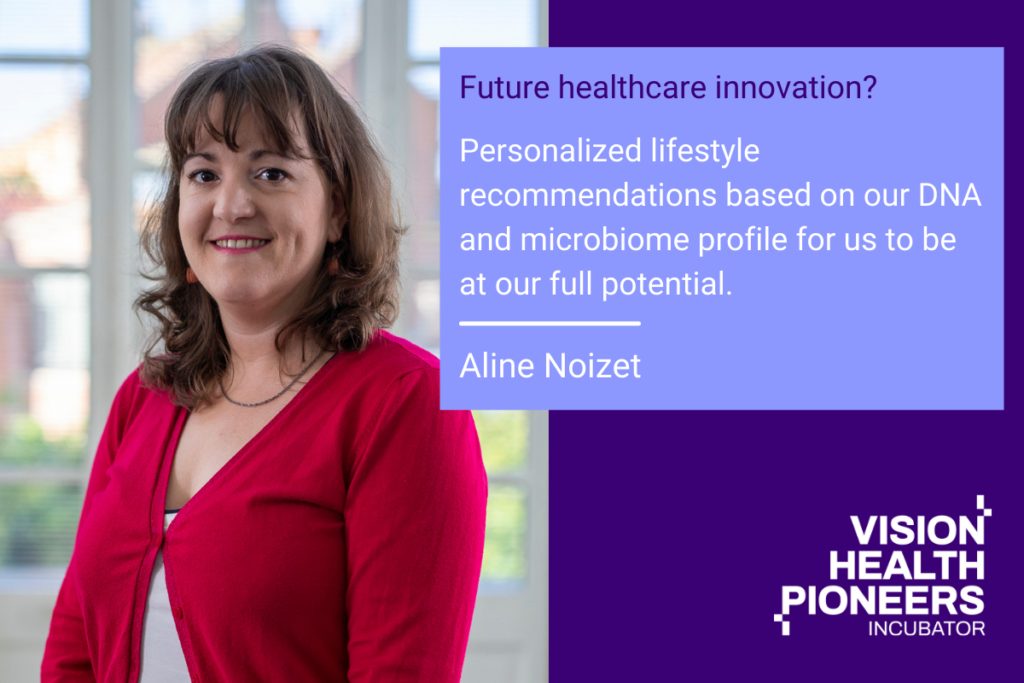
Aline Noizet, Founder, Digital Health Connector
What do you think will be the biggest change in healthcare in the next 5 years?
Decentralized care! The care is going where the patient is, instead of the patient going to the primary care center or hospital. People are being more empowered and will be able to consume healthcare from wherever they want 24/7.
What kind of innovation do you want to see happen in the future of healthcare?
Monitoring innovation that will enable each of us to track our health continuously and take action early if needed. Those innovations should empower us and treat us as persons, so we understand clearly what is happening and the course of action to take, from prevention to cure. Personalized lifestyle recommendations based on our DNA and microbiome profile for us to be at our full potential.
Where are the gaps right now in healthcare that need solving first?
Regulation. Have a clear regulatory framework, coordinated and interoperable between countries.
Data sharing. Being able to access and process data in order to advance drug development, improve treatments.
Involve patients and healthcare professionals more in the development of technological solutions
What can you see in your crystal ball? What does Into The Future of healthcare mean for you?
Empowered patients! Patients as CEO of their own health, participating fully in the decisions made about their health and supported by the right tools and care team (human part is key!). Personalized treatment made for me!
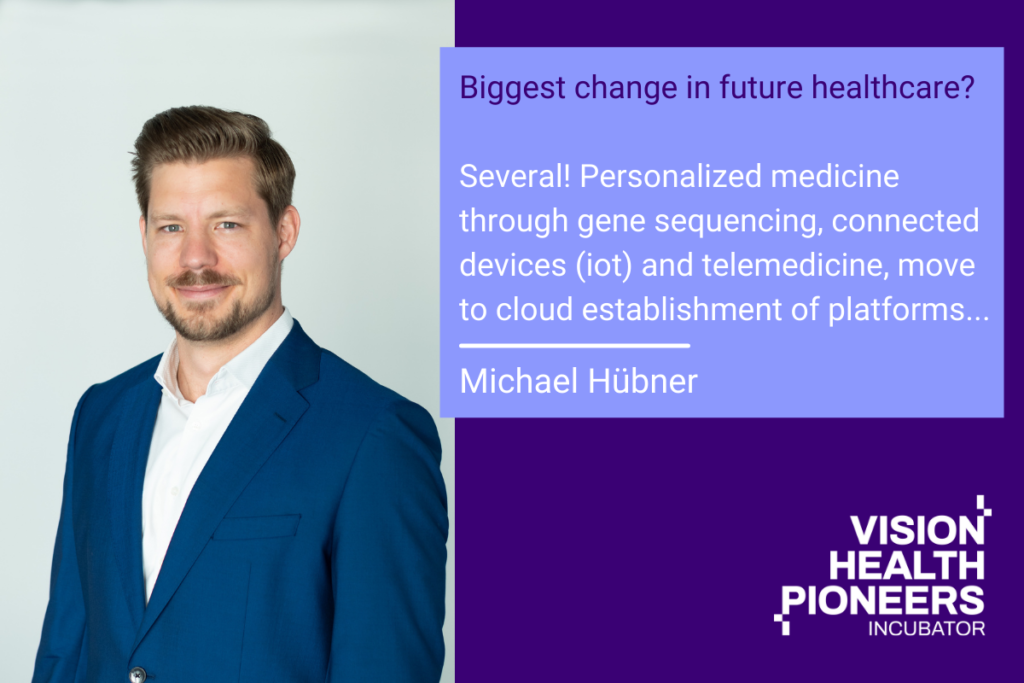
Michael Hübner, Projektmanager, Sana Digital
What do you think will be the biggest change in healthcare in the next 5 years?
In my opinion there will be several big trends that will change healthcare as we know it in the next 5 years, such as personalized medicine through gene sequencing, connected devices (iot) and telemedicine, move to cloud, establishment of platforms, data and analytics for evidence based medicine, transformation from inpatient towards more outpatient care, rise of value-based healthcare, etc. Choosing one is difficult. – For the next 5 years I would assume that the establishment of an international market leading healthcare platform combining a lot of the earlier named topics for customers/patients will have the largest impact changing the delivery of healthcare throughout the continuum of care as we know it.
What kind of innovation do you want to see happen in the future of healthcare?
More value-based patient centric and evidence based healthcare replacing old procedures instead of adding on and thereby making healthcare not just more effective but also more efficient and economically sustainable.
Where are the gaps right now in healthcare that need solving first?
Education and primary prevention can have a large impact on population health and thereby lower healthcare spendings as well as improving public health and the quality of life.
If you could drop everything right now and create any related product or service – what would it be?
I would probably aim to team up with big healthcare payer and provider to create a digital platform integrating the concept of HMO and ACO to provide state of the art highly digitized affordable healthcare services to selected customer
What can you see in your crystal ball? What does Into The Future of healthcare mean for you?
I will improve healthcare on a systematic level as part of the digital strategy department of one Germanys largest integrated healthcare provider.
INTO THE FUTURE Demo Day Event 31.09.2021 - Vision Health Pioneers Incubator
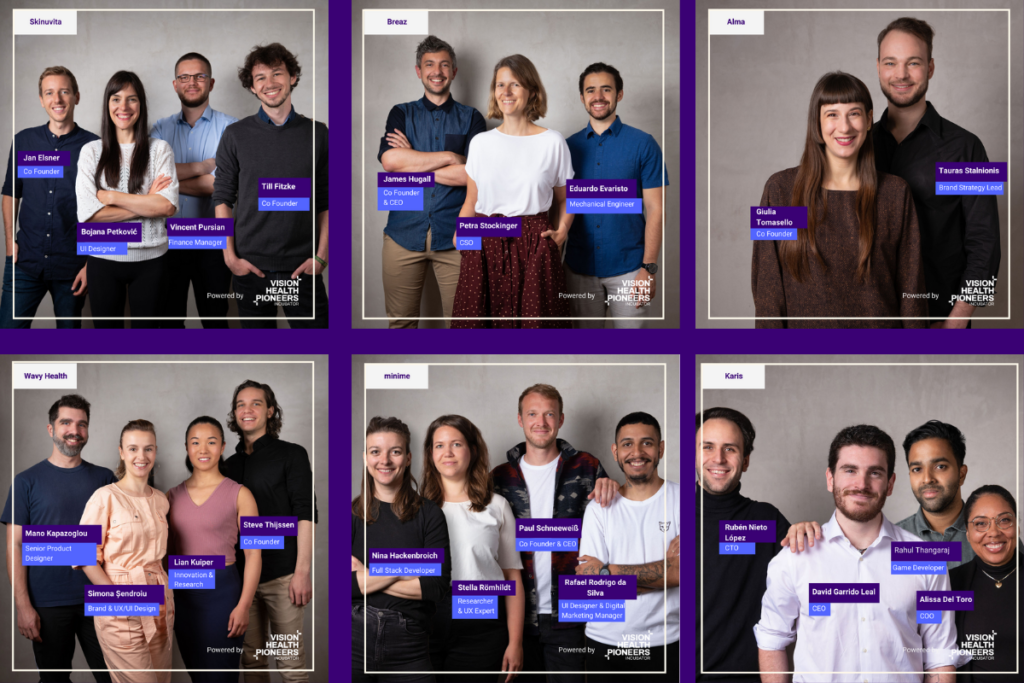
On 31st August 2021 our six startups will showcase their businesses at our next Demo Day – INTO THE FUTURE. But this isn’t just any normal event. This is inspiration. A demonstration of what can be achieved when a young mind is trusted to take something all the way to the finishing line. It has been a thrilling journey. Guided with expertises and insights from our trusted valuable coaches and mentors, supported by our wide-range of partners and nurtured within the Vision Health Pioneers Incubator, the startups have grown into. very. exciting. companies.
INTO THE FUTURE is the chance for an array of innovative startups in Berlin to present their business both to an online and hopefully in-the-room physical audience – depending on Covid-19 restrictions at the time. For all that attend, in whatever capacity is best, they will take away the stories of six exciting startups and also hear original thinking from a fascinating keynote speaker. Follow us across social media or sign-up to our newsletter here, to be among the first to find out who.
The Vision Health Pioneers Incubator Demo Day is a celebration and showcase of what can be achieved within an Startup incubation period. Where a group of young minds can build something special, often unique and always important. Entrepreneurs who improve not only healthcare in Germany but healthcare in Europe and beyond. That is the vision for so many of the fascinating startups in the Vision Health Pioneers Incubator.
Innovation in the healthcare sector is essential, new ideas must be brought in which can improve the current structure and systems. INTO THE FUTURE is the chance to discover some of the latest thinking of healthcare innovation in Europe. For those who invest in German healthcare or indeed who invest in European healthcare, this is an opportunity to interact with the pitchers and if of interest, hold one-on-one meetings with them and hold private conversations. If you are an investor and want to know more about the Demo Day and startup investment opportunities in German, please reach out to us.
Dr Daniel Kraft – Keynote and Nicole Scott – Moderator
Dr Daniel Kraft M.D., leader in the future of health, medicine and technology, is our Keynote Speaker! The Faculty Chair for Medicine, Singularity University and Founder and Chair, Exponential Medicine has previously given four fascinating TED Talks. We are over the moon to have the Stanford and Harvard-trained physician-scientist, inventor, entrepreneur, and innovator speak at our event and take time away from the XPRIZE Pandemic Alliance Task Force where he serves as Chair.
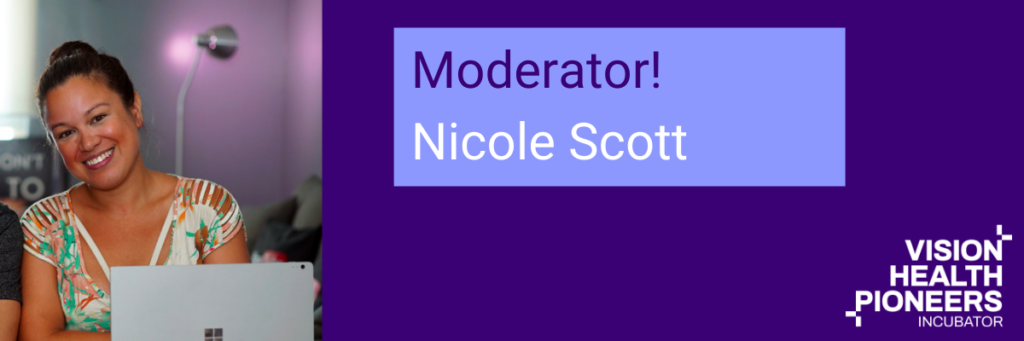
The Demo Day will be moderated by the cutting-edge video journalist and idea engine Nicole Scott! Nicole has been a leader in the tech world since the Blackberry was top dog and her first smartphone review happened years before we had even heard of an iPhone.
What does our insightful community of supporters, mentors, coaches and partners think of when it comes to ‘Into The Future’? We asked a handful for their thoughts on what innovation may happen in the near future, gaps that need solving in healthcare, what they can see in their crystal ball and more. We are thrilled to share their sharp, knowing and animating answers.
We are always fascinated by how our startups can find solutions to complex healthcare problems. At our INTO THE FUTURE Demo Day on 31st August 2021 the startups will present their businesses and explain how they solve issues for now and for the future. But we are equally as fascinating by what our community think of when it comes to the topic of ‘Into The Future’. Here are some of their answers…
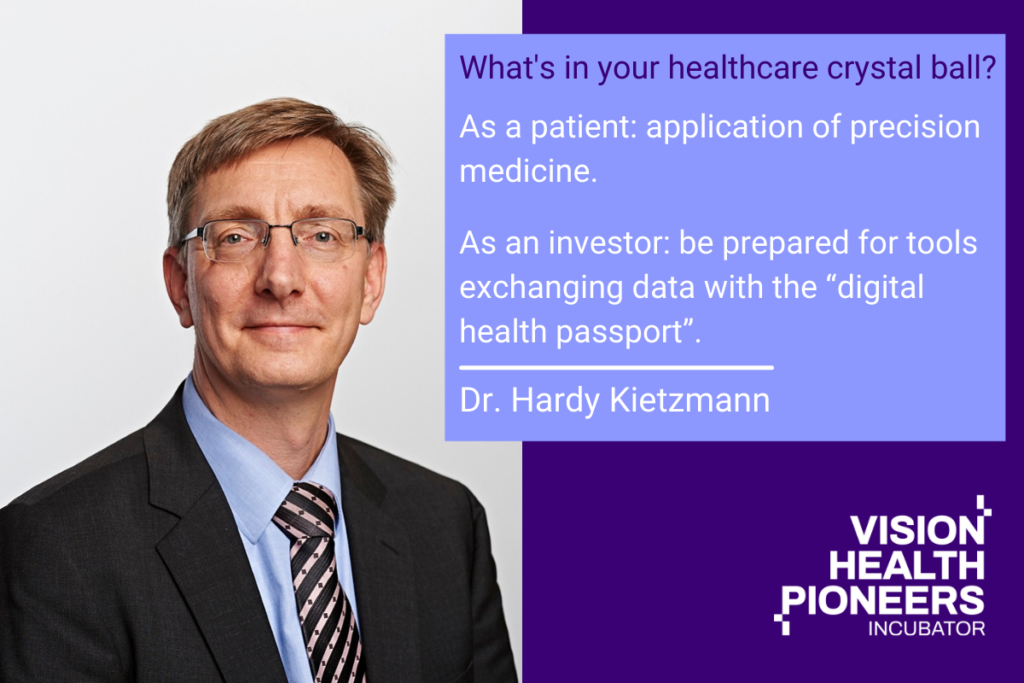
Dr. Hardy Kietzmann, Consultant in the area of digital therapeutics, focus Germany: DiGA
What do you think will be the biggest change in healthcare in the next 5 years?
Significant steps towards precision medicine (personalized diagnostics before selecting the drug).
What kind of innovation do you want to see happen in the future of healthcare?
Digital health passport or however you want to call it, … starting with (e.g.) german ePA and then enlargement on fields and features (much quicker than currently promised) and finally genetics to be included.
Where are the gaps right now in healthcare that need solving first?
Speed on ePA implementation and installment associated international standards including MIOs (again: toooooo late timeline for MIOs).
If you could drop everything right now and create any related product or service – what would it be?
I am on it (just joined a small StartUp). 8-))
What can you see in your crystal ball? What does Into The Future of healthcare mean for you?
As a patient: application of precision medicine
As an investor: be prepared for tools exchanging data with the “digital health passport”
What do you think will be the biggest change in healthcare in the next 5 years?
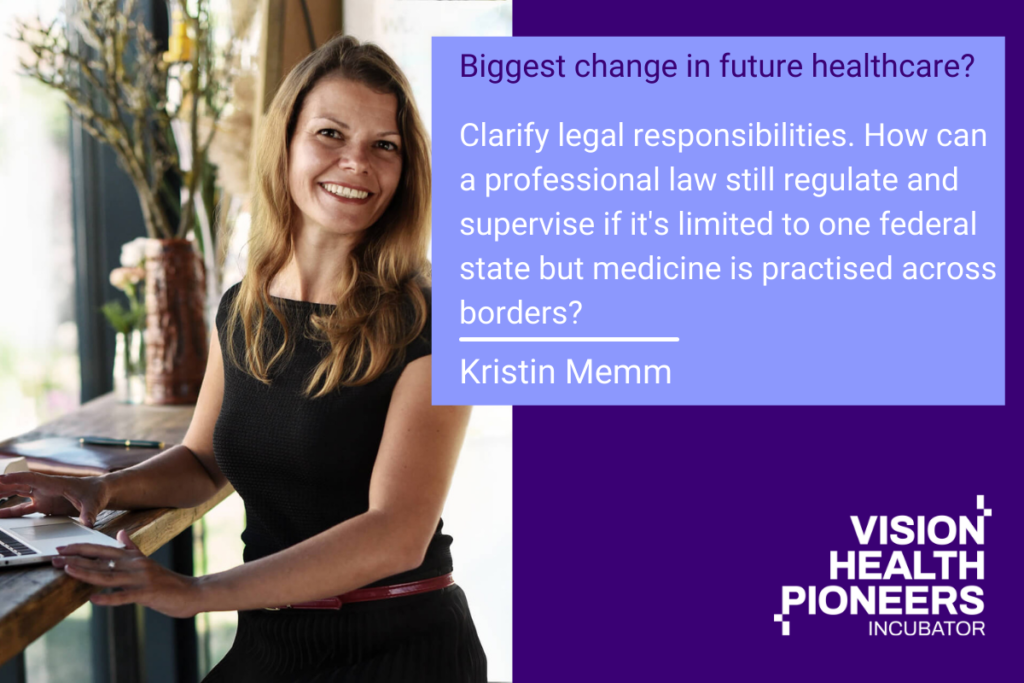
The centralisation of data. Artificial intelligence will collect such data, evaluate it and analyse it in a way that opens up new horizons for diagnostics, diagnosis, medical risk assessment and treatment decisions. The biggest challenge emerging from this will be to clarify the legal responsibilities.
How can a professional law still regulate and supervise if it is limited to one federal state but medicine is practised across borders? How can a physician be hold responsible for an AI making the right assessment of a treatment decision if the physician does not know the database and algorithms behind the AI? On the other hand, the AI is not a legal entity in its own right.
Our legal system faces a major challenge here. So far, we have set and changed the law in order to react to undesirable changes in our social community. Laws are abstractly general and are interpreted by the jurisdiction in individual cases. This results in the law by which we judge actions as right or wrong. The speed at which digitalisation is advancing is challenging our legal system in that law and jurisprudence are too slow to react to significant changes. Laws that only react to changes regulate a state of affairs that is often already in the past when they are enacted. The judgement of a supreme court is long outdated by the time it is pronounced. Our legal system is too slow and too limited to keep pace with technological development. This might cause an even bigger change in healthcare than the technical development. When technical evolution overtakes legal evolution, everything possible is also feasible, regardless of liability, responsibility and justice.
We need to rethink and make laws for the future. It will be crucial that we do not overstate the risks we see today, but also do not understate the risks that lie far in the future.
What kind of innovation do you want to see happen in the future of healthcare?
A patient centred healthcare, that focusses on prevention and the patients needs more than on treating diseases. The medical reimbursement system has become unbalanced in recent years. When financial incentives are set in such a way that it is not profitable to keep a healthy patient healthy, it becomes lucrative in an economically managed system to make patients sicker than they are. I hope, that the digital innovations, that mostly focus on prevention of chronicle diseases and serious health damages, change this approach and lead to a more individual, symptom controlled and health orientated wholistic healthcare.
Where are the gaps right now in healthcare that need solving first?
The medical reimbursement system needs to be changed fundamentally. Hospitals should not be allowed to be governed by stock exchange listed companies. The role of the physician as someone who shall drive healthcare innovation but must not be guided by economic interests must be reconsidered. In general we have to evaluate, who are our future healthcare providers, what drives them and how they are regulated. Medical self-governing bodies need to rethink their raison d’être. We all together should define the vision of our future healthcare and redefine our goals and mission for each healthcare body, each healthcare provider and each healthcare consumer.
If you could drop everything right now and create any related product or service – what would it be?
If I would drop everything for creating a healthcare related service it would be a patient centred App in non-hospital palliative care. With a focus on the therapeutic goal set together with the patient I would design a system that connects all doctors and nurses involved in the treatment, the patient and his or her caring relatives on the basis of a data-secure messenger service, provides access to the patient’s medical records and precautionary documents (such as the power of attorney for health care or advance directives) and that offers the option of requesting a multidisciplinary ethics vote in difficult decision-making situations.
What can you see in your crystal ball? What does Into The Future of healthcare mean for you?
This crystal ball is still very unclear and fuzzy. The future of healthcare depends on our ability to define a shared vision, critically review our existing systems and make the necessary changes, as well as our ability to abandon our retrospective assessment of current risks and exchange it for an objective prospective assessment of future challenges and regulatory requirements. If we can do this, the invention of digital health products has the potential to lead us to an ideal future of healthcare, where artificial intelligence can help provide the best valued and most individualised care, but where the patient, his or her health and a trusted doctor-patient relationship are at the heart of healthcare.
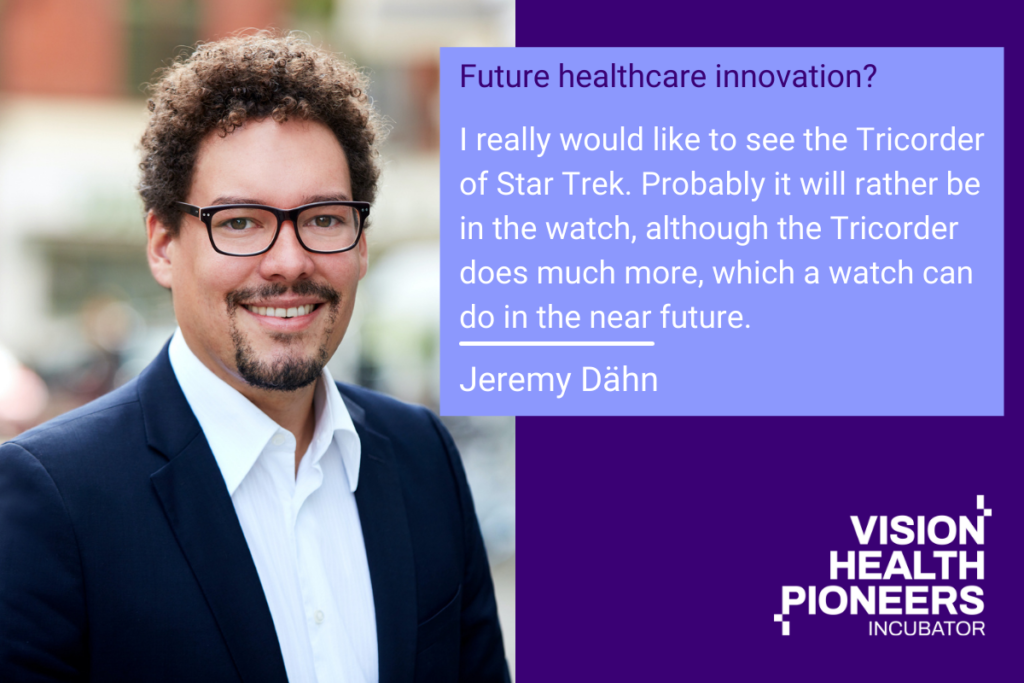
Jeremy Dähn, Head of Digitization and Innovation, Johanniter
What do you think will be the biggest change in healthcare in the next 5 years?
Patients and healthy people out there will monitor their vital signs continuously, which will be analyzed in newly established data centers in hospitals. Hospitals can immediately react to incidents, relapses or even preventive care for healthy customers. Therefore the cross-sectoral borders will merge.
What kind of innovation do you want to see happen in the future of healthcare?
I really would like to see the Tricorder of Star Trek. Probably it will rather be in the watch, although the Tricorder does much more, which a watch can do in the near future. 🙂
Where are the gaps right now in healthcare that need solving first?
In Germany, it is still the regulatory part. The cross-sectoral borders are cumbersome for innovation along the patient journey.
If you could drop everything right now and create any related product or service – what would it be?
The Tricorder!
What can you see in your crystal ball? What does Into The Future of healthcare mean for you?
Healthcare will focus on three areas. Taking care of the healthy ones to stay healthy, curing people with one-time incidents like accidents and helping patients with chronic diseases to cope with their illness, fostering adherence, and support behavioral change.
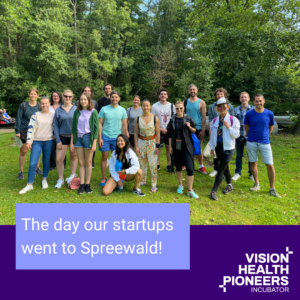
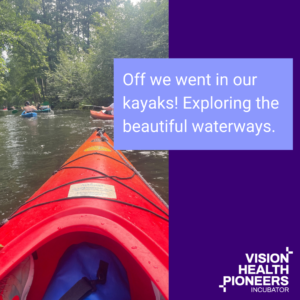
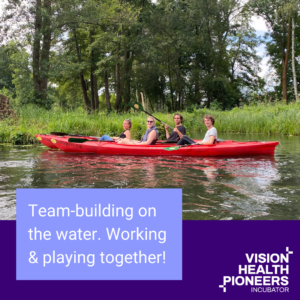
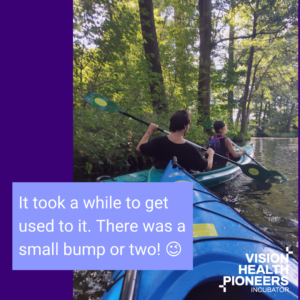
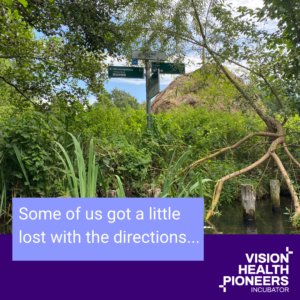
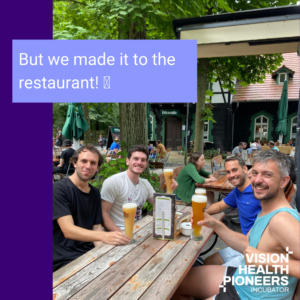
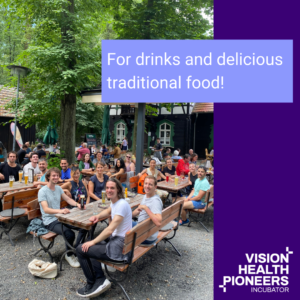
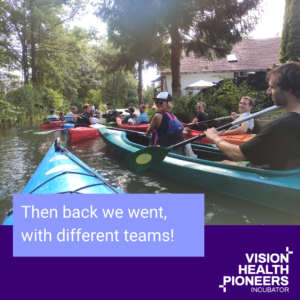
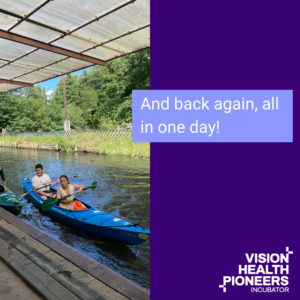
Recently we went with our startups on an adventure into Spreewald! This beautiful part of Brandenburg (the state that wraps around Berlin) is only an hour from Berlin and famed for its beautiful waterways. The trip was part of our Community Program where our startups get to interact with each other and take a well-deserved breather from their activities.
Many of the recent events have taken place online due to the current world situation, so it was wonderful to meet up in person once more. We jumped in the kayaks, zoomed through the water, stopped for a delicious traditional lunch and then took off again, this with different rowing partners.
With an abundance of nature on the doorstep, Berlin is ideally located for taking breaks in green spaces and on the water. Here’s to the next adventure!
Here’s a selection of photos from our startups adventure in Spreewald:
“Well what can I say? It was hard work writing the application, but we had great preparation from Beuth University of Applied Sciences Berlin and then we won!”
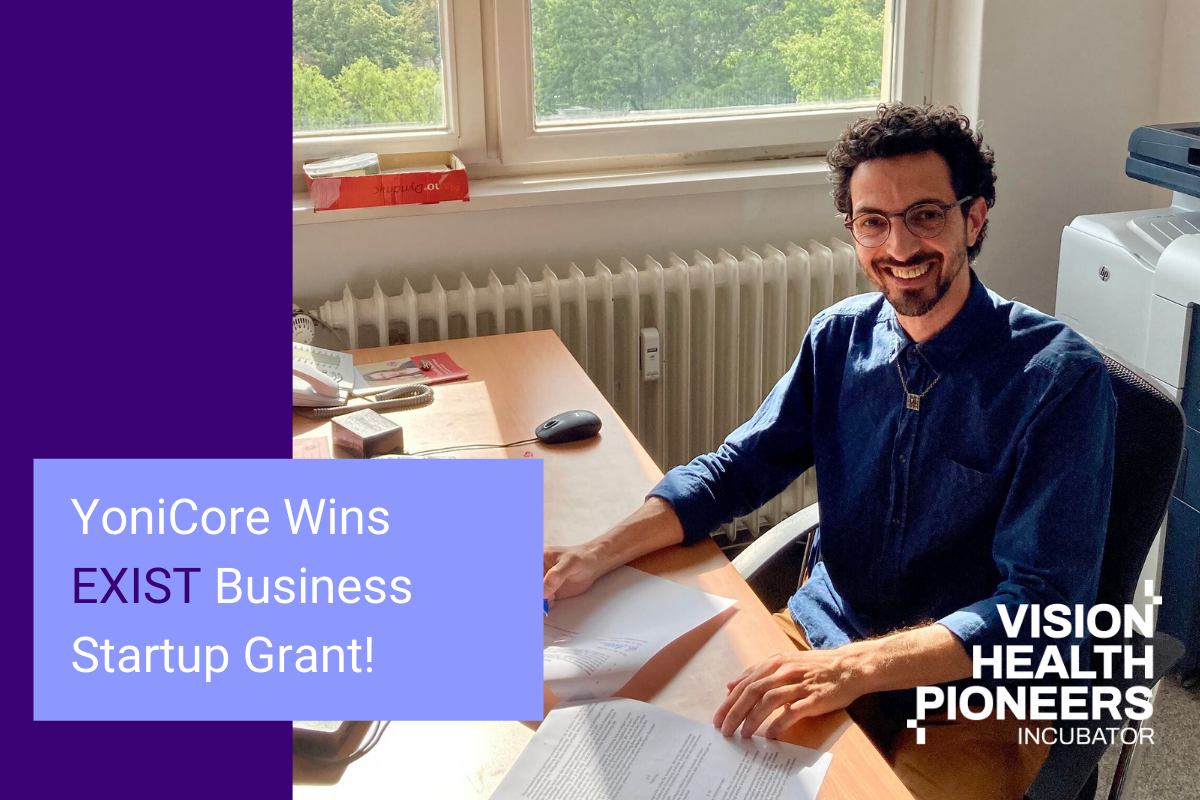
Yair Kira, Co-Founder of YoniCore is modest when it comes to the amazing news that their startup YoniCore has won the EXIST Business Startup Grant. Supported by the European Union and German government, the grant is focused on start-up teams with innovative business ideas. Yair and his team signed the contracts and moved onto their next exciting step of their entrepreneurial journey. As is the life of a young startup in healthcare, it’s about building the business onwards.
The Vision Health Pioneers Incubator alumni were awarded the grant, having pre-selected their mentor – Professor Ivo Boblan from the Compliant Robotics Lab in Beuth University of Applied Sciences Berlin (formerly Technische Fachhochschule Berlin).
“We needed to have a research partner and after a few universities turned us down, we were introduced to Bastian Behrmann from Beuth University. We were invited to pitch in front of the Beuth Startup Hub team. They weren’t easy on us, but we were well prepared and each Co-Founder could answer about their field of responsibility. For example I remember how nice it felt when Linda Wonneberger, Co-Founder, could explain better than me about the market. While Hugo Silva, CTO, talked in detail about the technology and presented the prototype we built. It felt good to see how we compliment each other as a team and I guess this is part of how we won them as partners. They instructed us through the process and we wrote the application, which took some time because it needed to be in proper german!” Yair jokes.
YoniCore’s Mission
Part of the necessary components for securing the grant is being an innovative technology or knowledge based project with significant unique features and good commercial prospects of success. YoniCore with its mission to build an excellent product that will improve the lives of millions of women around the world certainly ticks this box.
It however wasn’t all plain sailing. As Yair explains, “Due to the program structure, not all three Co-Founders could apply to the program. Therefore we decided to search for new team members for this application. This naturally took a little time but now we are happy that we could expand our product development team due to it.” It was a three month wait and then Yair and his team received the news that they had been accepted. “It was a big milestone for us to reach. We were really happy.” The grant is for one year and supports up to three scholars per team. Yair explains that there is an allocation of the public money funds towards key areas. “It will allow us to develop the product further and gain more validations as preparation for the next round of investors talks and fundraising.”
YoniCore’s Time With Vision Health Pioneers Incubator
Yair shares how their time, when they were named hers, in the Vision Health Pioneers Incubator helped prepare them for their overall journey. “It was almost a learning programme – we participated in many workshops. We were able to figure out all the health care issues we needed to deal with and came away from it with the ability to form our idea into a business model and plan.”
The team took part in the inaugural Vision Health Pioneers Incubator Demo Day.
“At our Demo Day in November 2020 it was another great milestone to reach. We were able to recap all the hard work we did and find the right way to communicate it. Our pitch was filmed and we still use that video today. It shows us and those in our network where we have been and where we are today.”
Yair also shares how the knowledge learnt through the Vision Health Pioneers Incubator has been of great support, even when this meant revisiting his notes. “We learnt how the German healthcare system worked and how to bring a medical product to market. At the time some parts felt theoretical and overwhelming. But now I can go back to my original notes and put those ideas into practice or re-tune something. After more than a year working on the project, we are gaining more hands-on experience and so we can match this with the theory. Slowly we are becoming experts in our field.”
Since Incubation with Vision Health Pioneers
The time after the incubator with Vision Health Pioneers is key for all the startups. Yair recalls the conversations with investors that took place. “We had many talks and received feedback that the project and the team looked great, but that it was a little too early for them to invest. Now when we go into investor talks, we know what they need to know and would like to see.” YoniCore have set themselves a goal to be ready for talks once more by the end of 2021. “We are using the time to gather more medical evidence and how the treatment we offer from a medical point of view is needed.” Yair is confident there is a high demand of women who need and would purchase their product. Now they are making sure they have the evidence for investor conversations.
Between the end of the incubator and the start of this grant, Yair and co have been taking part in other programs. “Tech4Ever, the mentoring programme, is specifically focused on women’s health and femtech so ideal for us. Another is Life Science Track which has been useful to analyze the user journey and requirements for quality management and the Medical Device Regulation (MDR).” Yair says.
The team is now hard at work with developing their product further. “The opportunity we have with the University and the lab is to develop the product further. The difference for the other programs is that with the EXIST Business Startup Grant we have a budget for materials and services. This is important when you develop a hardware solution. Now we have the possibility to get our product to work as we imagine it. After this we could test it and we’ll know what our minimum viable product (MVP) looks like. Then we can go through the CE certification and compliance to the MDR.”
The YoniCore Product
The unique aspect of YoniCore’s smart connected medical device is how it treats pelvic floor dysfunctions. The individualized treatment is the only treatment that offers end-to-end relief with a long-term training programme within their app. Other products in the market provide either physical support and immediate treatment of symptoms, or pelvic floor training. YoniCore has a holistic approach that takes care of these women from all aspects and allow them to get more control with less visits to the doctor. Their focus is not just on the plain medical aspects but on the whole experience and taking into consideration the emotions and busy life of the women they are approaching.
We are delighted to announce that Dr Daniel Kraft M.D., leader in the future of health, medicine and technology, is our Keynote Speaker at INTO THE FUTURE, our next Demo Day on 31st August 2021!
We are over the moon to have Daniel Kraft as our Vision Health Pioneers Incubator Keynote. Daniel is a Stanford and Harvard-trained physician-scientist, inventor, entrepreneur, and innovator and is serving as the Chair of the XPRIZE Pandemic Alliance Task Force. With over 25 years of experience in clinical practice, biomedical research and healthcare innovation, Kraft has served as faculty chair for Medicine at Singularity University since its inception in 2008, and is founder and chair of Exponential Medicine, a program that explores convergent, rapidly developing technologies and their potential in biomedicine and healthcare. Following undergraduate degrees from Brown University and medical school at Stanford, Daniel was Board Certified in both Internal Medicine & Pediatrics after completing a Harvard residency at the Massachusetts General Hospital & Boston Children’s Hospital, and fellowships in hematology, oncology, and bone marrow transplantation at Stanford.
Kraft is also heavily involved in digital health, founded Digital.Health, is on the board of Healthy.io and advises several Fortune-50 and digital health-related startups.
But that’s not all!
We are equally as delighted to announce that the Demo Day will be moderated by the cutting-edge video journalist and idea engine Nicole Scott! Nicole has been a leader in the tech world since the Blackberry was top dog and her first smartphone review happened years before we had even heard of an iPhone.
As well as being the Producer of beyond innovation GlobalTV Series, Nicole has been Editor-In-Chief of Mobile Geeks for nearly ten years. Here she focuses on the future of mobility, how we can live a more connected life and how we will live in the future. Whether self-driving cars, robotics, AI or IoT, Nicole is at the forefront of how devices impact our interaction with the world.
Make sure to register for your ticket and click ‘Attend Event’ our LinkedIn page to join us for what is bound to be an insightful and inspiring day. We look forward to seeing you there.
If you saw a problem every time you received treatment, would you decide to make it your purpose to solve it? Not many people would. But Jan Elsner isn’t many people. Skinuvita – making home UV-Therapy possible.
When you find out more about Skinuvita and how they are making UV-therapy more accessible, you soon discover what lies at the heart of the startup. There is a vision, yes, but also an inspiration weaved into the business and those who work within it. It’s the real feeling of knowing what it’s like to live with a chronic skin disease and that the effective medical treatments available are actually not so easily applied.
Jan Elsner, who Co-Founded Skinuvita, has the chronic skin disease Psoriasis and had for a long-time seen numerous therapists and tried different treatments until he eventually found that UV therapy was the best for him. However he encountered a problem. He was recommended 30 individual sessions, the average for a successful treatment cycle, but to receive these, he needed to visit the dermatologist every single time. Time is the most precious thing and this treatment process takes it away. Plus the travel involved in going to and from the doctors. That’s why home UV-Therapy is so important.
Mockups of upcoming Skinuvita product
Therefore UV therapy, in its current setup, is just not applicable for most patients of chronic skin diseases. But the solution from Skinuvita is. Jan decided to improve the situation for himself and all others in similar positions. To create a digitalised therapy which allows patients to use a safe and medically supervised UV-therapy at home. It began as a student project at Bremen University and those around were quick to see the advantages it brought to the healthcare ecosystem.
Jan explains how things began to really take off. “We had input from dermatologists in Bremen, public health experts and insurance companies. They were all keen to support. Then in 2019 with the Digital Health Act, the market changed and digital health became far more relevant.”
Even the global pandemic didn’t seem to hugely impact the startup being formed. “We decided to leave the comfortable bubble of academia and actually found more courage to write proposals for funding. It was during this process that we were invited to pitch at the Professional Association of the German Dermatologists (BVDD) in Berlin and then by surprise became the wildcard entry for the Vision Health Pioneers Incubator.”
Jan shares how joining the Vision Health Pioneers Incubator has helped their dream of making home UV-Therapy possible. “We went from an evening and weekend project to, on short notice, having the luxury to build a team.” It was this process where fate played a role.
A Team of Coincidence
Jan Elsner, Co-Founder Skinuvita
Jan reached out to now Skinuvita Co-Founder Till Fitzke, but it nearly didn’t work out that way. Till shares how he became involved. “I knew Jan from before. He contacted me but I was super sick with tonsillitis. After five days I called him back just before he pressed send on an email accepting someone else for the role! It was such a unique opportunity that I quit my then job. I felt I wouldn’t get another chance at something like this.”
Till Fitzke, Co-Founder, Skinuvita
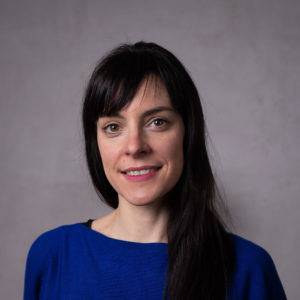
This wasn’t the last of happy coincidences for the Skinuvita team. For Bojana Petkovic, UI Designer, she was finishing her studies in Digital Media when a flatmate recommended the startup. “They said that Skinuvita were looking for support in their design work. I had a promising future in my job at the time but it wasn’t so interesting. I relate more to this kind of work – where we can create things from scratch. Rather than being a tiny screw in a larger organisation.” Bojana is focusing on marketing design and visual identity, having also recently been awarded the ‘Best Design Art’ award for her master thesis.
Bojana Petkovic, UI Designer, Skinuvita
As the Skinuvita team speaks it is clear they have a well-balanced approach to startup life and embrace the journey they are on. Till likens the combined passion as to that of doing something in your life that helps other people. “We all have that in common. It is worth a lot.” he says.
The startup team has naturally changed a little since they entered the Vision Health Pioneers Incubator in January 2021. Jan shares more,
Vincent Pursian, Finance Manager, Skinuvita
“Not everyone is born to work in a startup with all its uncertainties and challenges. We had a great colleague, Nadine, who did a fantastic job but had to make a change in her career direction. We are very thankful for her efforts. We used this chance to explore a fourth member of the team.” It was by chance that Till received a message from a friend.
“It was another funny coincidence. Vincent Pursian, who is now our Finance Manager, messaged me. We knew each other from school and he had just found out that his job at the time wasn’t continuing. He was in!”
Vincent is making sure they are ready for investment. “Till came back to me with that question about a change in my life and so I accepted. We have been planning for a substantial investment since then and are confident with what we can achieve. There are already ongoing conversations with various interested business angels and VCs.”
A Philosophy of Positive Impact
Jan explains how they enjoy the positive impact they have. “Like Bojana said, none of us want to be a small screw in the system. Startups are risky and they need a profitable business outlook to attract investors. We all relished the fact that we get more fulfilment from shaping things.” Bojana adds more, “We really discovered that in a team workshop together. After three exciting days with barbeque, creative sessions and simple things like playing frisbee in the lake, we got to know one another. That was really important to help us bond.”
“The small moments like when you discover a puzzle piece you didn’t know was missing. Suddenly everything gets better.” – Is how Jan describes how it energized them.
The Skinuvita Home UV-Therapy Product
The future looks very promising for Skinuvita. For example a recent meeting with an influential Head of a Dermatology Department took place and this might lead to advanced clinical tests. They aim to have a virtual treatment therapy device tested under medical supervision and overcome some of the typical barriers of certification. Following this, the next step is to take their product to the business sector.
Mockup of upcoming Skinuvita product
Till explains more about their product. “We’re in different beta phases. On one side is a therapy manager for nurses and doctors to plan and set sessions for treatment. On the other, a patient app where they receive session information – things like when and how long a treatment is. We were also recently able to integrate a bluetooth control unit which allows our software to connect with existing therapy devices, enabling an automatic dosis transfer. Therefore there is no longer the risk that patients could be harmed by setting a wrong dosis. Now we have to design it, connect it, make it look nice and certify it.”
Jan describes how the Vision Health Pioneers Incubator has helped their mission of home UV-therapy.
“It’s hard to imagine how we would have created our startup without the support. It’s like gaining knowledge from ten years of industry experience within just nine months. There’s just so many new things to consider when you’re not an expert. This is exactly the right programme for young people and young ideas.”
They have big dreams for home UV-Therapy at Skinuvita. They don’t just want to be considered an app which is turned on and off. Their international team has contacts in the Netherlands, Scandinavia and of course across Germany. Jan explains, “We are creating quality of life for those with chronic skin diseases. The more rural the area, the more relevant a home treatment. We now have a well established treatment and will use technology to make it safe, accessible and to guide people. To give them a normal life. We want UV-therapy to be as normal as brushing your teeth.”
“A lot of people put the emphasis on the heart but our lungs are equally important. After all without oxygen, the blood the heart pumps is useless. Cardiovascular diseases get the fame for all the right reasons, but now we want to raise awareness and contribute to making lung health considered just as important.”
These are the words of James Hugall, Co-Founder and CEO of Breaz. In the following interview, the Breaz team speak openly about making the invisible damage of COPD, visible – The lung diseases they are trying to tackle, what drives them to make a difference and what the future has in store for their device. They also share why now might be the best time to make something come to full fruition.
James explains what they mean by this. “The impact of COVID19 may impact the awareness of respiratory diseases like chronic obstructive pulmonary disease (COPD). Before this time, many people would feel a pain in their chest and just think they are getting old or not being as active as they could be. We want to change this mindset and bring our product into the market to help analyse people effectively.”
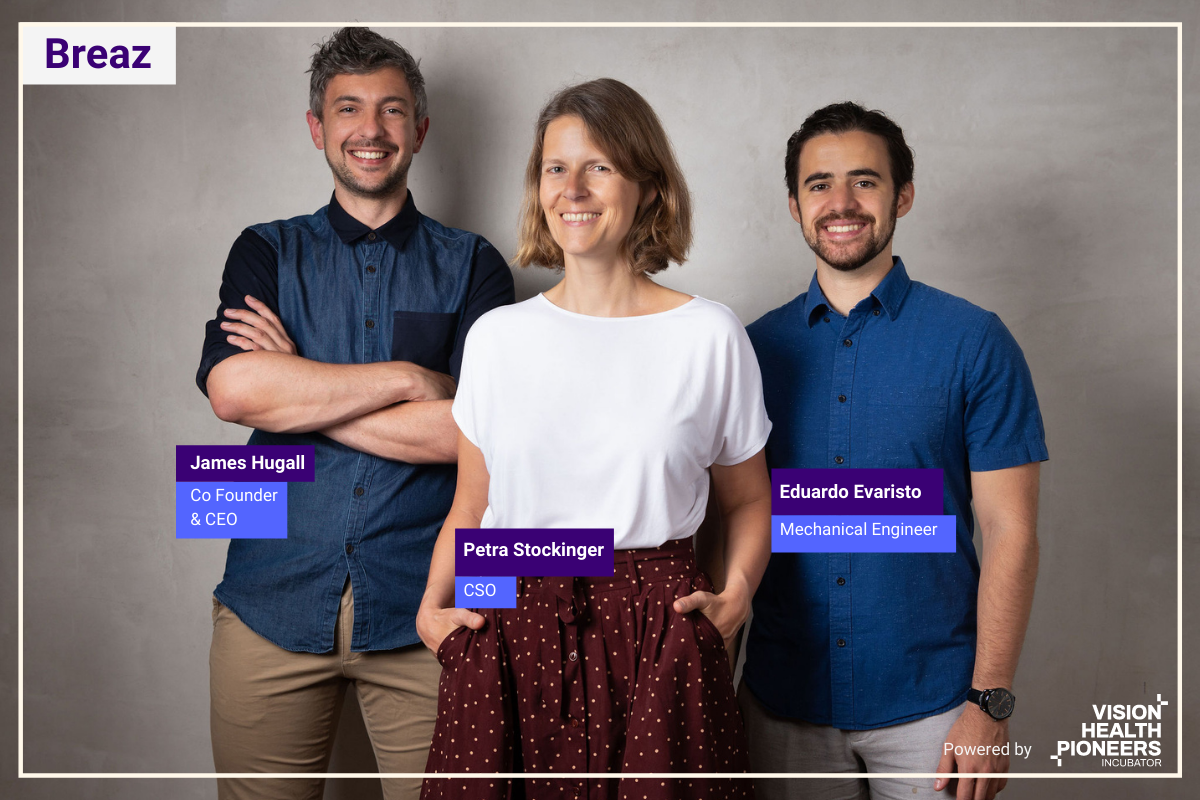
James, who is from the UK, originally began making his plan for the business in Barcelona, Spain. He worked there as a scientist in academia before moving to Berlin, Germany to enrol with the Vision Health Pioneers Incubator. James is joined by Co-Founder Austrian Petra Stockinger and Eduardo Evaristo, Mechanical Engineer from Venezuela. Combined this international team is focused on improving people’s lives and making the invisible damage of COPD, visible.
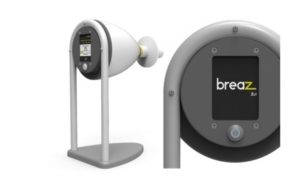
The Breaz Prototype
The Breaz team have a vision for their product to be considered as everyday as a thermometer or a blood pressure monitor. “These devices allow us to quickly understand what risks we have of certain diseases. We want the same for lung health. ” Petra says.
The Breaz prototype is a simple to use device which measures and grades respiratory diseases like COPD. All patients need to do is breathe normally and within a couple of minutes the doctor receives the results. They can then choose the best next steps, whether further tests, or beginning or adjusting treatment.
“We want to make it simple to use and reach as many different settings as possible. In primary care but perhaps also pharmacies and even the gym. Whenever the individual wants to check their lung health, they can.” James says.
Making the invisible damage of COPD visible
Both James and Petra are scientists and have previously worked in an academic setting. Whilst completing their post-doctoral work, Petra was working in biology and James in physics. Both knew they wanted more.
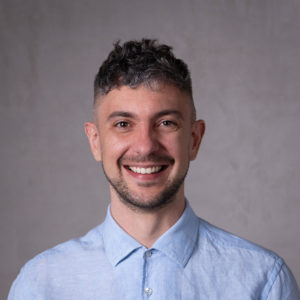
James Hugall, Co-Founder and CEO of Breaz
“We wanted to get out of the scientific world and into something more applied, that’s where our interest for healthcare innovation took hold.” James says. Only despite this inspiration happening at similar times for them both, they didn’t know each other at the time. “That desire for something more took us to the d.HEALTH course in Barcelona. This is where you try to create a business idea based on a real experience in a clinical setting.”
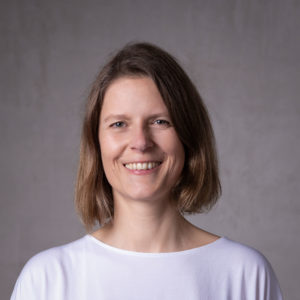
Petra Stockinger, Co-Founder, Breaz
They worked in different teams on the course which explored unresolved clinical needs that doctors faced. For two out of the nine month course, this focused on hospital immersion. Petra describes this time. “We discovered hundreds of needs and then we needed to try and filter them down to just one that would have the biggest impact, if it were worked on. James was in the respiratory team and saw first-hand the shocking amount of people suffering from COPD.”
James continues with what this experience was like, “I really wasn’t aware of it before that moment, it surprised me. More than half of the people there were dying from this disease. We only saw them at the very end and it was horrible to watch. To see the suffering.” It was during these traumatic experiences that James saw the need for something to improve this situation.
“The current method just isn’t working effectively. From both the patient and the doctor’s point of view. When diagnosing patients, the main method is the force spirometry test, which is where the patient breathes in a whole lot of air and exhausts it as quickly as possible. It’s quite a stressful test for patients and there are often long waiting periods.”
Doctors in primary care have also complained that the test isn’t always completed effectively. Petra and James reference research which found 75% of cases are undiagnosed. (Soriano and Joan B in their paper, “Prevalence and Attributable Health Burden of Chronic Respiratory Diseases, 1990–2017: A Systematic Analysis for the Global Burden of Disease Study 2017).
“So this is where the inspiration comes from. To find a way to test these people effectively. Reduce the number of undiagnosed cases, take control early with detection and how to follow the patient throughout the rest of their life. COPD is in many ways the new stroke.”
The programme in Barcelona ended and James was inspired to do something to improve the situation. Unfortunately timing wise, Covid-19 was just starting to appear.
“That changed things a lot. It became hard to start a business and bring us all together. The team changed slightly and then by chance a colleague in an EIT Health MedTech Bootcamp mentioned the Vision Health Pioneers Incubator. It seemed like the perfect setting to build a new startup and receive really important training.”
Breaz were enrolled and James reached out to Petra again to come in and join as another Co-Founder. Despite only having a week to decide, she said yes!
Breaz were finalists in the 2021 Imagine IF! Competition
The Breaz Team
The team today splits most of the business activities between James and Petra. Eduardo, as Mechanical Engineer, focuses on the prototype of their product. They believe having strong focus areas has helped them but that this did take time to develop. Petra explains, “James comes from a technical background so he’s more on the product development side. My background is data aspects – clinical testing. We have faced challenges, like any other startup, but within the incubator of Vision Health Pioneers, that has really helped us.”
Eduardo Evaristo, Mechanical Engineer, Breaz
Eduardo is in charge of product development. He describes his role, “We’re a hard-tech company so we need to develop and produce a physical device. I need to make sure that it works and then test and calibrate it.” It’s clear he enjoys the design process the most and all the challenges that come with it. “There are so many decisions to be made because we’re coming up with something new. There’s no script to follow. At times I have to kind of trust my gut and then see if it works. If it does, I feel amazing. If it doesn’t, then I need to see what I can do about it.”
James shares more about their time with Vision Health Pioneers. “It’s been a good introduction to topics that would have taken us forever to try and learn. We’ve connected with some great people, received mentoring but have also seen how different startups work and operate. We’ve always really appreciated the support in preparing for what comes afterwards.”
Breaz are now excited to talk to potential investors and prepare themselves for the Demo Day on 31st August 2021 where each startup will pitch their business. They are continuing to develop their prototype and are working on the longer process of hard tech plus working on strategies for how they can sell it. They are making the invisible damage of COPD, visible.
Environmental Concerns for Lung Health
Petra shares why lung diseases are such a worrying concern. “Air pollution, smoking, anything that irritates in the air – all of this can cause harm to our bodies. People are not always so aware of the damage the conditions around us are having on our body.”
“The global population is also becoming older. This is important because chronic respiratory diseases take a while to develop, so as people age, they can enter more severe states of lung disease.” James adds.
The team also shares that in more heavily polluted areas of the world, for example in locations where they cook inside over open fires, they are possibly at a greater risk. They also cite research from Hitchman SC and Fong GT that found smoking amongst women is increasing in some locations as social equality is achieved. (Gender empowerment and female-to-male smoking prevalence ratios. Bull World Health Organ).
For Breaz success is how the team grows from here. They believe that good people are the really important part but also how that team works together can be a challenge. They appreciate they have a complex product which requires a lot of activities running in parallel but are confident they can make it happen. By this time next year they hope to have tested their device in a clinical setting, have feedback, early adopters and overall a better understanding through user valuation research.
James going into a little detail on the current progress. “Compared to say a software based company, we have different expectations with hard tech. We’re getting to where we want to go – to have a functional demonstration of our device so we can take it to a hospital and test it, but it does take time. We can then use those learnings to develop further.”
Eduardo adds more on the why behind Breaz,
“We’re raising awareness of a massive problem that COPD represents, worldwide. We are making something and getting it out there. People are finding out too late and we can avoid that stress. It comes down to whether we choose to do something about it or have people who can barely breathe.”
Petra shares that she loves to learn, even when she’s involved in something she isn’t fully comfortable with. “We have learnt that sometimes not making a decision is worse than making the wrong decision. If you are not an expert in something, in a startup you just push yourself to make a decision.”
“We have come from science where you try to prove if something is wrong by obeying the rules of the world as you would expect it too. At the beginning of our journey, we wanted to know what’s the right answer, now we know there isn’t always one, you just take different paths.”
Breaz was born from frustration in academia, a willingness to learn of problems in clinical settings, the leap into a new country, hard work in an incubator and ultimately along the entire journey, a desire to help people.
We are delighted to announce that the Vision Health Pioneers Incubator will run for another two years! 36 entrepreneurs in 15 teams will once again receive support from our healthcare Startup incubator based in Berlin.
Check out these exciting new developments:
FUNDING: We will again invest more than 1.5 mio Euro public funding. This support originates from a special European Union’s response to the Covid-19 pandemic.
INVESTMENT: We will be able to grant up to 80,000 Euro per team equity-free funding (up to 4 team members).
ACCESS: To house our cohorts we just signed up for a new cribb: starting in 2022 we will partner with Unicorn Coworking and will offer our startups a modern space located in central Berlin.
TRAININGS: Stay tuned for even more coaching and mentoring from the best of the best in healthcare and beyond.
TIMELINE: Join us for an extended 10-month program
NETWORK: Connect with our network of 150+ experts via events and our growing Slack community
Note down the starting dates for 2022-2023:
Cohort #3 – Begin January 2022. Apply between 15.10.21 and 15.11.21. Cohort #4 – Begin April 2022. Apply between 15.10.21 and 15.01.22. Cohort #5 – Begin in July 2022. Apply between 15.10.21 and 15.04.22.
The challenge hasn’t changed but the paths of successful support are growing stronger by the day. Within the incubator our startups will learn how the German healthcare market works and how they can ensure that by the end of the ten month period of incubation, they are ready for their next steps. Now with two years of successful healthcare Startup incubation and an array of fantastic innovation solutions working their way into the healthcare ecosystem, or about to be presented to the world, Vision Health Pioneers Incubator is poised to support many more entrepreneurs achieve their dreams.
Keep a close eye across our social media channels and sign up for the newsletter to to be amongst the first to get notified once our application phase starts.
P.S.
Our next Demo Day, INTO THE FUTURE, takes place on 31st August 2021! Get a glimpse of the healthcare startups currently in the program and meet the Vision Health Pioneers Incubator Alumni.
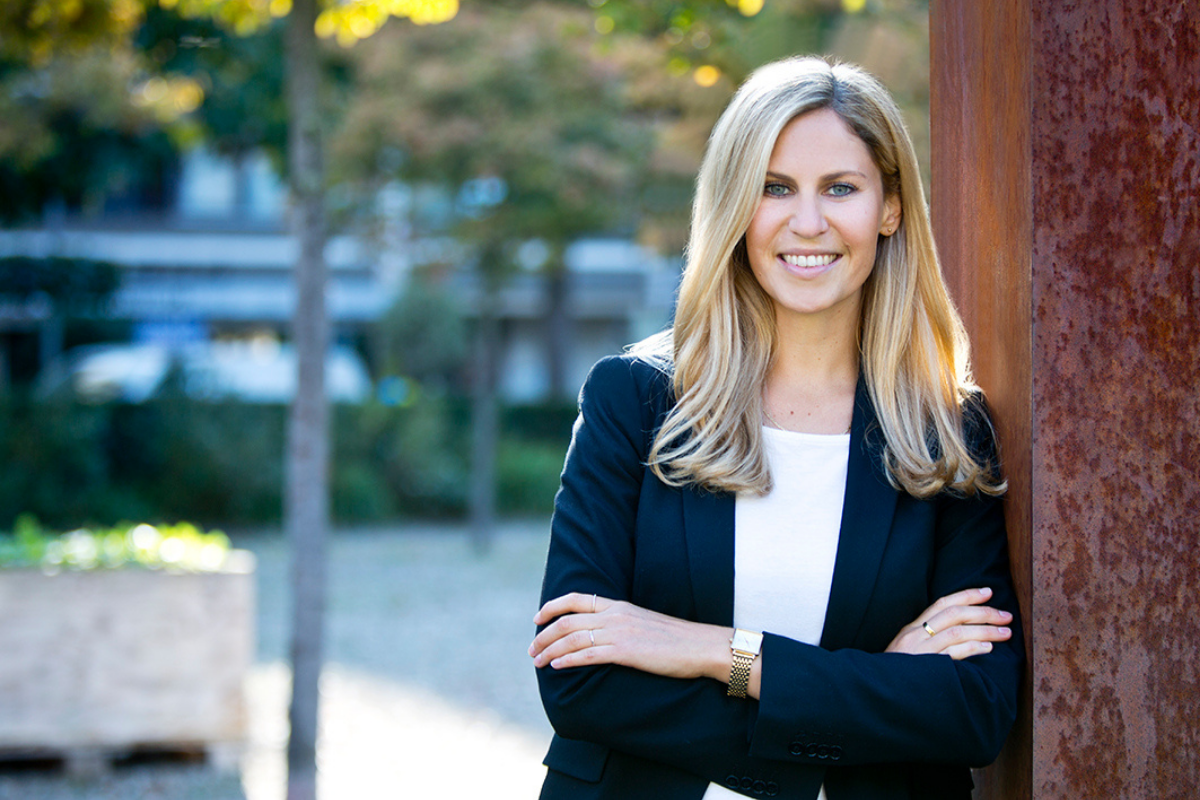
Dr. Eva Elisa Schneider is a mental health expert, psychotherapist and coach. She is the Founder of the mental health lab that supports individuals, teams and organisations in the creation of a people centred and needs oriented culture. A passionate advocate for mental health, Eva views it beyond the ability to meet everyday challenges in coping with stress in a non-harmful way. Rather, she sees it also as the psychological and behavioural flexibility to take on opportunities to grow and contribute within someone’s scope of action.
Unsurprisingly, she is also the team lead of nilo.health. Alumni’s of our Cohort #1. nilo.health is opening up the space for mental health in the workforce. Bringing counsellors, therapists and mental health content on one platform, nilo.health is empowering employees to be proactive and take charge of their mental health.
What issues or topics are you most motivated to tackle and what Digital Health issues are particularly on your mind at the moment?
First, bringing together mental health care and digital solutions. Mental health is a sector which has been practiced in a very traditional way for decades, however, the Corona-pandemic has promoted people’s acceptance towards digital mental health solutions. People started to realize that digital healthcare is actually beneficial and can come with many advantages, e.g. location independence.
Second, motivating health professionals for using and recommending digital health solutions themselves. Many professionals stick to their usual day-to-day routine and don’t directly realize the huge added value of digital health products. Health professionals are the crucial bottleneck when it comes to stakeholder management, which is why I believe we have to show them how digital solutions can spark joy. As Marie Kondo would say!
Third, making digital health solutions accessible and easy to use for everyone, including people that haven’t been in touch with any mental health support before or generations that didn’t grow up with an intuitive understanding of digital devices and solutions.“
What advice would you give your younger self?
Always pay attention to your gut feeling! And that you don’t have to stick to prototypical career paths, even if many people suggest you to do so – it’s a great character trait to stay curious and to have many interests. Many people kept telling me that I should finally focus on one particular direction, but this always felt very limiting. Being active in many different projects and engaging in things I care about is a huge strength of mine and I would tell my younger self that this is a great skill and not a weakness.
What is the best advice anyone ever gave you?
You have to find your very own way.
Who is your role model/mentor and why? What are the qualities of an effective mentor especially in this space? What motivates you to be a mentor?
For a very long time I was looking out for role models that have walked a similar path like me and are active in the digital (mental) health sector now. Meeting a licensed psychotherapist in the digital health space is still rather rare, but there are a few now, which feels very refreshing and it’s a great experience to connect with them.
At this point in my life, it’s a big motivation to show other people from my profession that leaving the typical psychotherapy and science career path is perfectly possible and a great option to pursue, even if it might puzzle some people. This is also what I tell my mentees: If it feels right, stick to the very individual pathway you are going!
Having been both a mentee and a mentor myself, a huge motivation for me is to give something back. I have received a lot of valuable support in my life so far, and I believe that whenever you receive something, it’s important to give something back somewhere else.
A mentor has to be a reliable sounding board for whatever topics come up. I believe that mentoring is not limited to time, positions or programs, it’s a trustworthy relationships that exists beyond respective borders.
How would you describe or characterise your digital health journey? Did it have big highs and lows, and if so, how do you feel about those experiences, now?
I have experience in inpatient and outpatient care, in health science, in the digital health sector and as an organizational consultant. All those different lenses help me to understand pains and needs from various perspectives. The classical health sector is often characterised by very strict guidelines, slow processes, complicated workarounds and few financial resources, which felt like navigating it with the brakes on. Yet, our current healthcare system provides a lot of safety, which is of course beneficial when it comes to anything around health. In the classical health sector, you are often confronted with a “no” or a deprioritization whenever it comes to anything digital, often because of financial reasons or because people fear they might destroy all the routine processes that were built over years and years. In the private sector on the other hand, people have a bigger credit of trust for innovation and new ideas.
When I entered the digital health space I was amazed by how fast things are being implemented, tested and refined. The mindset is completely different and a lot more agile: Get your product out, test and iterate as often as possible, learn by exploring, not by discussing everything in theory.
The pace in how ideas and products develop is so much faster and the willingness to take a risk is higher, which was a huge game-changer for me. Despite all the differences, I also see a common goal: anything that will help people in the long-run is a key motivation!
Explore how nilo.health is making mental health support easy for your entire organisation
What have been you biggest challenges in working through a pandemic, and have you found any silver linings?
The pandemic hit me in waves. At the beginning in 2020 I had huge boost in creating new concepts and making a virtue of necessity. For example in my lectures I was teaching therapy and conversation techniques, so I was wondering how in the world I am supposed to translate something so analogue into the digital space. However, there was no alternative, which eventually led me to rethink my lectures from scratch and to build innovative concepts. I think when we are constrained most, we develop the biggest innovative power, because there is simply no other way to move forward.
For me, the beginning of the pandemic was like learning a new language: when you move your work into the digital space, you have to collaborate and plan in a completely different way. I often hear that people are missing many aspects of analogue work and try to adapt them into the digital space, which I understand in a way, but I think we really have to stop comparing both worlds, because they are simply different, both have strengths and weaknesses.
It’s like two different languages: You can try to translate things back and forth, but the basic structure and functioning will remain different. Later during the year, i.e., in fall and winter, I moved to Berlin and the situation was really challenging for me. Coming to a new city which is basically in a long-term artificial coma made it very hard to arrive here. However, I used the time to expand my freelance activities and to connect with other people from the digital health space. Just sending out messages to people whose work I find cool via LinkedIn was something I would never have done before, now it’s the most natural thing to me. Next to my professional activities I also put a big emphasis on doing things that stimulate other domains in my life, for example I taught myself an instrument during the winter, which was a great experience for me. Making music has not been a part of my life at all so far. Keeping a balance by engaging in a variety of activities was probably what kept me sane during that time.
Did you always want to be a leader in digital mental health? What do you think you might have been if you had taken a different path?
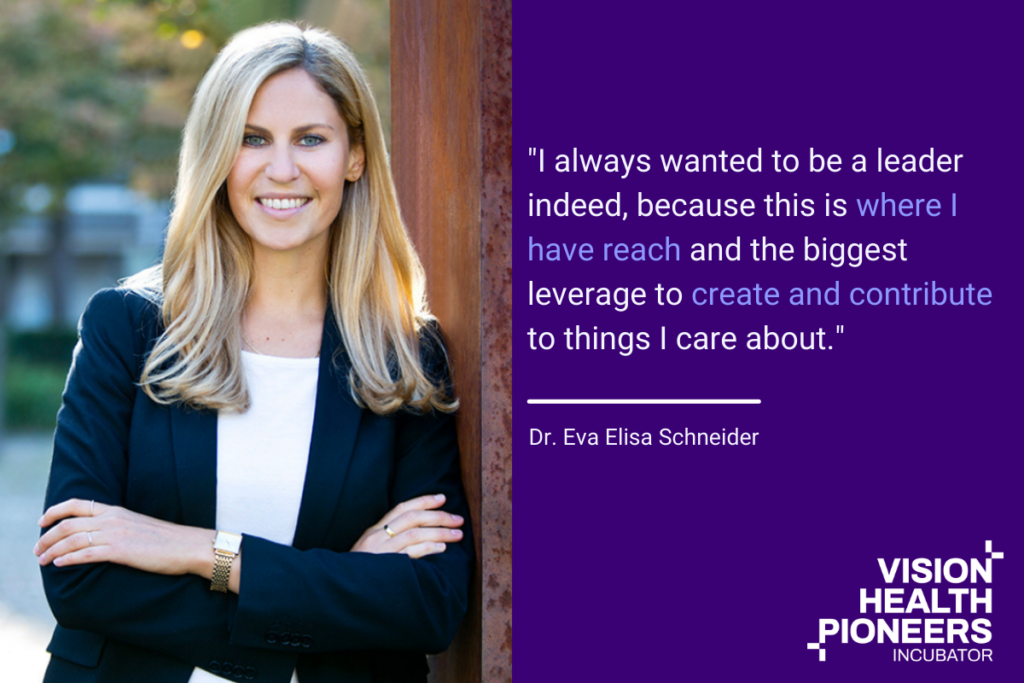
Now that I look back, digital health was like a magnet to me, because it combines many of my interests: it’s highly professional, innovative, human, dynamic and has a lot of room to grow. If I had taken another path, I probably would have done something creative, which is a big passion of mine as well.
What do you do to unwind?
Luckily, I have a good intuition for my needs, which is something very precious. Psychological work is often a very abstract type of work, yet very demanding – both cognitively and emotionally. This is why I love to do things that are a good counterpart to that: bodily activities like sports, being outside, spending time with loved ones, or being creative and crafting: I love when I see an immediate result in my hands, which is something I often don’t get to see in my daily work. I also find energy in good and deep conversations about topics I am passionate about, e.g. feminism. And I’m a big nature lover!
In these challenging times, what are some of your go-to strategies to stay on top of things?
Having a clear-cut separation between work and leisure time, surrounding myself with loved ones, reflecting my happy moments every day together with my partner.



 Thank you to our community for sharing their insights. Find out more about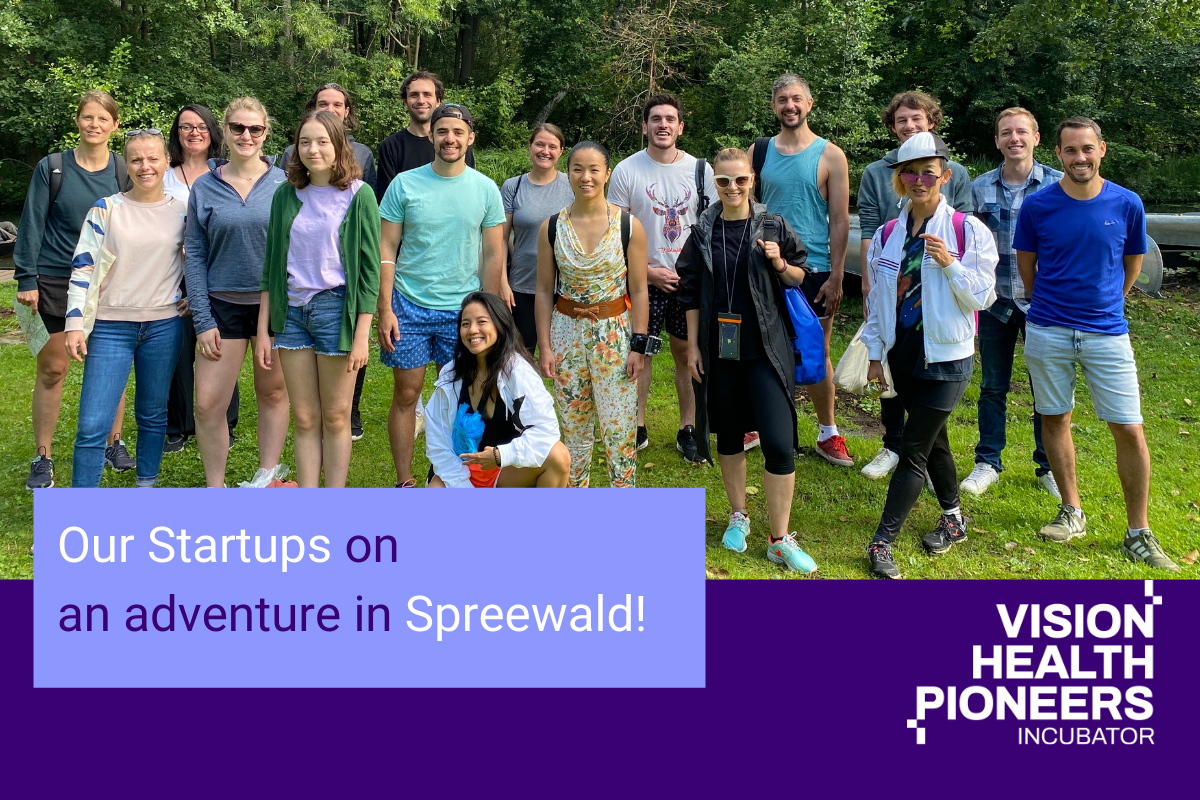
 The time after the incubator with Vision Health Pioneers is key for all the startups. Yair recalls the conversations with investors that took place. “We had many talks and received feedback that the project and the team looked great, but that it was a little too early for them to invest. Now when we go into investor talks, we know what they need to know and would like to see.” YoniCore have set themselves a goal to be ready for talks once more by the end of 2021. “We are using the time to gather more medical evidence and how the treatment we offer from a medical point of view is needed.” Yair is confident there is a high demand of women who need and would purchase their product. Now they are making sure they have the evidence for investor conversations.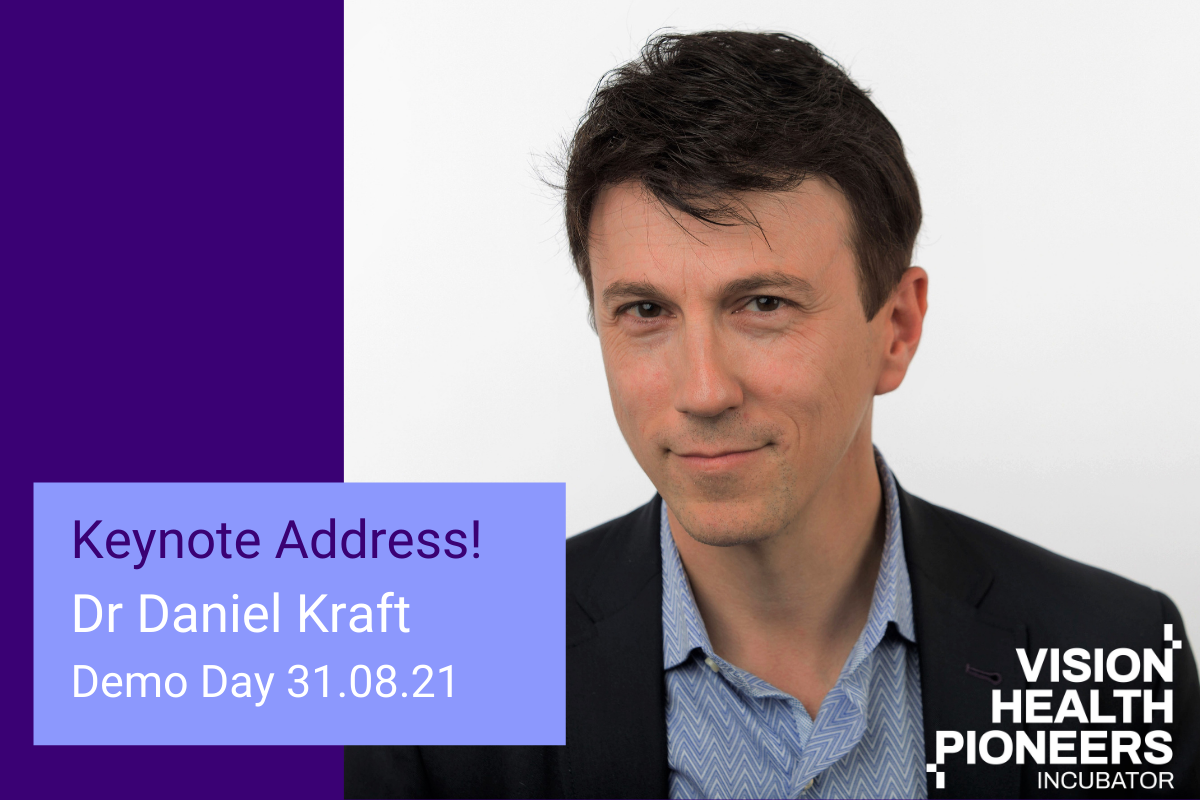
 We are equally as delighted to announce that the Demo Day will be moderated by the cutting-edge video journalist and idea engine Nicole Scott! Nicole has been a leader in the tech world since the Blackberry was top dog and her first smartphone review happened years before we had even heard of an iPhone.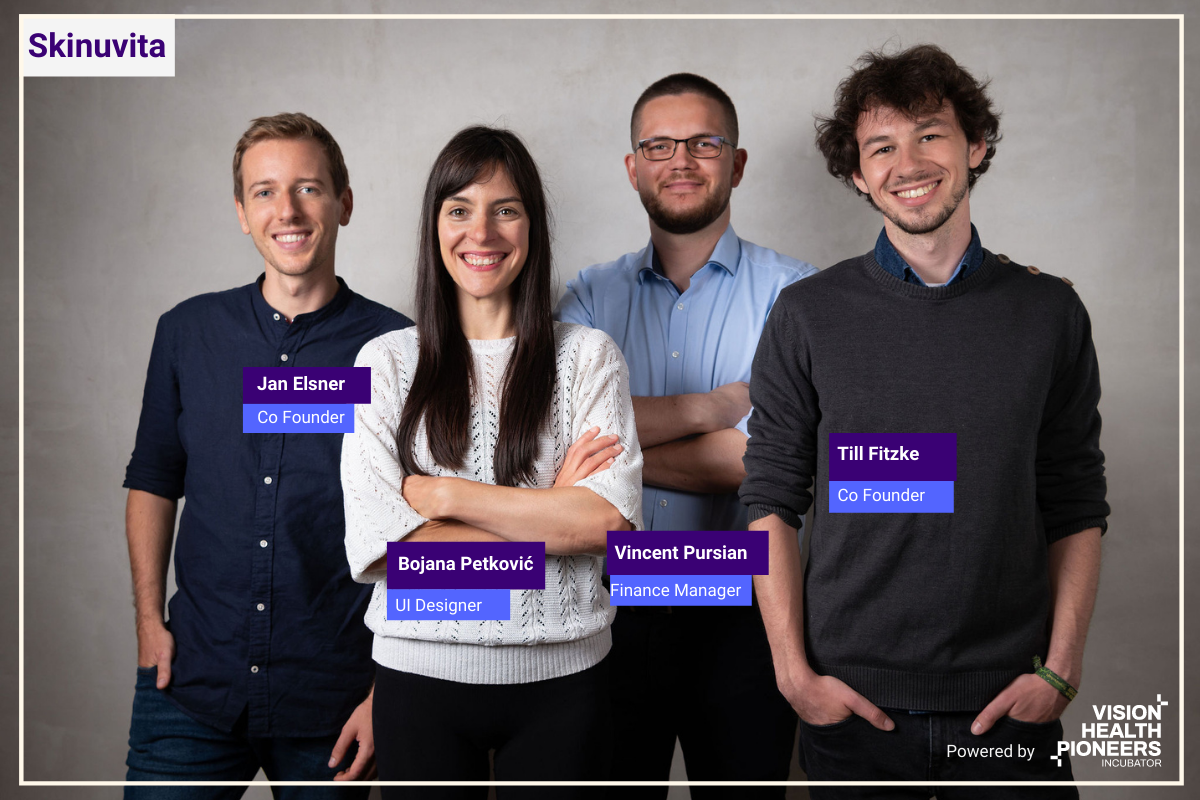

 Even the global pandemic didn’t seem to hugely impact the startup being formed. “We decided to leave the comfortable bubble of academia and actually found more courage to write proposals for funding. It was during this process that we were invited to pitch at the Professional Association of the German Dermatologists (BVDD) in Berlin and then by surprise became the wildcard entry for the Vision Health Pioneers Incubator.”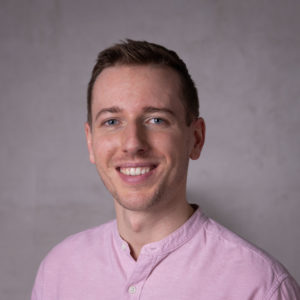



 Our next Demo Day,