Categories
Inside the incubator

Meet minime: The Startup Founded By Psychotherapists—For Psychotherapists

Look no further than minime for a startup that’s helping patients and therapists build a more interactive relationship. Founded by Paul Schneeweiß, a practicing cognitive behavioral therapist, minime was built with psychologists’ needs in mind. The CEO came up with the name for his startup on the train to the hospital where he still works today. “The idea just came to me,” he confessed. “I spoke it out loud and wasn’t really searching for a name, but I thought, Why not? It fits.

The platform’s name serves as a metaphor for reflecting one’s inner thoughts and feelings— for example through the components that make up the SORC (Situation, Organism, Reaction, Consequence) Model and other self-monitoring strategies in psychology.


What does this model entail? We’ll get to that shortly. For now, we’ll reiterate that the idea behind this innovative mental health startup is for therapists to help patients more efficiently create their own “mini-me.”

A Cutting Edge Approach: Digitizing Paper Logs
PaulThrough Schneeweiß’s work in the psychotherapy field, it became clear that there’s a lot of homework involved for both patients and practitioners—generally using paper logs, which have become outdated. “It became obvious we needed to digitize things,” explained minime’s CEO. “To make complex concepts more tangible.”

According to Stella Römhildt, User Experience Director at minime, the worksheets patients complete between sessions is super-complex, and the paper logs aren’t particularly nice to look at. “This is the reality,” she said. “Not just in one setting, but in psychotherapy settings all over Germany.”

So Schneeweiß created a card game—the basis of the startup’s MVP—and integrated it in therapy sessions before developing a digital version. Ask the founder to describe his product, and he’ll cite the many different layers involved.
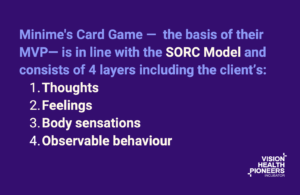
“On the one hand, we have paper logs,” he described. “And on the other, we have specific self-monitoring strategies.” 

In line with the SORC Model, these strategies consist of four layers. These include the client’s: Thoughts, Feelings, Body sensations, Observable behaviour.

By offering a playful take on these four layers—including their triggers and consequences—Schneeweiß and his team have created a digital framework for overcoming challenging behaviours. The platform is essentially a toolbox therapists can use to distribute exercises to patients: creating them, sharing them, and ultimately, analysing them.

Mental Health Treatment Challenges and COVID-19

The COVID-19 pandemic has presented unique opportunities for minime—and a unique set of challenges.

“Therapy changed a lot because [therapists] were so non-digital, and suddenly they had to be [digital],” said Römhildt.
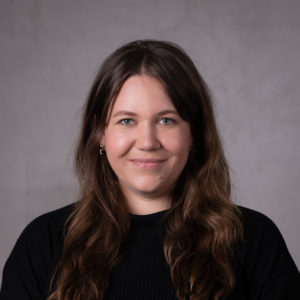
StellaWhile some therapists continued to work with patients in person—wearing masks to ensure safety—there was an overwhelming disconnect, given the lack of visibility into both parties’ facial expressions. And then, with telehealth appointments, therapists could no longer distribute paper logs. (Unsurprisingly, scanning, printing, and emailing the documents wasn’t an efficient alternative.) While the startup is still in its early stages, minime is offering a solution that transcends digital and in-person therapeutic models. And it comes at an appropriate time—as mental health issues have become more prevalent during the ongoing public health crisis.

“I think with COVID-19 and all these regulations, we were forced to behave unhealthily,” confessed Schneeweiß. “And by unhealthily, I mean reducing your regular contacts, and relying on activating behavior patterns.”

Layoffs, lockdowns, and the financial challenges resulting from the pandemic have only compounded the stress so many of us face—yet we’ve also become more aware. According to Schneeweiß, patients have begun scheduling sessions with the goal of no longer coping in unproductive ways. Some people, for instance, began drinking excessively to deal with the monotony of COVID-19—and many patients want to adopt healthier behavioral patterns instead.

Per the SORC Model, and with minime, they can do just that. The mental health startup has launched at an ideal time, as more and more people begin to advocate for greater transparency.

Nina“The awareness of mental health, and being able to talk more openly about it these past few years, has been a great development,” said Nina Hackenbroich, Full-Stack Developer at minime. “This will always be an issue people face, and society and humanity will improve with this increased visibility.”

The novel coronavirus, and the challenges billions of people around the world have experienced as a result of the pandemic, revealed that everyone has struggles. From this point forward, mental health startups like minime will continue highlighting the benefits of open discussion.

A strong team with a joined mission

Rafael Rodrigo da SilvaThe founding team at minime only recently connected on LinkedIn. And while they just added a fourth employee to their roster – the UX/UI & Marketing Expert Rafael R. Da Silva – they have a number of goals toward which they are still working.

Schneeweiß’s objective is simple: “Having therapists who not only like this idea, but who use it and deeply integrate it into their therapy,” he said. “And by ‘deeply,’ I mean, ‘I don’t know how we ever did it using paper logs.’”

Hackenbroich added, “Hopefully we will be in as many therapy practices and hospitals as possible in Germany, and really supporting the patient-therapist relationship.”

As a developer, she’s confident that digital tools like minime will be quite popular in other countries as well. In the next year or so, Römhildt projects a huge number of therapists overcoming their fear of adopting digital tools. “I want minime to really encourage patients to communicate their thoughts and feelings over the week,” she said. “Helping even just some people would be a huge win.”

The mental health startup’s MVP will be ready at the end of August 2021—at which point the team plans to have their first therapist and clients onboarded.

Team minime’s secret weapon for all the progress they’ve made? Römhildt believes they’ve conquered this early stage in large part due to effective communication. “I like to compare it to a romantic relationship,” she said. “Honesty is the most important thing for us. We were honest from the start about our beliefs and struggles. That way we know about everyone’s history and can cut some slack if needed.”

She shared that the founding members regularly check in with one another—asking how things are going—to ensure everyone can speak freely. There are no complex power dynamics, and there’s a sense of openness and integrity that’s integral to the team’s well-being and overall success.

So, what does the path forward look like? Only time will tell—but minime is slated to be a huge hit among therapists looking to securely digitize their paper logs.

“What I’ve learned is that we are used to doing things again and again—to learning patterns,” said Schneeweiß. “If you are doing new things, it comes with a lot of uncertainty that could lead to frustration or a search for short-term solutions. Even building up a company, being aware that uncertainty is okay is key.”

As a therapist and a founder, it’s no wonder that minime’s CEO has mastered the uncertainty so many of us fear. The mental health startup acknowledges that we have to reflect on our anxieties and frustrations, and then accept and release them in order to move forward.

Categories
Inside the incubator

Going global with Karis and ALMA – Our startups present abroad

Recently both Berlin startups Karis and ALMA, in the current Vision Health Pioneers Incubator, have crossed borders, within the confines of current Covid19 restrictions, to bring their ideas to other parts of the world. They are just two of the many companies who have brought their new thinking and innovation to Berlin for incubation and then once they have reached a maturity level, started to go international. They build solutions to often complex problems and whether they gain research and insights from other countries or present and pitch to new audiences, at the heart of the activity is how these teams bring their resolution and innovate remedies to people. Here they share their recent activities. 

Karis pitch at the most influential startup event in the world

How did Karis, who integrates art, science and emerging technologies into a unique treatment option for people with ADHD, find pitching at one of the most popular startup events in the world? 

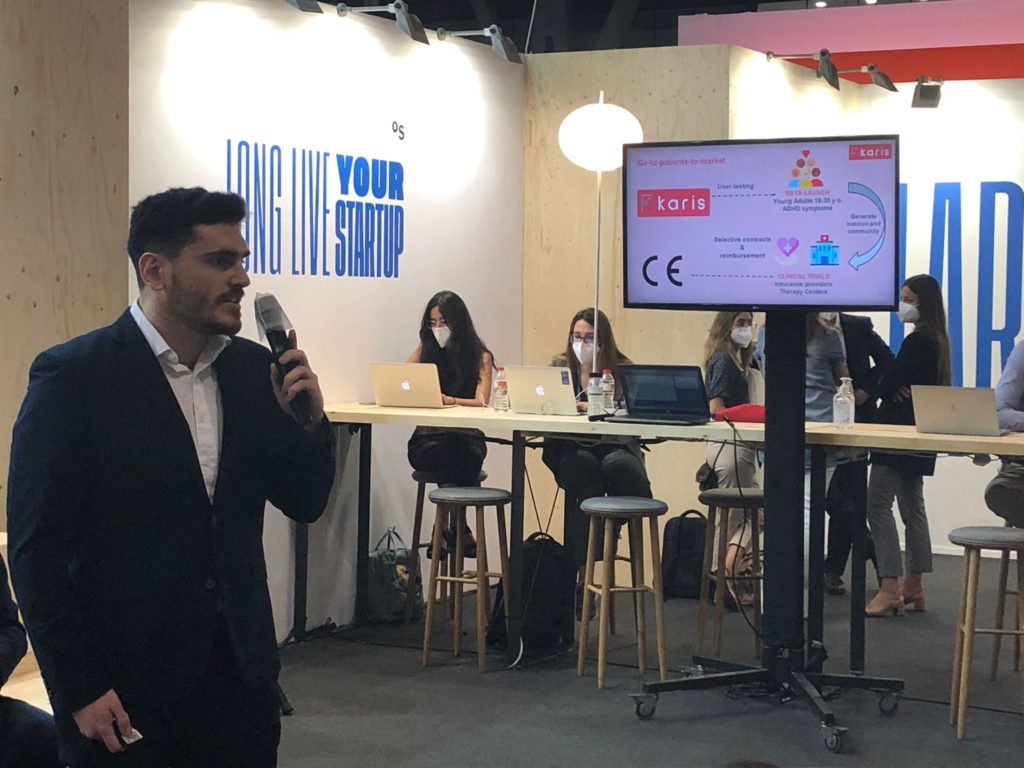
David Garrido, Co-Founder of Karis in the Vision Health Pioneers Incubator, pitches his Berlin startup to an audience at 4YFN in Barcelona

Our Berlin startup Karis attended and pitched at 4 Years From Now (4YFN) in Barcelona, Spain. One of the first major conferences of it’s kind to take place this summer and a strong sign that it’s become possible to travel abroad for events again.

Karis Co-Founders David Garrido and Rubén Nieto López share how the opportunity came about and why it was good practice for INTO THE FUTURE, the next Vision Health Pioneers Incubator Demo Day on 31st August 2021. They were both very enthusiastic with the experience and how it opened their eyes. 

4YFN is famed for its global impact and is part of the Mobile World Congress (MWC) in Barcelona. With 950 investors and 100,000 attendees it’s clear the reach it has. So what was the experience like for Karis?

“We went with the intention of not regretting anything. It was our first conference in some time and so we wanted to learn more about the international startup ecosystem. At first it was quite weird, especially with everyone wearing masks which makes networking interesting, but then we got used to it all again.” David explains.

The opportunity for Karis to attend 4YFN came through the Vision Health Pioneers Incubator mentor network. Aline Noizet, Founder of Digital Health Connector and mentor for the startups who has worked on accelerator programs in Barcelona, Berlin and in the United States. “We were very grateful to Aline for bringing us the opportunity.” David says. “She knew we were interested in the topics being discussed and that, even though we are still at an early stage, it would be a great international experience for us.”

Ruben shares how they approached the conference. “We went there every day as soon as it opened. We attended sessions on anything related to our activities. Whether that was how to use VR and AR in different ways, the topic of art therapy but also how art can be connected to new innovation. We explored sessions on funding, best practices (especially on digital health innovation)  and how to approach investors.” All essential topics for the Demo Day 31.08.21 where Karis will be pitching their business. 

David also had the opportunity to pitch Karis on stage whilst at 4YFN. “It was a nice experience. You pitched to an audience and to a camera. It made me step out of my comfort zone a little. I felt there were different challenges to pitching online but I enjoyed the experience and embraced it.” 

“We both appreciated interacting with other attendees. Whether startups, which in a way helps us track where our business is in comparison but also companies which we could collaborate with in the future.” Ruben explains. “We are very aware we need contacts for growing our business so we tried to interact with doctors, hospitals, institutions and investors. We even spoke with hospitals with expertise in ADHD. There was excitement there and we have brought that back with us.”


David’s takeaway word from 4YFN is ‘hope’. “It’s hope because despite the physical distancing we have all been doing, we are all finding a way to make things happen. There is a startup ecosystem and there are people involved that want to help you and share their knowledge. The most interesting aspect of innovation for me is when different ideas come together and that happens when you can interact with others.” Ruben adds, “It doesn’t matter what kind of business you are, what matters is the problem you are trying to solve. That’s the kind of environment our startup in Germany wants to be in.” 

ALMA holds their first of many international events 

Just last week in Madrid, Spain, ALMA held the first of their international events where they are researching and analysing feedback from attendees. Co-founder Giulia Tomasello shares why having an international focus is important for the development of their platform and their plans for future events around the world.

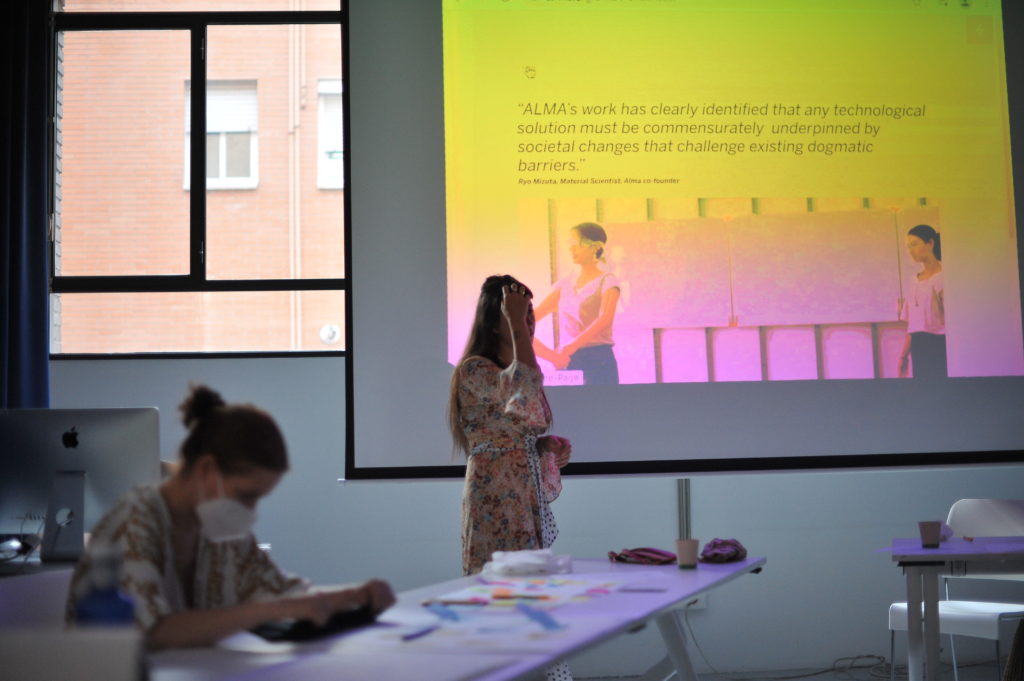
ALMA is developing a community that captures what it means to live in a female body. A safe and inclusive space where stories can be shared around female intimate care. They use the workshops to analyze different points for front and back end development of their community platform. The team in Berlin then also works on the user journey and user interface developments. 

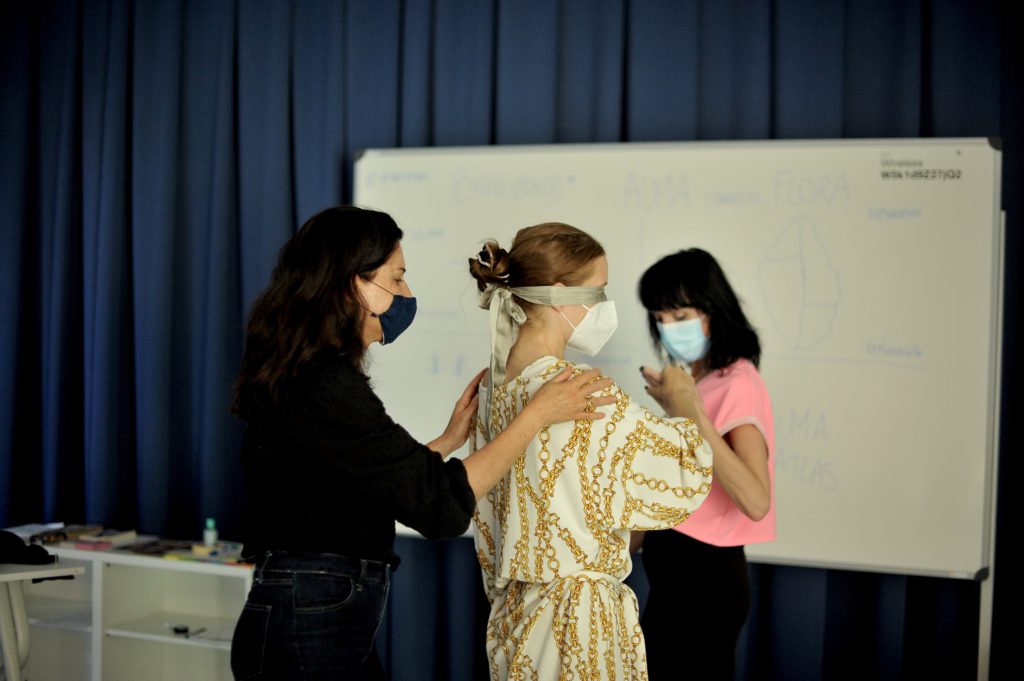
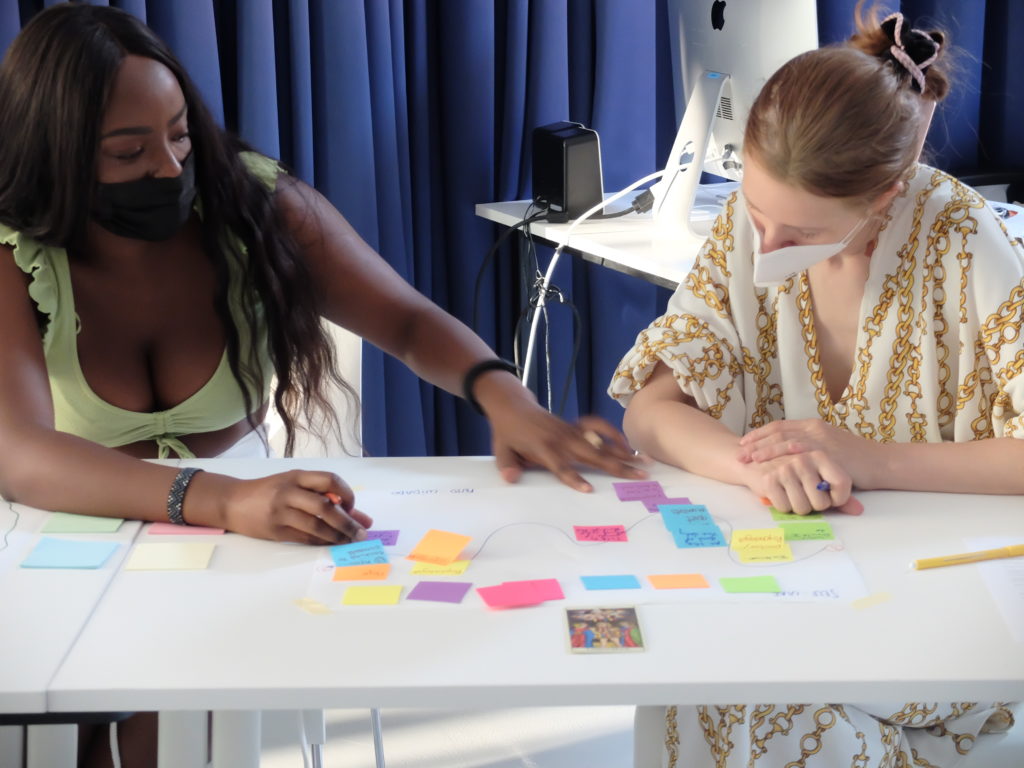
“It can be difficult to find people to talk about something like female intimacy. We’ve found small groups are best for workshops where people join with intention. At our event in July in Madrid we held contact exercises to create trust and then activities to understand a personal journey through self-care.” 

Giulia explains that they are trying to understand the invisible and invisible taboos of society. “What is hiding us from being who we want to be. Are we trying to fulfil parts of a gender role which are not who we want to be, but what society has made us believe us to be.”

ALMA is focused on gathering insights from people across the world because they want their community platform to be a place where all female users will not feel alone. “In our sessions we are taking on board suggestions and feedback from what the majority are saying towards female health. It is a place for sharing experiences and that’s powerful. We are already seeing how fear can be overcome when realising we can solve things and try different solutions.”

Having a platform constructed with input from people is important for Giulia and Berlin startup ALMA. “At the moment we are evolving with ALMA Connects Flora which developed from ALMA Meets Flora. We held events internationally for this first stage of research and now we are looking into what it means to deal with society that doesn’t understand the many sides of the female world.” 

ALMA meets FLORA explores how intimate female health is experienced by women* in our society:

ALMA is currently planning for upcoming events in Germany, Italy, Sweden and South America. For those who cannot attend these events, ALMA has also created an online survey for gathering feedback. 

Giulia summarises why international focus is so important for the Berlin based startup. “We want to know how women all over the world feel and how they would react.”

Categories
Our Mentors

Networking across borders – the international mentor

Whilst Vision Health Pioneers Incubator is based in Berlin, Germany, teams enter the incubator from all over Europe. Many of our Mentors are internationally based and they provide fascinating insights and learnings from their global experiences. Aline Noizet, Founder of Digital Health Connector and expert in startup investment shares her thoughts on why having a global focus can be crucial for startups, why it’s never too early to network and why understanding a country’s healthcare system is vital. 

Aline has been working with Vision Health Pioneers Incubator for the current and inaugural cohort of startups. Her expertise lies in a range of areas and she specifically helps mentor the startups when it comes to networking and connecting them with potential investors. Based in Barcelona, Spain, she shares her approach. 

“For networking sessions I focus on the components of networking – what is networking, why you need to network early, how to build your branding and network in a virtual environment. That has been important in recent times because there has been a lack of access to physical events and therefore startups had to build their brand and their network in a different way.”

Aline also monitors opportunities, for example for startup investment and was recently able to support our startup team Karis with their pitching experience at 4YFN in Barcelona. “By understanding Karis and their background, I knew that the Spanish speaking market was for them. Culturally it was a chance for them to present their business in a home market and gain insights and experiences. Often startups will argue that they are not ready to network or pitch and that they don’t have the time. I say it’s never too early. You are in control of what you pitch and what you want to share with the audience.You never know who you will make contact with and whilst the timing may not be right just yet, they may serve you well in the future.  It’s all about building relationships that will be useful further down the line.”

Video of David Garrido, CEO and Co-Founder of Karis pitching at 4YFN:


Events are now beginning to open up as Covid-19 restrictions are relaxed, but it isn’t always easy as Aline explains. “None of the attendees at the 4YFN conference had name badges. In previous years they had their name alongside a colour code system, so you knew who the investors were for instance. Without this it made it more difficult to network because you didn’t necessarily know how to identify your targets.”

Aline is vastly experienced with investor relations and provides the startup with support in this area.

“I have worked with investors for many years. I’m involved with different investor groups so I understand what they are looking for and what they want to see. I share this knowledge with the startups and help them prepare things like one pager summaries. I also help them connect with investors by reaching out to my network.”

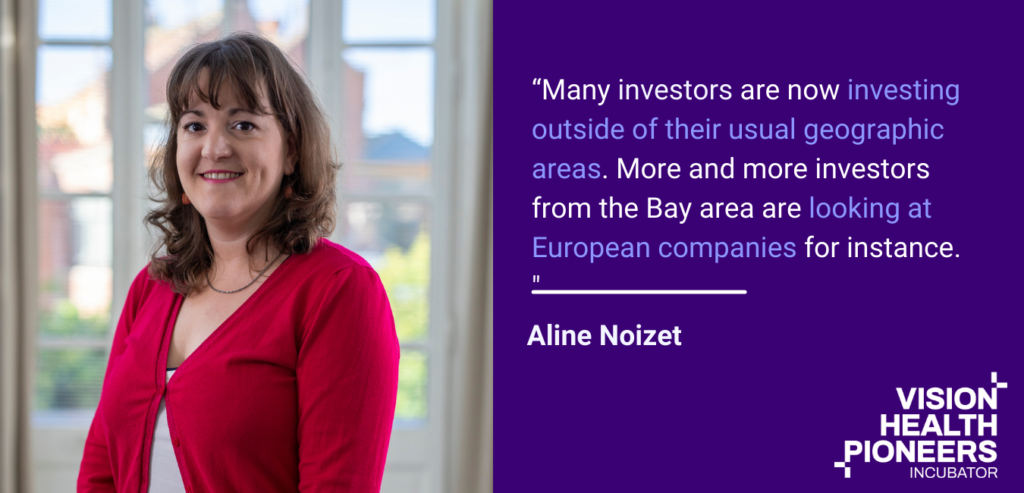
Aline has noticed how Covid-19 has actually had some positive impact on a startup investment relationships with investors. “Many investors are now investing outside of their usual geographic areas. More and more investors from the Bay area are looking at European companies for instance. This is great news for entrepreneurs.”

Aline Noizet, Founder of Digital Health Connector shares a quote on startup investment in Berlin healthcare startups is like now. "“Many investors are now investing outside of their usual geographic areas. More and more investors from the Bay area are looking at European companies for instance. This is great news for entrepreneurs.”

When investors are exploring potential startups to invest in, their ability to work across borders is of great interest. The more scalable to different markets a product is, the better for investors. Aline explains how startups can benefit from understanding other markets better and how sometimes your home market is not necessarily the best market fit for your product. It’s equally important to consider differences when it comes to healthcare models and areas such as insurance: Markets like the US have a bigger consumerism culture so B2C models may be easier. When it comes to payers, self-funded employers are a privilege to go to market channel in the US, but not in Europe, where the prefered channel would be insurance companies.

These sorts of insights are key for the startups in the Vision Health Pioneers Incubator. They use these experiences and industry knowhow so that once they reach a certain level of maturity, they can bring their innovative solutions to even more people around the world.