Categories
Inside the incubator

INU Health: Empowering women to find strength within and freedom from menstrual pain

From the age of ten, Adeline Caiado was tormented by excruciating menstrual pain, thinking– and being made to feel – that this was normal. 

Speaking of the experience now, the 31-year-old, soft-spoken Brazilian describes having to wake up on the first day of her period in such a state of agony as to have to lie motionless in bed for hours waiting for the painkillers to kick in, and for respite. Over the course of seven days, each month, she would have to endure what she describes as a sensation of having her insides twisted and squeezed at an intensity akin to being run over by a vehicle, and which spread itself beyond her pelvic area and through her intestines. 

She lived with this each month since her first period, which announced itself with a pain so intense she could not attend school for a week. Each year from that point onwards she would approach a doctor, asking if there might be something wrong with her, or if there was something she could do to make the agony bearable. Doctors all said the same thing. That this was normal. And that this was just what women had to go through each month.

“Not one doctor I went to suggested I might have endometriosis,” she recalls. “I had to learn about (the condition) myself.” 

The penny dropped when Caiado was watching a TV show of a doctor explaining the condition, in which tissue similar to that which grows on the lining of the uterus grows outside of it, causing a great deal of discomfort and also potentially resulting in infertility.

 It affects around ten percent of women, but, owing to long-standing taboos and misunderstandings around menstruation that are rooted in misogyny, it continues to be under-diagnosed and treated with indifference.
Owing to these attitudes, there’s often quite a lag between the onset of the condition and the time at which its sufferer is diagnosed, forcing many, like Caiado, to suffer in silence for years or even decades.

Two years ago, Caiado moved to Berlin. During that time, she tracked down a specialist in endometriosis, who diagnosed her with its most severe stage, prescribing surgery to remove the endometrial growths responsible for the distress. She went through this surgery last year, which, alongside lifestyle adaptations she made, helped tremendously. 

Caiado’s two-decade-long ordeal is not all that unusual, although awareness of the condition has grown in recent years, owing in part to more and more women finding the courage to speak out.

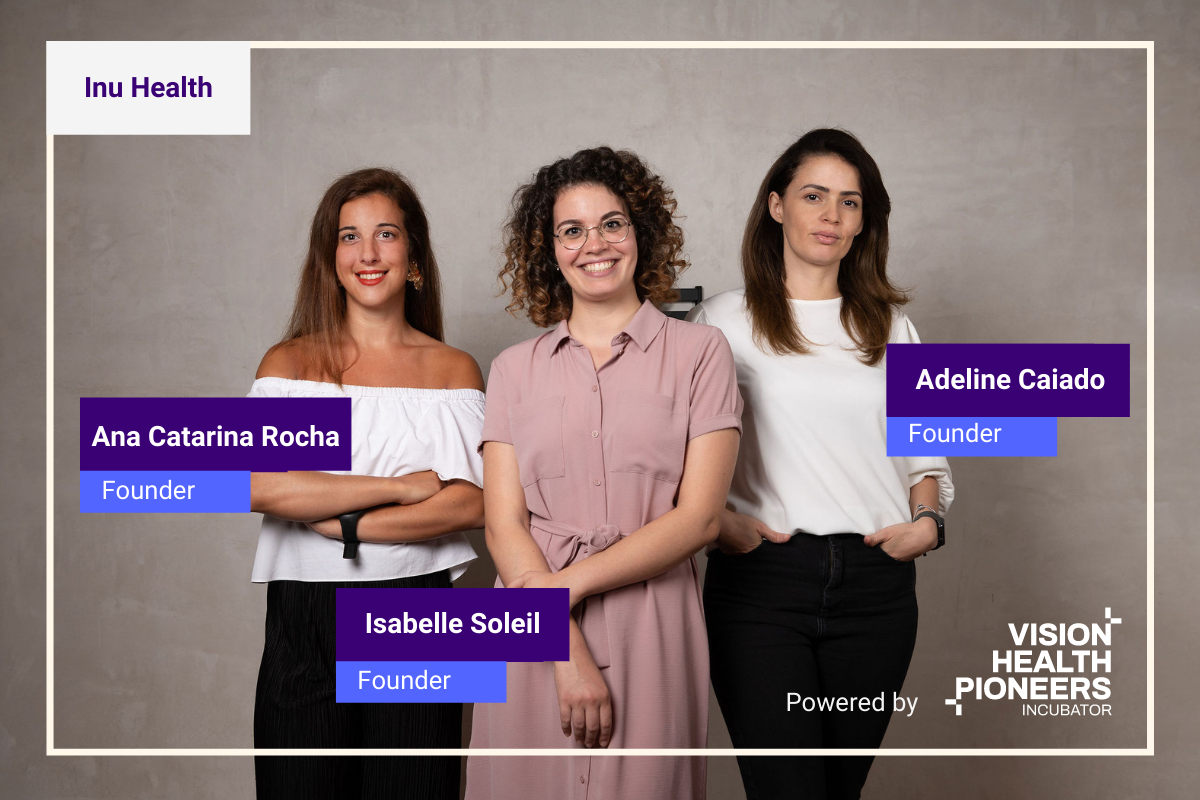
“We keep being told that this is normal. And if no one tells us its not normal, we’re just going to keep thinking it’s normal, telling our daughters its normal, and it’s not,” says Isabelle Soleil, a German/Belgian psychologist who makes up one third of Vision Health Pioneers startup INU Health alongside Adeline Caiado, who handles the marketing, and its passionate co-founder, Ana Catarina Rocha, who hails from Porto, Portugal.

“So we want to break the cycle and get people to talk about it. And for me, it’s been really interesting, because ever since I’ve started cooperating on this project, I’ve been talking about it more with friends. I feel like everyone knows at least one woman who has endometriosis, and they say “oh yeah, I didn’t realize how bad it was.”

Holistic solutions in the digital age 

The trio at INU Health aims to break the silence of endometriosis while providing practical solutions and holistic treatment via a sophisticated period tracker app that first offers a diagnosis, followed up by a 28-day-cognitive behavioural therapy programme alongside a host of holistic tips and tricks for managing pain. Its target audience extends past women with endometriosis, to encompass all women who suffer from painful periods in general.

The project, whose name derives from the idea that women have ample resources within themselves to heal and thrive, is the brainchild of Rocha, who did the work of joining various dots together, including one sparked during a chance meeting between her and Caiado in which the latter shared her experience with the condition.

“I want to give women the power of choice, through this app,” she says, describing how many women otherwise attempt to manage their pain through birth control pills, which can be problematic for the body.

Rocha has long wanted to explore holistic tools and strategies for empowering women, initially starting her journey at Vision Health Pioneers with a different female empowerment project, called Sista, which, owing to diverging visions between Rocha and her fellow founder at the time, split in June this year.

Rocha began looking more deeply into treatments for menstrual pain, discovering a research project in Australia that used cognitive behavioural therapy to help sufferers develop coping strategies. On a whim, Rocha reached out to the psychologist co-piloting the project, who was happy to offer insight and who remains in touch to advise INU Health. 

“I’m really fascinated with this psychology and how to trick the mind in order to change the state of the body,” Rocha says.

The missing piece, in the form of a Co-founder who could help helm INU Health while bringing deep insight into the mental health aspect of the project, was found in Isabelle Soleil, a psychologist introduced to Rocha by fellow Vision Health Pioneer’s entrepreneurs Mila.Health. 

Rocha and Soleil describe feeling an instant connection. Catarina offered her the role on the spot.

“Sometimes you have to use your mind and heart, and follow a little bit your intuition,” says Rocha.

As a trio, the INU Health entrepreneurs are excited about the road ahead, the possible avenues they can take their startup, and how their work can lead the charge in serving the large number of women who suffer needlessly and without support.

“I say this quote over and over again, but we only start working from a position of strength if we begin to embrace the way we are designed,” says Rocha.

For Caiado, embracing the way she is designed has come in the form of making big changes to her nutrition and lifestyle, which she can now do, being furnished with a much greater understanding of her own body and her condition. 

Her surgery was a success, and alongside a shift in diet – she avoids processed food, dairy, and gluten – and a host of insights accumulated via the app, her pain is nowhere near as intense as it once was, and she can live an unencumbered life.

“I feel really great now I have these solutions, and I know what is happening to my body. I don’t have extreme pain for days now, I just take one painkiller and that’s enough,” she says.

Categories
Inside the incubator

Advosense: The future of geriatric care is smart and patient-centric

Martina Viduka is not quite sure what it was that first sparked her untiring passion for geriatric care, but what she does know is that there has always been a part of her that has felt drawn to and inspired by older generations.

“It’s funny, I don’t know where it came from, this soft spot for the elderly,” she says. “I think it’s something about the wisdom they bring to society, and the work they’ve put in. I feel like a lot of our western cultures just don’t appreciate that enough.” 

Viduka’s fondness for the elderly prompted a career in nursing that lasted a decade, and which has provided firsthand experience and insight that has primed her for the next chapter of her life.

“I went into nursing because I wanted to somehow create a space, an age-friendly, caring space for people to age in the future,” she says. “I thought that nursing would be a good place to start, because you’re on the bedside and you really know and can see what was needed.”

Dreaming up revolutions in geriatric care

The whip smart and charismatic Croatian-Canadian is now one third of Vision Health Pioneers Incubator’s startup Advosense GmbH, having partnered up with co-founder, the Texas-born, Kentucky-raised Erin Webb in 2018. Webb brings to the table a fastidious, data-driven mindset alongside extensive management consultancy experience from working on projects for the Affordable Care Act.

As an entrepreneurial trio that includes British marketing specialist Grace-Anne Marius, their goal is to create the next generation of geriatric products. First stop: Smart incontinence briefs that use sensors to report to nurses when the patient needs to be changed. 
“Right now, it’s just not possible to know when a patient is wet or not. You have to go in and physically check and there’s no best practice,” says Webb. Their product, which currently has no direct competitor, features a passive and disposable sensor printed onto an incontinence brief which notifies the clinician when their patient is wet via their smartphone, tablet or computer.

The product stands to have far-reaching impact. Over 200 million people currently suffer from urinary incontinence, an affliction which can bring about a host of complications, including pressure ulcers, falls and urinary tract infections.

Introducing smart briefs into the workflows at nursing homes and hospitals would save significant time, allowing clinicians to better care for patients’ complex needs. No event has highlighted the need for adaptations like these to be made more than the current pandemic, which has exposed shocking deficiencies in healthcare systems globally.

“You need to deal with the basics first and have the right resources for the basic care so you can really deep dive into the geriatric special needs,” says Viduka. 

A winning combination 

Webb and Viduka first met at Maastricht University, while both were enrolled in a Master of Science in Healthcare Policy, Innovation and Management.

“We weren’t friends to begin with, but as the only North Americans on the programme, we had an eye for each other,” recalls Viduka.

“Towards the end of the programme, we ended up always on the same teams,” says Webb.

“…doing projects together, and killing them,” Viduka adds.

Advosense was born in November 2018, Berlin during hackathon ‘Hacking Female Health’ – an event powered by Vision Health Pioneers partner Hacking Health, when the pair joined forces and worked as part of a team called PeriPower.

“Martina and I were sitting next to each other and I was, like, “Martina, you have to pitch something about geriatrics. Otherwise, all of these solutions are going to be about other problems that are not as inspiring to you,” recalls Webb.

PeriPower emerged victorious, a success prompting the pair to consider taking their idea to the next level. Fast forward a couple of years, a place on Fraunhofer’s AHEAD programme, a name change and now as part of Vision Health Pioneers Incubator’s first cohort, the team have set their sights on eventually bringing their product to German hospitals and nursing homes, with a view of later pitching to North American and more European markets.

But that’s still quite far down the line, as a lot of expensive processes involved in bringing medical devices to market – and making sure they are safe, effective, and usable  –  lie ahead. Two big challenges present themselves now: finding funding and validating the product. 

Ingredients for the long road ahead

For now, the team has some time to reflect on the journey they have taken, where they are going next, and how Vision Health Pioneers Incubator has helped them along the way.

“Now that the programme is eventually coming to an end, I feel like a chick getting ready to leave the nest and I’m starting to get a little nervous about it,” says Viduka, who lists the mentorship and community-spirit at the incubator among its many perks. 

“[The programme] really gave me the courage to move forward. Before, I felt… imposter syndrome, I guess. I still kind of do. So, it gave me the support and the tools to feel that I can do this.” 

Webb agrees that the convivial spirit and guidance has been a big help, especially in managing the uncertainty involved in building something completely from scratch.

“I think that a lot of the mentorship and also being able to talk to the other teams who are going through the same thing has been very valuable,” she says, adding that the incubator’s flexibility and resilience from lockdown onwards has also been much appreciated.

It’s been an important time for the team to set upon the values that they believe will carry them through each new challenge that presents itself along their journey to revolutionising geriatric care.

“Erin and I laid out the qualities and characteristics that we’re looking for as a team, as our team grows. Resilience was one of the top ones. What else?” asks Viduka.

“Autonomy, trust, curiosity,” says Webb. “And commitment to the vision. Because it’s very important to really always be able to go back at the end of a hard day and say, “Okay. What’s driving this?” I would say that that’s essential for an entrepreneur”. 

While the pair think about what lies ahead for Advosense, they are also keen to consider the twists and turns that brought them to where they are now, and the extent to which keeping an open mind has helped them both discover and adapt their mission. 

That openness to seizing new opportunities as and when they arise is what led both women to joining forces, turning a lifelong dream to transform geriatric care into an actionable mission, and finding inspiration, mentorship and a community along the way.

Categories
Inside the incubator Our Mentors

Thanks to all the Mentors!

Mentors and Coaches are the backbone of our incubator program. They share valuable advice, support with access to their network, take time to listen to startup challenges and promote our incubator teams tremendously. More than 50 mentors support the first cohort of the Vision Health Pioneers Incubator currently. Here just a few faces!

A huge THANK YOU to all off them! Check out all mentors supporting us here.

If you want to become part of Vision Health Pioneers Incubator, please reach out to us!

Categories
Inside the incubator

Boost your Knowledge!

Design Thinking, Business Model Canvas, Personas – you might have heard about it but do you really know how to apply design thinking and lean startup methods. In the beginning of the incubation program all teams have been invited to refresh their knowledge and apply the startup methods to their ideas.

Supported by our super coaches – Barbara Posern and Robert Lange from designiT as well as Lust Haase and Prateek Mahalwar – our seven teams worked hard to plan the validation of the ideas they have been working on.

Enjoy some video impressions:

Also check out further startup advice from our coaches on Youtube!

Categories
Inside the incubator

Impressions from our online Pitching Sessions

Each Month our Incubator teams present their ideas to investors, editors, product experts and fellow entrepreneurs in a short online session – 3 min pitch, 3 min Q&A. Every critical question, every outside perspective is the foundation for further improvement. Each months, experts take time for us to hare their valuable feedback!

A huge shoutout to these amazing jurors that supported us so far!

Categories
Inside the incubator

20 Founders were looking for a new home!

There are more than 140 coworking spaces in Berlin – some are huge with thousands of members, some are small and have a special sector focus. Which one would become our crib?

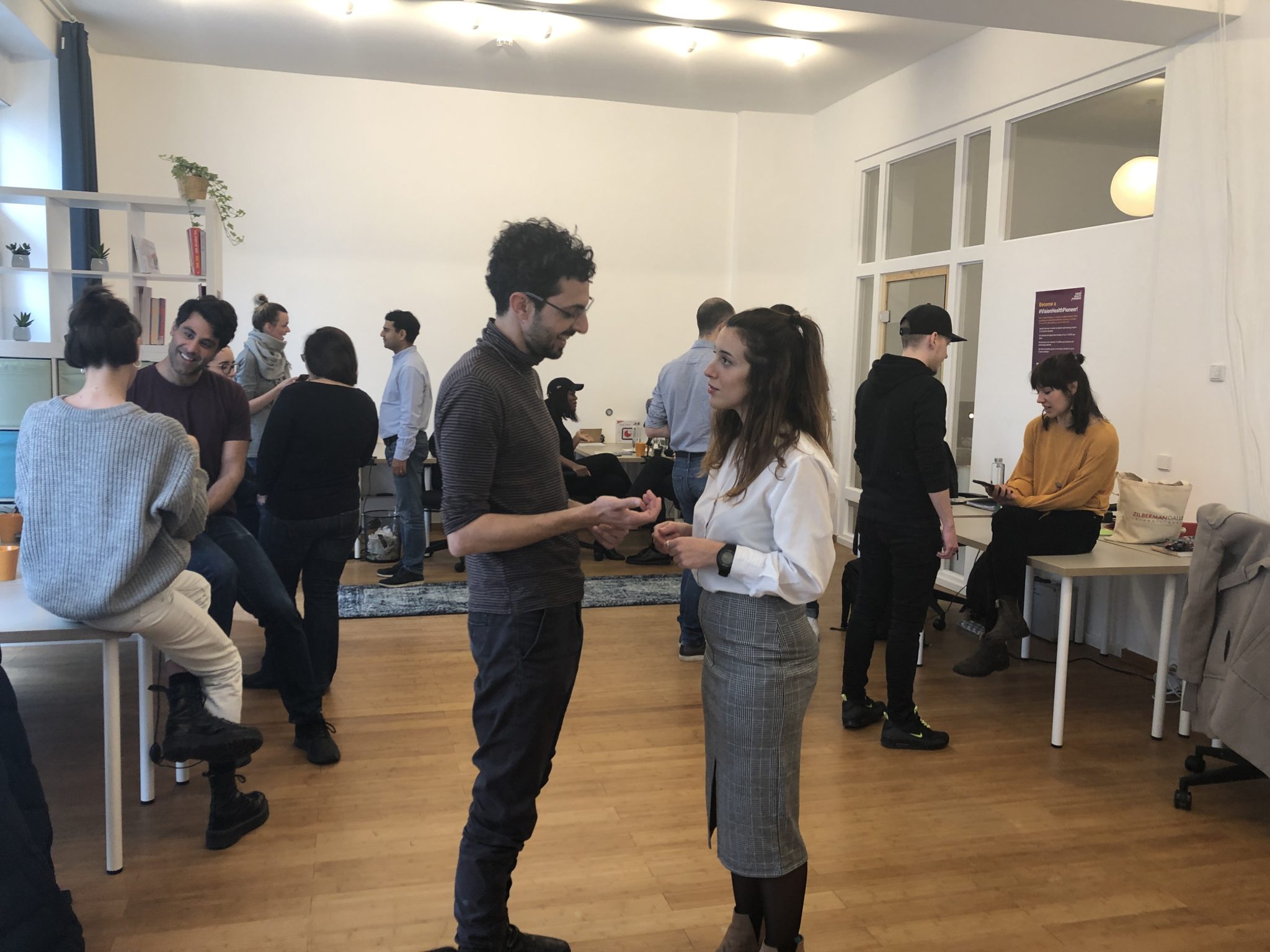
In December our incubator team visited close to 15 spaces. At the end we decided to set-up our own space. At Wöhlertstrasse 14 – close to Charite, the Federal Ministry of Health, the Health Innovation Hub and companies such as Bayer and fellow startups such as ADA Health, we found a new home.

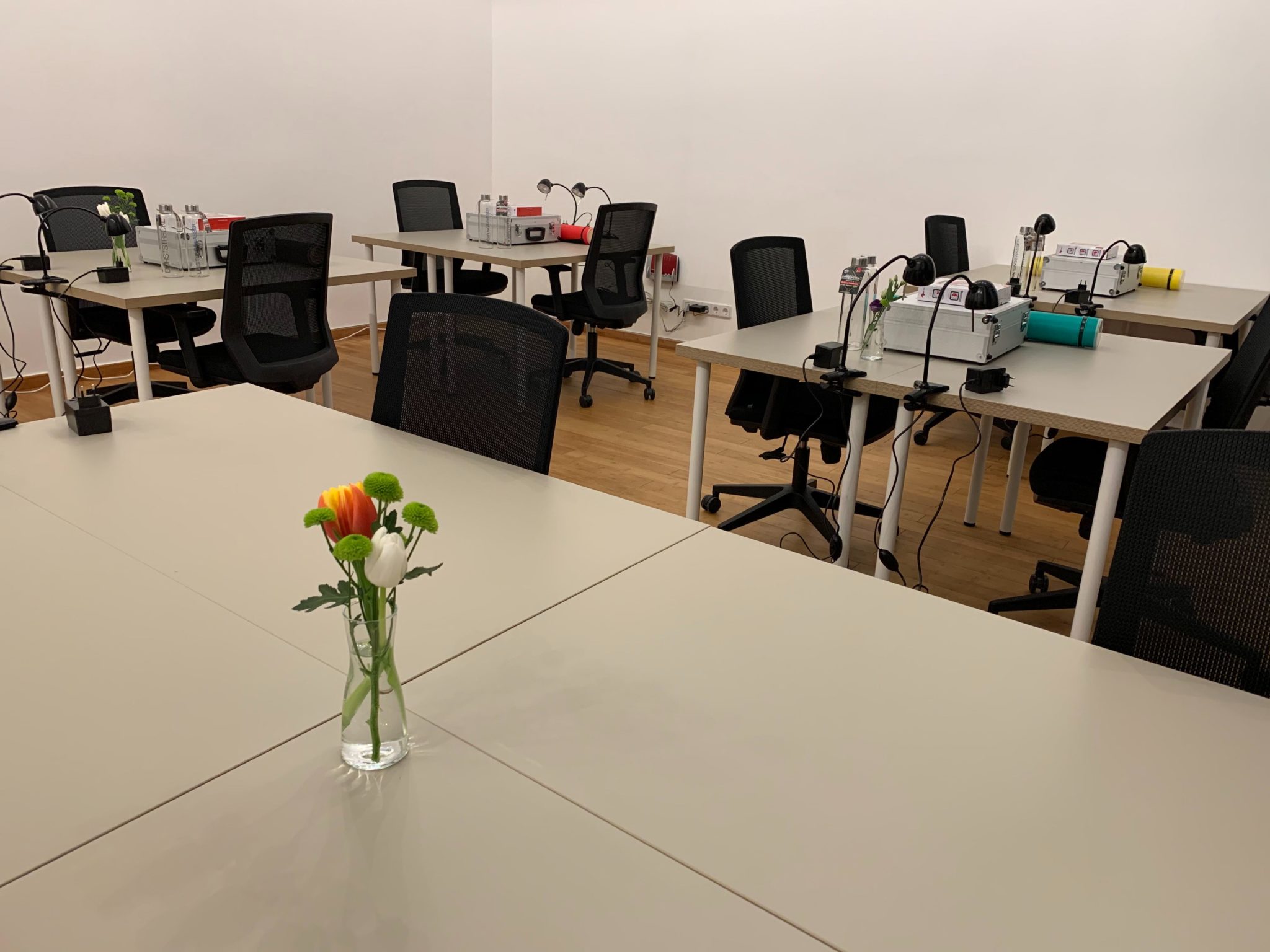
A former shop, turned ground-floor apartment that housed a family of 4, became our new incubator hub. After 3 months of adding dry and glass walls, testing desks and couches, we moved in – just in time for the first cohort.

In the next years we will welcome all mentors, experts and coaches into our new space at Wöhlertstrasse 14 in Berlin-Mitte. With 25 desks, 4 small conference rooms, a spacious community kitchen, a green community backyard as well as strong WIFI – we are sure we will have a creative environment to innovate healthcare in Germany!

Stop by when in town!

Categories
Inside the incubator

And if we better talk?

Effective tools for communication in teams 

There are multiple benefits that can be obtained by just communicating appropriately within teams and groups. These can go from the maintenance of good interpersonal relations to the development and transparency of a business. In fact, communication allows people to cooperate better and overcome obstacles even in stressful  situations. 

As much as it sounds old fashioned,  good communication strategies help teams not just to define the short- and long-term goals but also the roles within the team to work in a synchronized and effective way. If we consider a startup, having good communication between team members makes the difference in terms of performance: alignment and clarity result in rapid execution and the capacity to confidently take on more tasks.

Therefore, on March 5th we kicked off a communication workshop so that the teams of the Incubator get the right vibe and collaborate in the right way for the nine months of the program.

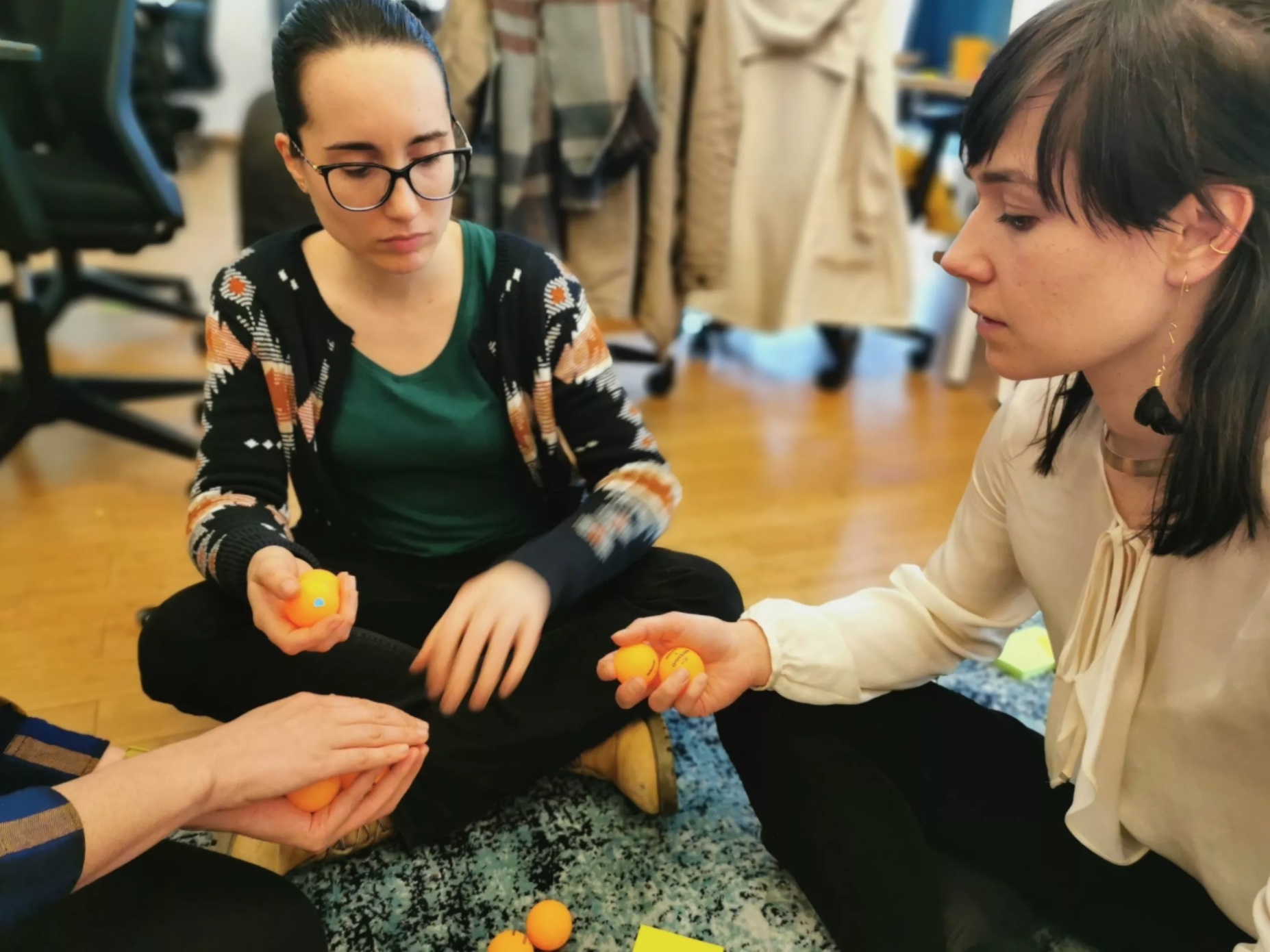
Our coach Edo was the guide and facilitator for this day. His exercises – all backed by scientific research – were fun, effective and highly  interactive which led to great feedback among the participants. Also, with his methodology of “learning by doing”  he helped the teams to understand how to create a good teamwork environment even in close contact and under pressure, and get the focus needed for the startup journey.

A few words about the coach

Edoardo Binda Zane of EBZ Coaching is a communication and leadership trainer and consultant.  He provides team and leadership development workshops. His focus is enabling teams and leaders to operate better in dynamic contexts, and increasing their capability of generating value under pressure.

Categories
Inside the incubator

Batch 1, let’s get set for your startup journey!

One thing is certain, the business world moves fast and so do startups!

Among all the challenges a startup faces are: adaptability to new changes, a need to find the balance between organizing themselves as a team and be flexible enough to overcome obstacles in their business development. 

Agile teamwork and decision-making are therefore important best practices for young entrepreneurs to create sustainability in team organization and business. For this reason, one week after the launch of the first batch, Rakesh Kasturi held an “Agile” workshop to help the teams develop the right techniques and rituals to get ready for their entrepreneurial journey.  

In particular, this “Agile Starter Kit” considered 3 important aspects in a startup development, which are alignment and collaboration, self-organization and decision making, and emotional intelligence.

The learnings

  1. Established the core values and purposes of their team and business
  2. Learned principles of agile methodologies and how to apply them in their environment
  3. Understood Kanban and other agile tools
  4. Applied decision making principles in real cases
  5. Recognizes the importance of developing emotional intelligence in their startup journey with a few tips and tricks
Rakesh Kasturi

A few words about the coach

Rakesh Kasturi known as Sprintdoctor helps leaders in startups and larger organizations to  create a culture of collaboration using agile methods like the Google Design Sprints. His practice in both diagnostic and clinical has been peer-reviewed and tested at institutions such as Google, MIT, LinkedIn, and IBM.


Categories
Uncategorized

Mila health is needed more than ever

The past month has been an exciting time to say the least for Jonas Keil and Ines Räth (the founders of mila.health). During a time when most of the world has stalled, mila.health is needed more than ever. Due to covid-19 and all the ways in which it affects our daily lives; the stress, anxiety and the normality of working from home, has pointed out why there should be a much stronger responsibility for employers to offer help and services to their employees surrounding their mental health. This has created an opportunity for mila, one in which their product and services are needed more than ever. It’s an opportunity they’ve grasped.

According to the World Health Organisation, nearly half of the world’s population will be affected by mental illness at some point in their lives. The personal and social impact of mental health is well recognised; it can also have a profound economic effect. The German health insurance provider DAK has estimated that between 1997 and 2007 the number of days taken ‘sick’ by employees, on account of mental health issues, increased three-fold. When taking account of the current impact of covid-19 these numbers will be even more profound. From the point of view of the health start-up sector, this provides a major market opportunity.

Who are they?

Jonas Keil and Ines Räth quit their jobs in business consultancy to start the adventure of mila.health in 2019. Based on their early career experience, they spotted a consistent flaw inhow companies functioned and, in particular, how they neglect one key aspect of the health of their employees: their mental health. This inspired a desire to create a solution to this problem. They are inspiring individuals who see a fundamental issue in the way an aspect ofsociety functions, and set out to change it!

Their vision is to transform employer attitudes to mental health, removing the stigma so oftenassociated with mental illness, so that it is viewed in the same vain as physical health – by promoting mental well-being and establishing a culture of support and understanding. The second issue they saw was something rather more practical. When someone was looking formental health support it was hard to find. Trying to find a therapist was a long and tedious process. Addressing these two issues lies at the heart of what mila aims to achieve.

What does mila provide?

https://www.youtube.com/watch?v=DHe4KDQ5uJE

Jonas and Ines have dedicated the last 7 months to creating a company with a network of ‘mila experts’ (therapists and academic professionals.), who can provide one-to-one advice and support. Their service involves working with employers to build an understanding of and commitment to the culture of mental health among their employees. They work with the employer to support their staff, embedding a new approach to employee support and creating a healthy and positive workplace for everyone. This takes place with two services provided by mila both available on their app.

mila.sessions: Every employee has easy access to their ‘mila experts’ to provide individualised mental support based on their needs and preferences, the ease of which is non comparable to anything currently available. Flexibility is key to mila.sessions, employees can access support via the wide range of options: video, phone or chat. This being even more of a selling point at this current time where the vast percentage of employees around the world are working from home.

mila.hub: The ‘place to go for all knowledge around mental health. In seminars, workshops or webinars you can learn the tools to better deal with mental challenges or stressful situations. The programs are curated individually and flexibly for you. While some of the courses take place on-site at your company most are offered digitally.’ (from their website).

The fundamental aim of mila.health is to tackle mental health by changing its perception: that it’s not just for ill or weak people but for everyone. It was the passion to create a new mindset among major employers which appealed to the Vision Health Pioneers team. Mila has joined seven other teams to be part of the nine-month program, supporting entrepreneurs with training, free coworking space, access to technology, business opportunities and equity-free funding.

Due to this sudden increase in need for the service mila provides, an opportunity presented itself; one they didn’t expect to come so fast. Not following their anticipated timeline, Monday the 20th of April saw the launch of their pilot app for a company with around 600 employees. This was by no means an easy feat to achieve logistically. All of their work came down to creating the app at blistering speed, in only 20 days from the start of development to launch. Catalina Turlea, mila’s CTO and also a founder, was central to this development. It is clear that on boarding Catalina was one of the key milestones in the progression of Mila. Without this inclusion the possibility of taking up an adventurous opportunity like they have would not have been possible. This adventure by no means is finished, they start working with 2 new companies from the 1st of June!

From founding the company, to the research and all the positive feedback from the new ‘mila experts’, to onboarding Catalina Turlea, and now the launch of the mila app – the last few months have been a ‘crazy roller-coaster’ according to Jonas. The future promises to be even more exciting.

Thoughts on Covid-19 by Gabriel Furey, Student Entrepreneur in Residence at Vision Health Pioneers

Categories
Inside the incubator

The innovation of Covid-19 lockdown

If you were to ask me a month ago what would be my biggest worry about a possible worldwide lockdown I would answer the lack of connectivity. All facets of society benefit from the diversity of people and ideas, the fact that we don’t all come from the same bubble – not least the world of healthcare. My assumption would be that worldwide lockdown would stop our interactions and create inertia – halting the progression of everything that makes society better. In-fact I couldn’t be more wrong.  

Lockdown has halted many things, work is limited in most sectors, people losing jobs if not being furloughed. My assumption would be that this would lead us to not only hulting any sort of progression but becoming more insular in how innovation takes place. However it would appear in the health sector this is not the case at all. it’s actually created a complete openness, and a general disruption of traditional ways of working which is creating expansive ideas. Innovation is all about ideas, the more ideas the more innovation. The world has never seen anything quite like Covid-19, there are many challenges facing the world that we not only want but need solutions to.

It’s very easy to despair and lose hope but that’s not what innovators do, they innovate. 

https://twitter.com/hackinghealthDE/status/1248628174562320384

Hacking Health Easterhack

The hackathon organised by Hacking Health Berlin and supported by Vision Health Pioneers during the Easter weekend is a great example of this in action. With over 150 participants from around the world, all of them with ideas, all of them brainstorming together, all of them debating strategy, and all of them coming up with solutions to address the challenges caused by Covid-19.

Six Challenges, 30+ different ideas

The hackathon began on Friday the 10th of April and ran until the early hours of Monday the 13th of April. It brought together creative innovators from all around the world with the general aim to come up with some sort of innovative idea that could help the Covid-19 pandemic. Teams were given six challenges to address with the aim of creating a solution with a lasting impact.

All 150 innovators went to work. The difference to other Hackathons? While in the past, the rooms where Hackathons are taking place became bee hives with conversations, interactions and break out sessions, Covid-19 forced the teams to work remotely. What could have been a problem, was turned into a challenge to master! Tools like Zoom, Mentornity and Mural helped. And while in local Hackathons innovators come from one region, the Easterhack was able to connected cities, countries and even continents. Time zones did not matter. Sleep did not matter. Impact mattered.

It needs pressure to create diamonds

The scope of ideas was remarkable. At the end of an intense weekend each team working on their project formed and presented their solution and their achievements. The prize money of 5000 Euros was split at the end to help push selected projects into fruition.

Aline Noizet, international digital health consultant and mentor as Vision Health Pioneers, was on the jury for the Hackathon. she emphasised the scale and novelty of the challenge we currently face – the fact that never before has there been a problem that so heavily affects everyone in the world. In New York, Delhi, Tokyo and Lima, every society is facing the same problem. This more than anything else means that everyone is fighting the same cause. People that have never been involved in the health sector now want to get involved, this is the case both in the hackathon and innovation worldwide. 

https://twitter.com/HealthPioneersB/status/1249633079045640193

The fact that a range of new innovators from different sectors were involved helped bring lateral thinking and a diversity of ideas. Any innovator knows the advantage of this to the development of new projects. Far too often these ideas are held back by corporate culture and red-tape. 

“Things that might normally take up to 15 years are being done in a week or even just a few days”

This diversity and openness created an atmosphere of generosity. One in which it is in everyone’s interest for all of the ideas voiced to be successful.

Innovators united

LaurieAnn Scher a diabetes specialist based in the USA who is currently being furloughed as a result of the impacts of covid-19, was one of the participants in the hackathon. Having seen an advert for the event on LinkedIn, LaurieAnn decided that she would try and use her expertise for some sort of project that would help the most vulnerable around the world. Not only does LaurieAnn now have the time to help such a mission, she also has the want; having worked with vulnerable people in the health sector throughout her career she knows the importance innovation can have. 

Having never been involved in a hackathon before LaurieAnn teamed up with Aaron Day – based in london and came up with the idea of ‘Do 3 things’ an app designed to support those with diabetes by collecting and collating information about the risk of infection in different areas around the world. This data would then be used to provide key advice for those most vulnerable. This is a common example of the wider idea of collective innovation in action; a type of specialist who is integral in health innovation not only having the time at the current moment to help drive ideas, but also the want. Teaming up with someone who she has never met, from the opposite side of the world to find solutions. This story isn’t unusual by any means, the hackathon was full of these examples. The Easterhack again was simply one of many spaces and events in which this sort of innovation has taken place during the past month.

The first mile in an exciting journey

Regardless of the progression and success of ‘Do 3 things’ the point remains, many ideas will not work, many won’t ever come into fruition, but it takes people with ideas to innovate. The Hacking for Health hackathon provided this space.

Advosense (formerly known as ‘PeriPower’), one of the teams in the Vision Health Pioneers incubator, was born in Berlin at the Hacking Female Health event in November 2018. At this hackathon, a jury of health experts awarded the female team first prize, and what started as a hackathon idea became a passion. The 3 founders have been working on the concept ever since. They were also awarded the ‘Best Pitch’ prize at the HPI startup bootcamp and in 2019, the entrepreneurs participated in Fraunhofer Venture’s AHEAD Program and further developed their idea. They are now in the latter stages of research on the mission to transform geriatric care, their new website has just gone live!: https://www.advosense.com/

The Hackathon weekend is just one example of the way in which people are connecting around the world to address the health challenge of Covid-19. Although lockdown has halted most of society, it has created the conditions for a huge surge in innovation, especially in the health sector. Hacking for Health like many other events brought people with ideas together, it is doing this which allows for ideas to flourish. 

Staying positive

My biggest fear about lockdown was what I saw as inevitable inertia. This may well be the case in the majority of sectors, but in health care lockdown has only helped fuel innovation. For once in the world there is a collective problem, one in which finding a solution is in everyone’s interest. This paired with the free time many now have has caused not only a want but a need to innovate. Let’s hope the hacking for health hackathon is only the tip of the iceberg, we must not only innovate, but find solutions.

Thoughts on Covid-19 by Gabriel Furey, Student Entrepreneur in Residence at Vision Health Pioneers